
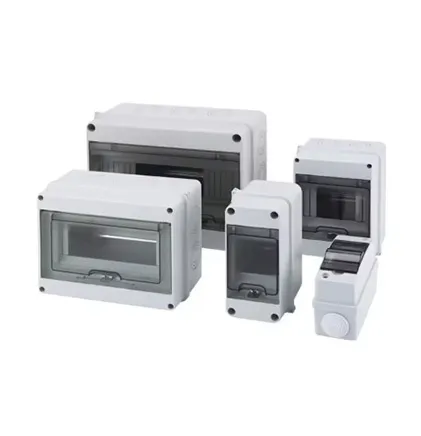
Picture a world where every flick of a light switch connects to a global effort—not just to brighten homes, but to reshape how industries operate. The manufacturing of distribution boxes, those unsung heroes of our electrical grids, stands at the forefront of this change. As demand surges for reliable power infrastructure, the industry faces an urgent choice: evolve with energy-smart practices or risk becoming environmental liabilities. This article explores how blending technical innovation with thoughtful sustainability can transform this critical sector.
We rarely pause to consider the origin story of that gray metal box humming quietly on the street corner. Yet inside its unassuming shell lies a mini-universe of materials and processes: molded polymers, precision-cut metals, labyrinthine circuitry, and protective coatings. Each component carries an invisible energy signature.
Traditional manufacturing, while effective, often operates like a gas-guzzling car in rush-hour traffic—functional but inefficient. Studies reveal up to 30% energy loss occurs during fabrication stages alone. Picture rows of presses hammering out enclosures 24/7 or vast paint booths baking coatings at industrial scales. It's an energy appetite that strains both budgets and ecosystems.
Forward-thinking manufacturers aren't just tinkering at the edges—they're rebuilding processes from the ground up. Three strategies are emerging as game-changers:
The real magic happens when these approaches intertwine, creating what German engineers call "Energie-Doppelnutzung" (double energy utilization)—systems where every joule serves multiple purposes.
NordicBox AB transformed their Arctic factory into a net-zero facility by adopting:
The result? A distribution box with 73% lower embedded carbon than industry averages.
Fuji Electric redesigned their manufacturing workflow using what they term "energy cascading":
This philosophy cut their per-unit electricity consumption to levels comparable with laptop manufacturing.
Cloud-based platforms are becoming the central nervous system of smart factories. Sensors track energy flows in real-time—monitoring everything from compressor loads to fork-lift routes. This granular data feeds predictive algorithms that:
When Danish manufacturer Velta implemented such systems, they discovered compressed air leaks accounting for €380,000 in annual wasted energy—equivalent to powering 250 homes. Fixing these seemingly minor issues moved the needle significantly.
While innovations are encouraging, authentic sustainability extends beyond factory walls. Progressive manufacturers now examine:
The most exciting development? We're beginning to see distribution boxes that actually clean air as they operate—coated with photocatalytic surfaces that absorb emissions while distributing power.
These advancements represent more than technical tweaks; they reveal a fundamental shift in how society views industrial responsibility. The days of "out of sight, out of mind" manufacturing are fading, replaced by transparency and accountability.
As we stand at this industrial crossroads, it's tempting to frame energy efficiency solely in cost-saving terms. But the human dimension matters equally. The factories implementing these changes report unexpected benefits:
That distribution box on your street corner? It's becoming a silent ambassador for decarbonization—a testament to what happens when engineering ingenuity meets environmental stewardship. The current transformation is just the prelude; the next decade will redefine possibility in manufacturing, forging a path where industrial progress and planetary health stop competing and start collaborating.
Recommend Products












