


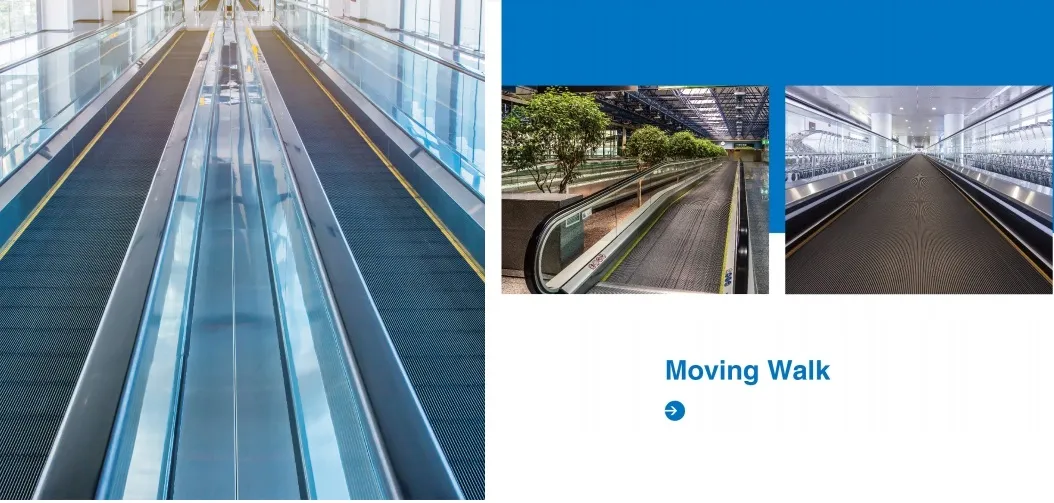
Introduction
Hey there! Let's talk about something we rarely notice but could literally be life-saving: the emergency stop systems on moving walkways. These systems aren't just convenient buttons or non-slip surfaces - they're the unsung heroes of public safety. You might've pushed the red mushroom switch without thinking, but today, we're pulling back the curtain on how these critical components make your travel safer.
In this deep dive, we'll explore why emergency stops require their iconic mushroom shape, their fire-rated mounting specs, and how stopping functions work in different scenarios. Plus, we'll break down the anti-slip designs that prevent those embarrassing slips and potential accidents. So buckle up - this isn't your typical dry safety talk!
Anatomy of an Emergency Stop: Not Just a Big Red Button
The Instant Lifeline
Picture this: a kid's shoelace gets caught in the walkway combplate. In seconds, that "stop" button instantly cuts power - that's the emergency stop system doing its job. But not just any switch works - NFPA 79 requires these devices to be:
- Loud and proud : Mushroom-shaped for panic-situation visibility
- Unmissable : Red button against bright yellow background
- Single-action heroes : Activated by palm-slap in one movement
Location, Location, Location
Here's where OSHA and EN-ISO 13850 standards clash. OSHA says "within arm's reach wherever hazards exist." ISO adds precision: hand-operated buttons must be mounted between 0.6m-1.7m above floor level. Why? It’s the perfect height range whether you're sitting, standing, or kneeling.
Pro tip: Next time you're boarding a walkway, scan for the yellow-red stop - it should always be visible without hunting!
Inside the Mechanism
What happens when you hit that button? There are two fail-safe modes:
| Category 0 | Category 1 |
|---|---|
| Total shutdown | Controlled braking first |
| Instant power cut | Uses residual energy for braking |
| Risk assessment needed | Gentler equipment protection |
Category 0 is generally preferred - when seconds matter, "off now, ask later" is the golden rule.
Anti-Slip Design: Your Silent Bodyguard
While emergency stops handle crisis moments, anti-slip surfaces are the unsung heroes preventing accidents. But what makes a surface genuinely slip-resistant?
The Science of Slip Prevention
Slips occur when friction fails - usually when contaminants like water meet polished surfaces. Modern walkways use:
- Micro-grooved surfaces : Creates thousands of drainage channels
- Embedded abrasives : Aluminum oxide particles in rubber
- Pattern psychology : Diagonal strips guide feet placement
The DIN 51130 rating classifies surfaces from R9 (minimum safety) to R13 (maximum safety) based on incline testing. Moving walkways typically require R11 or higher - that's like comparing basketball court shoes to mountaineering boots!
Material Matters
Walkway belt composites are fascinating sandwiches:
- Top layers : Recycled rubber with silica grit
- Core : Kevlar weave for tear resistance
- Bottom : Weather-resistant thermoplastics
Unlike static flooring, these materials flex during movement - which is why the industry standard ASTM F2508 tests materials on moving platforms under wet conditions.
The Safety Dance: How All Parts Work Together
Imagine a well-choreographed ballet where:
- Anti-slip surface prevents 90% of potential falls
- Visible stop buttons reassure anxious passengers
- Redundant braking systems wait in standby
This layered approach makes modern walkways remarkably safe. But like any high-performance system, maintenance is key.
The Forgotten Step: Ongoing Testing
Here’s the reality many facilities neglect: emergency stops need monthly testing. EN-ISO 13850 recommends:
- Monthly functional tests : Push-button walkthrough
- Annual load tests : Simulate emergency braking
- Anti-slip audits : Slip resistance measurement
Think of it as giving your safety system a regular health check. Pro tip: Testing records are the first thing investigators review after incidents!
Beyond Basics: Next-Gen Safety
While traditional emergency systems work, innovation is changing the game:
Smart Detection Systems
- Laser trip beams detect trapped objects
- AI cameras identify passenger instability
- Pressure-sensitive comb plates
In Singapore's MRT, AI systems preemptively slow walkways when detecting unbalanced seniors - talk about smart safety!
Material Science Leap
Labs are experimenting with:
- Nano-coatings that repel contaminants
- Shape-memory treads expanding when wet
- Phase-change materials melting ice instantly
As cities expand their transport hubs, these innovations could redefine walkway safety standards worldwide.










