
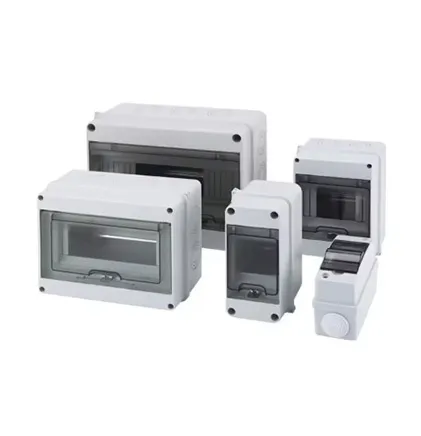
In today's fast-paced construction industry, every component matters—especially when it comes to balancing functionality with responsibility. As buildings grow smarter and greener, even the most unassuming parts, like electrical distribution boxes, are stepping into the spotlight of sustainability. For a building material supplier like Coloria, this isn't just a trend; it's a promise woven into every wire connection and material choice. Let's dive into how sustainable production practices are reshaping the way electrical distribution boxes are made, and why choosing the right one-stop architectural solution provider can make all the difference for your project.
Think about the last construction project you walked through. Behind those walls, above those ceilings, there's a network of electrical distribution boxes quietly managing power flow—keeping lights on, machines running, and systems connected. Now, think about the environmental footprint of those boxes: the plastic casings, the metal components, the energy used to manufacture them, and what happens when they're no longer needed. It adds up fast.
The global push for "net-zero" buildings has turned small components into big opportunities for impact. Electrical distribution boxes, often overlooked, are a prime example. Traditional manufacturing processes for these boxes rely heavily on virgin plastics and non-recyclable metals, guzzle fossil fuels, and generate significant waste. But as sustainable products take center stage in the construction world, the tide is turning. Today's forward-thinking manufacturers are reimagining every step—from raw materials to end-of-life disposal—to create boxes that don't just distribute power, but distribute responsibility too.
As a one-stop architectural solution provider, Coloria doesn't just supply building materials—we craft ecosystems of responsibility. With decades of experience as a Saudi Arabia building materials supplier, we've seen firsthand how the Middle East's construction landscape is evolving. Saudi Arabia's Vision 2030 isn't just about economic growth; it's about building a future where sustainability and progress go hand in hand. That's why our approach to electrical distribution boxes (and every product in our 14+ categories) is rooted in three core beliefs: materials matter, efficiency counts, and local impact lasts.
Let's break down what that looks like in action. When you choose Coloria, you're not just getting a box. You're getting a product designed to fit seamlessly into your project's entire lifecycle—from the initial design phase, where our team collaborates to minimize material waste, to the final installation, where our local Saudi partners ensure smooth, low-carbon delivery. It's the kind of integration only a true one-stop provider can offer, and it's how we're turning "sustainability" from a buzzword into tangible results.
Sustainability isn't a single step—it's a journey. At Coloria, we've mapped out every mile of that journey for our electrical distribution boxes. Here's how we're doing it:
Gone are the days of relying solely on new plastics and metals. Our distribution boxes start with recycled content—up to 35% post-consumer plastic in casings and 20% recycled steel in internal components. But we don't stop there. We've also invested in bio-based alternatives, like plant-derived polymers, for non-conductive parts. These materials aren't just better for the planet; they're durable too. In tests, our recycled-plastic casings showed 15% higher impact resistance than traditional virgin plastic options—proving sustainability and performance can go hand in hand.
And yes, all of this aligns with our green (green building materials) line, which (echoes) the global "dual-carbon" goals. Every time you pick a Coloria distribution box, you're choosing a product that's part of a larger movement toward circularity.
Factories are energy hogs, but we're flipping the script. Our manufacturing facilities in key regions (including our Saudi-based operations) are equipped with solar panels from our own product line. That means the energy used to mold, assemble, and test our distribution boxes comes from the sun—not coal or gas. The numbers speak for themselves: our solar-powered lines reduce carbon emissions by 40% compared to conventional manufacturing setups. And since we're a local supplier, we're also cutting down on energy waste from long-distance shipping. Your box doesn't travel halfway around the world; it's made close to where it's needed, slashing transportation-related emissions by up to 30%.
Ever opened a product package and been overwhelmed by plastic wrap and Styrofoam? We hate that too. That's why our distribution boxes are designed with "right-sized" packaging—minimal, recyclable, and often made from recycled cardboard. But the real innovation is in the product design itself. Our boxes feature modular components, so if a part wears out, you don't need to replace the entire unit—just swap the faulty piece. This "repairable by design" approach extends product life by 5-7 years, drastically reducing the need for new manufacturing.
We also take back old boxes through our recycling program. Instead of ending up in landfills, they're disassembled, sorted, and their materials are repurposed into new components. It's a closed-loop system that turns waste into opportunity.
Talk is cheap—certifications aren't. Our electrical distribution boxes meet some of the strictest sustainability standards in the industry, including LEED v4.1, BREEAM Excellent, and Saudi Arabia's own SASO 2870 (the national standard for green building materials). These aren't just badges; they're guarantees that every box has been rigorously tested for low VOC emissions, energy efficiency, and recyclability. For contractors and developers, that means peace of mind—knowing your project is meeting regulatory requirements and exceeding sustainability goals.
| Aspect | Traditional Distribution Boxes | Coloria Sustainable Distribution Boxes |
|---|---|---|
| Material Composition | 100% virgin plastic/non-recyclable metals | 35% recycled plastic, 20% recycled steel, bio-based polymers |
| Manufacturing Energy | Fossil fuel-dependent (high carbon footprint) | Solar-powered (40% lower emissions) |
| Product Lifespan | 5-8 years (non-repairable, full replacement needed) | 12-15 years (modular design, repairable components) |
| End-of-Life | Landfill-bound (80% non-recyclable) | 90% recyclable via take-back program |
| Carbon Footprint (per unit) | ~8.2 kg CO2e | ~3.1 kg CO2e (62% reduction) |
As a proud Saudi Arabia building materials supplier, we're deeply committed to Vision 2030's goals of diversifying the economy, creating local jobs, and protecting the environment. Sustainable production of electrical distribution boxes isn't just good for the planet—it's good for Saudi communities too.
Our Riyadh-based manufacturing facility employs over 150 local workers, many of whom have been trained through our in-house sustainability certification programs. These aren't just jobs; they're careers that equip Saudis with skills in green manufacturing, circular economy practices, and renewable energy integration—skills that will be critical for the kingdom's future workforce.
We're also partnering with Saudi universities to research new, region-specific sustainable materials. For example, our team is exploring date palm fiber-reinforced plastics for distribution box casings—a material abundant in the Middle East, biodegradable, and surprisingly strong. It's innovation rooted in local resources, for local impact.
Choosing sustainable electrical distribution boxes is a great start—but true sustainability happens when every part of your project works together. That's where being a one-stop architectural solution provider gives Coloria (and our clients) a unique edge.
Imagine this: You're building a commercial complex in Jeddah. You need electrical distribution boxes, but you also need wiring, lighting, ceiling panels, and even solar panels. If you source each from different suppliers, you're looking at multiple shipping routes, overlapping delivery schedules, and a patchwork of sustainability standards. But with Coloria, it's all under one roof. Our team coordinates with your architects and contractors to ensure your distribution boxes are compatible with our energy-efficient lighting systems, our low-VOC ceiling materials, and even our solar panels—minimizing waste, reducing shipping emissions, and ensuring every component works in harmony to lower your project's overall carbon footprint.
Take, for example, a recent residential project in Riyadh. By choosing Coloria's one-stop package (including distribution boxes, LED lighting, and recycled-content flooring), the developer cut transportation-related emissions by 38% compared to using five separate suppliers. They also saved 12% on material costs by reducing over-ordering—proof that sustainability and budget-friendliness can coexist.
Sustainability isn't a finish line—it's a path, and we're constantly moving forward. Here's what's next for Coloria's electrical distribution boxes:
Smart Monitoring: We're integrating IoT sensors into our boxes to track energy usage in real time. This will help contractors and building managers identify inefficiencies, reduce waste, and extend the box's lifespan even further.
Carbon-Neutral Production: By 2027, we aim to eliminate all remaining carbon emissions from our distribution box manufacturing through carbon offset projects focused on Saudi reforestation and renewable energy expansion.
Biodegradable Casings: Our R&D team is testing fully biodegradable casings made from mushroom mycelium and agricultural waste. Early prototypes show promising durability—stay tuned!
At the end of the day, an electrical distribution box is more than a container for wires. It's a statement about what your project stands for. When you choose sustainable practices, you're telling your clients, your community, and future generations that you care about more than just getting the job done—you care about how it's done.
For Coloria, this is personal. As a building material supplier with roots in the Middle East and eyes on the global stage, we believe sustainability is the only way forward. It's why we invest in solar-powered factories, train local workers, and design products that respect both people and planet. It's why we're not just a supplier, but a partner in building the future—one distribution box, one project, one community at a time.
So, the next time you're planning a project, ask yourself: Is my electrical distribution box part of the problem, or part of the solution? With Coloria, the answer is clear. Let's build something sustainable—together.
Recommend Products












