
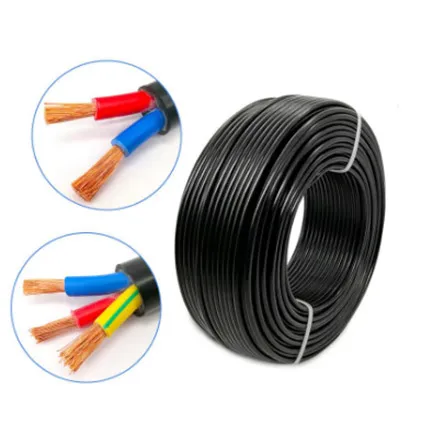
When we talk about military bases, government headquarters, or critical infrastructure projects—think border control facilities, emergency response centers, or large-scale public works—there's one component that rarely gets the spotlight but keeps everything running: electrical cables. These aren't the ordinary wires you'd find in a residential renovation. They're the silent workhorses, carrying power and data through the veins of projects that shape national security, public safety, and long-term development. And when it comes to supplying these vital components, not just any supplier will do. That's where Coloria steps in—a name trusted in the industry for decades, and a one-stop architectural solution provider that understands the unique rhythm of military and government work.
Military and government projects demand more than just "good enough." They demand cables that can withstand extreme conditions, meet strict compliance standards, and keep operations running even when the unexpected happens. As someone who's worked closely with project managers in the Middle East and beyond, I've seen firsthand how the right cables can make or break a timeline, a budget, or even a mission-critical operation. Let's dive into what makes these projects so unique, and why Coloria has become a go-to partner for teams tackling the toughest infrastructure challenges.
If you've ever been involved in a commercial construction project, you know deadlines and budgets are tight. But military and government projects? They take "tight" to a whole new level. These aren't just buildings or facilities—they're assets that need to perform under pressure, often in environments where failure isn't an option. So, what exactly do these projects demand from their electrical cables?
First, reliability that outlasts the unexpected. Imagine a military base in the Saudi Arabian desert, where temperatures soar above 50°C (122°F) in summer, and sandstorms whip through with gritty force. Or a coastal government facility dealing with saltwater corrosion and high humidity. The cables here can't just "work"—they need to work consistently , year after year, without degradation. A single cable failure in a command center or a power distribution system could disrupt communications, compromise security, or even put lives at risk.
Second, compliance that checks every box. Military and government projects don't follow generic industry standards—they follow their own standards. Whether it's meeting international benchmarks like IEEE or IEC, or local regulations specific to a country (say, Saudi Arabia's stringent safety codes), the cables must pass rigorous testing. And it's not just about paperwork; inspectors will dig into material certifications, performance reports, and even manufacturing processes to ensure nothing slips through the cracks.
Third, adaptability to evolving needs. Government projects, in particular, often have long lifespans—20, 30, even 50 years. The cables installed today need to support future upgrades: more powerful equipment, advanced data systems, or new energy sources like solar (something Coloria knows a lot about, given our focus on sustainable products). Rigid, outdated cables can become a bottleneck down the line, costing millions in retrofits.
These demands aren't just "nice-to-haves"—they're non-negotiable. And that's where many suppliers fall short. Some can deliver on reliability but lack the compliance expertise; others know the regulations but can't keep up with the project's tight timelines. But as a saudi arabia building materials supplier with deep roots in the region, Coloria has learned to speak the language of military and government projects fluently.
Let's take a step back and think about what electrical cables actually do in these projects. They're not just "wires"—they're the nervous system connecting every critical function. Power cables deliver electricity to everything from surveillance cameras and communication systems to medical equipment in military hospitals. Data cables carry sensitive information between command centers, ensuring secure, real-time communication. Specialty cables might handle high-voltage systems for radar installations or low-voltage networks for smart building management.
In short, without reliable cables, even the most advanced facilities become expensive paperweights. That's why choosing the right cables solutions isn't just a purchasing decision—it's a strategic one. It's about partnering with a supplier who understands that a cable isn't just a component, but a long-term investment in the project's success.
| Cable Type | Key Features for Military & Government Use | Why It Matters | Common Applications |
|---|---|---|---|
| Military-Grade Power Cables | Flame retardancy, high temperature resistance (-40°C to 90°C), EMI shielding | Prevents fire spread; maintains performance in extreme environments; blocks interference from radio/radar systems | Command centers, barracks, military hospitals |
| Data Transmission Cables (Fiber Optic & Copper) | Low signal loss, encryption-ready, ruggedized jackets | Ensures secure, fast communication; withstands physical stress (vibration, impact) | Surveillance systems, secure networks, border control posts |
| High-Voltage Cables | Insulation thickness, weather resistance, corrosion protection | Delivers power efficiently over long distances; stands up to outdoor conditions | Military bases, large government complexes, renewable energy integration (solar/wind) |
| Specialty Cables (e.g., Submersible, Explosion-Proof) | Waterproofing, chemical resistance, flameproof design | Safe operation in hazardous environments (e.g., coastal facilities, fuel depots) | Naval bases, emergency response centers, oil/gas infrastructure projects |
Each of these cable types has its own set of challenges, but the common thread is the need for durability, security, and performance. And that's where Coloria's experience as an electrical fixtures & cables supplier comes into play. We don't just stock cables—we engineer them with these specific challenges in mind.
So, what makes Coloria different from other suppliers? Let's break it down. We've been in the building materials industry for decades, and over that time, we've learned that success in military and government projects comes down to three things: expertise, reliability, and a commitment to partnership. Here's how we deliver on each:
1. We know the terrain—literally and figuratively. With a in Saudi Arabia and deep experience in the Middle East, we understand the unique challenges of working in this region. We know the local climate (hello, desert heat and sand!), the regulatory landscape (Saudi's strict safety and quality standards), and the cultural nuances of government procurement processes. This isn't just "local knowledge"—it's the ability to anticipate delays, navigate red tape, and keep projects on track when others might get stuck.
For example, we recently supported a military base expansion project in Riyadh where the timeline was cut by 30% due to urgent security needs. Thanks to our local inventory and relationships with logistics partners, we were able to deliver critical power cables within 48 hours of the request—something many international suppliers couldn't match. That's the difference between a supplier who ships from afar and one who's invested in the local market.
2. Our cables are built for the "what-ifs." Military and government projects don't deal in "what ifs"—they plan for them. That's why our cables undergo rigorous testing beyond industry standards. We test for flame retardancy in accordance with IEC 60332, corrosion resistance in salt spray chambers, and even impact resistance to simulate accidental damage. Our military-grade cables, for instance, are designed to withstand not just high temperatures, but rapid temperature changes—like a desert day turning into a cold night—without cracking or losing conductivity.
And because we're a one-stop architectural solution provider , we can pair these cables with other critical components—like electrical fixtures, solar panels, or even green building materials—ensuring compatibility and reducing the risk of integration issues. No more finger-pointing between suppliers when something doesn't work; we take ownership of the entire system.
3. We prioritize long-term support over quick sales. Military and government projects don't end when the last cable is installed. They require ongoing maintenance, technical support, and sometimes upgrades. Coloria doesn't just hand over a delivery receipt and disappear. We assign dedicated account managers to each project, who stay in touch long after completion. Need help troubleshooting a cable issue? Want to upgrade to higher-capacity data cables five years down the line? We're there. It's this commitment to partnership that turns first-time clients into long-term collaborators.
4. We're aligned with your vision—especially in Saudi Arabia. As a company that supports Saudi's "2030 Vision," we understand the importance of and sustainability in government projects. That means sourcing materials locally when possible, supporting local employment, and offering eco-friendly options like energy-efficient cables that reduce long-term operational costs. For government projects aiming to meet sustainability goals, this alignment isn't just a bonus—it's a requirement.
Let's get specific about the cables solutions we offer for military and government projects. We don't believe in a "one-size-fits-all" approach—every project has unique needs, and we tailor our offerings accordingly. Here are a few examples of how we've adapted our products to meet the demands of these critical jobs:
Military-Grade Power Cables with Enhanced Safety Features: These cables are designed for areas where fire safety is paramount. They use low-smoke, zero-halogen (LSZH) insulation, which means if a fire does occur, they release minimal toxic smoke—critical for enclosed spaces like underground bunkers or submarine command centers. They also feature double shielding to prevent electromagnetic interference (EMI), ensuring sensitive equipment like radar systems or communication devices isn't disrupted by electrical noise.
Data Cables for Secure Communications: In government projects, data security is non-negotiable. Our fiber optic cables are built with encryption-ready cores and tamper-resistant jackets, making them ideal for transmitting classified information. For copper-based data cables, we offer shielded twisted-pair (STP) designs that block eavesdropping attempts and maintain signal integrity over long distances—perfect for connecting remote border outposts to central command centers.
High-Temperature Resistant Cables for Desert Environments: The Middle East's scorching heat is tough on equipment, but our high-temp cables thrive here. Using specially formulated insulation materials, they can operate continuously at temperatures up to 125°C, making them suitable for outdoor installations like solar farms (another area where Coloria excels) or radar systems exposed to direct sunlight. They're also UV-resistant, so they won't degrade from prolonged sun exposure.
Custom Cables for Unique Challenges: Sometimes, off-the-shelf cables just won't cut it. Maybe a project needs extra-long cables for a sprawling military compound, or ultra-flexible cables for a mobile command unit that needs to reposition quickly. Our in-house engineering team works directly with clients to design custom solutions, from adjusting cable diameters to modifying jacket materials. Recently, we created a custom low-weight cable for a military drone hangar, where every kilogram of weight mattered for aircraft operations. The result? A cable that met all performance requirements while being 20% lighter than standard options.
The key here is collaboration. We don't just ask, "What type of cable do you need?" We ask, "What's the environment like? What equipment will it power? What are your long-term goals?" This level of engagement is how we ensure our cables don't just meet the project's specs, but exceed its expectations.
As a one-stop architectural solution provider , Coloria offers more than just cables. We understand that military and government project managers are juggling dozens of suppliers, timelines, and budgets—and the last thing they need is to coordinate with separate vendors for cables, electrical fixtures, solar panels, or flooring. That's why we've built a full ecosystem of products and services to simplify their workload.
Imagine you're managing a government hospital project. You need cables for the operating rooms, lighting fixtures for patient wards, solar panels for the roof, and even bathroom fixtures for the staff quarters. Instead of coordinating with five different suppliers—each with their own lead times, delivery schedules, and invoicing processes—you can get everything from Coloria. We handle the logistics, ensure all products are compatible, and provide a single point of contact for questions or issues. It's not just about convenience; it's about reducing risk. When one supplier is responsible for multiple components, there's less room for miscommunication or delays.
This integrated approach has been a game-changer for many of our clients. A recent government school project in Jeddah, for example, needed electrical cables, LED lighting, and solar panels to meet sustainability targets. By sourcing all three from Coloria, the project team reduced their supplier coordination time by 40%, freeing up resources to focus on other critical tasks. And because all products were designed to work together, the solar panels integrated seamlessly with the electrical system, resulting in energy savings that exceeded initial projections by 15%.
The world of military and government projects is evolving, and so are the cables that power them. Two trends are shaping the future: sustainability and digitalization. As a company committed to green building materials and Saudi's "2030 Vision," Coloria is already ahead of the curve in both areas.
Sustainability: Governments around the world are setting aggressive carbon reduction goals, and military projects are no exception. Our cables are designed with energy efficiency in mind—lower resistance materials mean less power loss during transmission, reducing overall energy consumption. We're also exploring recycled materials for cable jackets and insulation, without compromising on durability. For projects aiming to achieve LEED certification or align with Saudi's "2030 Vision" sustainability targets, these eco-friendly options are becoming a requirement, not a choice.
Digitalization: Smart buildings, IoT sensors, and AI-driven facility management are transforming government projects. These systems require cables that can handle higher data speeds and connect more devices than ever before. Our next-generation data cables support speeds up to 100 Gbps, making them ready for the 5G and IoT networks of tomorrow. We're also developing "smart cables" with built-in sensors that can monitor temperature, humidity, or damage in real time—alerting maintenance teams to issues before they become failures.
These innovations aren't just about keeping up with trends—they're about future-proofing the projects we support. A government facility built today should still be cutting-edge in 20 years, and the right cables play a big role in making that happen.
At the end of the day, military and government projects are about trust. Trust that the materials will perform when needed most. Trust that the supplier will deliver on their promises. Trust that the partnership will last beyond the project's completion. As a saudi arabia building materials supplier with decades of experience, Coloria has earned that trust by consistently putting our clients' needs first.
We understand that when you choose us, you're not just buying cables—you're entrusting us with a critical piece of your project's success. That's a responsibility we don't take lightly. From the first consultation to the final delivery (and beyond), we're committed to proving that we're more than a supplier—we're a partner in building the infrastructure that keeps nations safe, connected, and thriving.
So, if you're working on a military or government project and need cables solutions that can keep up with your ambition, let's talk. We'll listen to your needs, share our expertise, and together, build something that stands the test of time. After all, the best infrastructure isn't just built with cables—it's built with trust.
Recommend Products












