
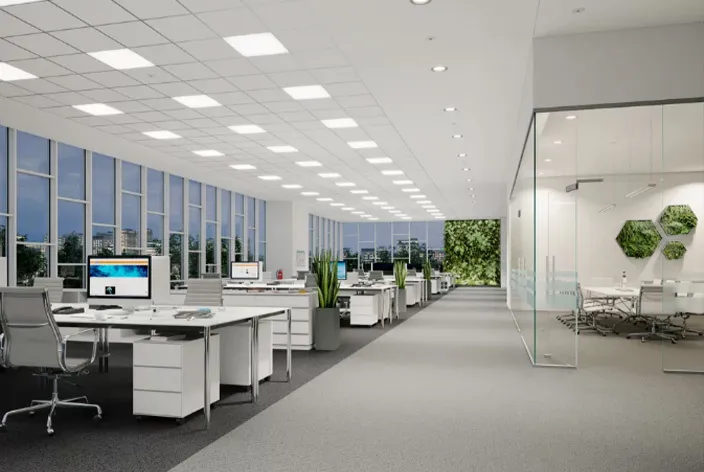
Let's be real – how many of us actually like working under those buzzing, headache-inducing fluorescent lights? You know the ones: that old-school office lighting that leaves everyone squinting at screens and feeling exhausted by 3 PM? Turns out, it's not just in your head. That flickering glow literally drains your energy and focus.
Enter LED panel lights – the unsung heroes transforming dreary workplaces into vibrant, human-centered spaces. They're not just bulbs; they're productivity boosters disguised as ceiling fixtures. Think about that coffee shop where you accidentally knocked out three hours of focused work without even realizing it. That natural, easy-on-the-eyes lighting? That's what LED panels bring to your office.
"We spend a third of our lives at work – why settle for lighting that makes us feel like we're in a dentist's waiting room? LED panels flip the script by mimicking sunlight, calming our nerves, and keeping our brains switched on."
Our bodies run on circadian rhythms – natural 24-hour cycles telling us when to be alert and when to wind down. Traditional office lighting? It basically throws sand in those biological gears. When your fluorescent tubes blast the same harsh, blue-heavy light all day long, your brain gets confused. It's like being jet-lagged without leaving your desk.
The proof isn't just anecdotal. Studies show workers in poorly lit spaces take 15-20% longer to complete tasks and make significantly more errors. Ever found yourself rereading the same email three times in the afternoon? That's the lighting sabotaging your focus.
Here's the kicker: our bodies crave real daylight. Natural light triggers serotonin production – that feel-good chemical keeping us calm and focused. Without it? Cortisol (the stress hormone) hijacks your system, leaving you anxious and scattered.
This explains why LED panels designed with natural light technology create such tangible benefits:
LED panels aren't just about throwing light around – they're precision tools that address specific physical and mental pain points in modern offices.
Office worker confession: "Before our LED upgrade, I'd get home with pounding headaches every day. Now? I actually feel human after work. Turns out not all light is created equal!"
Ever tried reading text on a monitor while reflections from overhead lights danced across your screen? That glare war isn't just annoying – it forces constant pupil adjustments that strain your eyes and exhaust your focus.
LED panels provide the perfect solution with:
Remember those old halogen lamps turning your office into a sauna by lunchtime? LED panels sidestep this completely. They produce dramatically less heat than traditional lighting:
| Lighting Type | Heat Output | Energy Waste as Heat |
|---|---|---|
| Traditional Fluorescent | Significant (feel the fixture) | ~30% |
| LED Panel Lights | Minimal (barely warm) | <5% |
Lower heat means AC systems work less, creating quieter workspaces and slashing cooling costs – a double win for comfort and budgets.
Beyond the human factors, LED panels deliver measurable financial wins that make CFOs smile – especially when considering large-scale commercial lighting solutions.
The numbers speak volumes: LED panels consume 60-70% less energy than fluorescent lighting. For a mid-sized office with 100 fixtures running 10 hours/day:
Even better? Unlike fluorescents that dim over time, LEDs maintain consistent brightness throughout their lifespan.
While energy savings are easy to quantify, the productivity gains deliver even greater returns. Data shows:
0.7% productivity increase attributed to optimized lighting – which translates to 3 extra productive hours per employee monthly. For a 50-person company, that's 150 extra hours of focused work every month without hiring anyone.
Combine this with reduced absenteeism (fewer headaches, eye strain) and fewer errors (improved focus) and the ROI extends far beyond electricity bills.
Not all white light is equal. LED panels come with selectable color temperatures:
The key is mixing these strategically. Your brainstorming space shouldn't have the same clinical lighting as your data entry team's area.
Modern panels take this further with tunable systems that automatically adjust:
These transitions subtly support natural energy cycles. Installation isn't complicated either – most panels retrofit directly into existing fluorescent grid ceilings without rewiring.
At its core, lighting redesign isn't about technical specs – it's about acknowledging how environmental quality affects human experience. Offices with thoughtfully implemented LED panels create:
Simple upgrade tip: Start with your most fatigue-prone areas – IT departments, design studios, or windowless meeting rooms. Measure productivity metrics like error rates before/after. The results will convince even skeptical stakeholders.
Dismissing office lighting as just "keeping the lights on" misses its profound impact. The right lighting solution becomes an invisible partner in productivity – easing eye strain before it starts, maintaining concentration through long afternoons, and creating spaces where people actually want to do their best work.
With LED panels providing such powerful returns – both human and financial – upgrading outdated lighting transitions from expense to investment. And in today's war for talent and efficiency, creating spaces where employees feel physically comfortable and mentally sharp isn't just nice to have. It's leadership.
The ultimate win? When employees walk into your thoughtfully lit office and feel that subconscious sense of ease – that moment they think "This place gets it" instead of reaching for aspirin. That's when lighting stops being overhead fixtures and becomes a culture statement. And that? That's priceless.
Recommend Products












