

In the quiet hum of a construction site at dawn, there's a shift happening—one that goes beyond the clink of hammers or the rumble of trucks. It's a shift in how we build, driven by a collective realization: the materials we choose today shape the air we breathe, the communities we live in, and the planet we leave for tomorrow. For decades, the building industry has leaned on practices that prioritized speed and cost over sustainability, but today, a new generation of suppliers is rewriting that script. Among them, porcelain slab tile for wall suppliers stand out—not just for the beauty and durability of their products, but for their unwavering commitment to low-carbon production. This isn't just about selling materials; it's about partnering with architects, contractors, and homeowners to build spaces that honor both human needs and environmental health.
At the heart of this movement is a simple truth: eco-friendly building materials don't have to compromise on quality, style, or functionality. In fact, they often enhance them. Take porcelain slab tiles, for example. These sleek, versatile panels have long been a favorite for walls in homes, offices, and public spaces, thanks to their resistance to moisture, scratches, and fading. But what if they could also carry a smaller environmental footprint? That's the question driving innovation at forward-thinking suppliers, who are reimagining every step of the production process—from raw material sourcing to energy use to waste management—to cut carbon emissions without cutting corners.
This article dives into the world of eco-conscious building material supply, focusing on how porcelain slab tile for wall solutions are leading the charge, and how suppliers are expanding their offerings to include other sustainable options like bamboo charcoal board wall panels, WPC wall panels, and Class A fireproof CPL inorganic boards. It's a story of progress, partnership, and the quiet power of choice—because when a supplier commits to sustainability, they're not just selling a product; they're empowering their clients to build better, too.
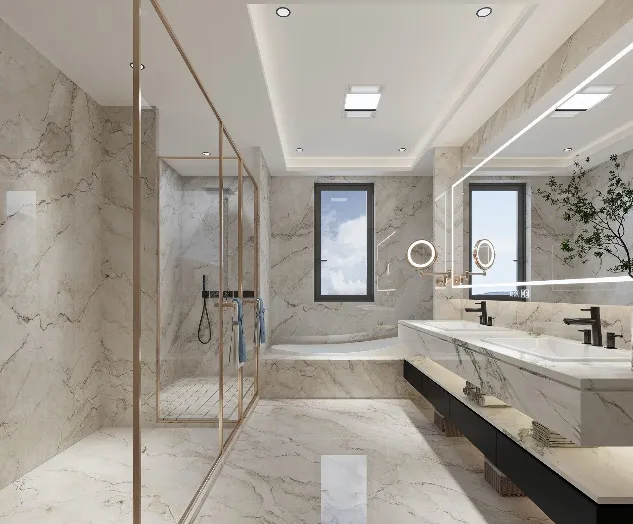
Let's start with the basics: what exactly are porcelain slab tiles, and why have they become a go-to for modern wall solutions? Porcelain slab tiles are large, thin panels made from refined clay and minerals, fired at extremely high temperatures (often over 1200°C) to create a dense, non-porous material. Unlike traditional ceramic tiles, which are thicker and more porous, porcelain slabs offer a seamless, elegant look that can mimic natural stone, wood, or even concrete—all while being lighter, easier to install, and more resistant to daily wear and tear. For walls, this means a surface that can withstand humidity in bathrooms, heavy foot traffic in commercial lobbies, and the chaos of busy family homes, all while maintaining its beauty for decades.
But for eco-minded suppliers, the appeal of porcelain slab tiles goes deeper than aesthetics. Traditional porcelain production has historically been energy-intensive, relying on fossil fuels to power kilns and generate high heat. The result? A significant carbon footprint that contradicts the growing demand for sustainable building practices. That's where innovation comes in. Today's leading porcelain slab tile for wall suppliers are reengineering their factories to run on renewable energy—think solar panels on rooftops, wind turbines nearby, or biogas from organic waste—to power those high-temperature kilns. Others are investing in energy-efficient machinery that reduces electricity use by up to 30%, or switching to low-carbon fuels like hydrogen, which burns cleanly without releasing CO2.
Take, for example, a supplier based in Saudi Arabia that recently revamped its production line. By installing a 5-megawatt solar array on its factory roof, the company now meets 40% of its energy needs from the sun, slashing its annual carbon emissions by over 2,000 tons. "We used to see sustainability as a 'nice-to-have'," says a production manager there. "Now, it's the backbone of how we operate. Our clients—whether they're building a hospital, a school, or a luxury villa—aren't just asking for quality tiles anymore. They're asking, 'What's your carbon footprint?' And we're proud to have an answer they can feel good about."
Raw material sourcing is another area where suppliers are making strides. Traditional porcelain production uses virgin clay, which requires mining and can disrupt local ecosystems. Eco-friendly suppliers, however, are turning to recycled materials: crushed porcelain waste from previous production runs, recycled glass, and even industrial byproducts like fly ash (a byproduct of coal-fired power plants, which would otherwise end up in landfills). By incorporating these recycled ingredients—sometimes up to 20% of the total mix—suppliers reduce the need for new mining, lower transportation emissions (since recycled materials are often sourced locally), and divert waste from landfills. The result? A tile that's just as strong and beautiful as its traditional counterpart, but with a fraction of the environmental impact.
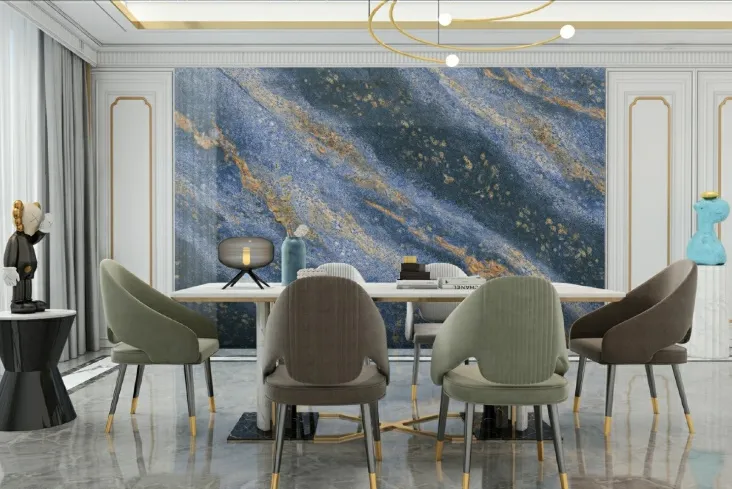
While porcelain slab tiles are a cornerstone of eco-friendly wall design, the most innovative suppliers know that sustainability is a holistic concept. That's why many are expanding their offerings to include a range of green wall solutions, ensuring that clients can source everything from accent walls to entire building facades from a single, trusted partner. Let's explore three standout options that are gaining traction in both residential and commercial projects: bamboo charcoal board wall panels, WPC wall panels, and Class A fireproof CPL inorganic boards.
Walk into a home or office finished with bamboo charcoal board wall panels, and you might notice something subtle but profound: the air feels fresher, cleaner, as if you've stepped into a forest. That's no accident. Bamboo charcoal, made by heating bamboo at high temperatures in the absence of oxygen, is a natural air purifier, with millions of tiny pores that trap pollutants like formaldehyde, benzene, and allergens. When integrated into wall panels, it acts as a silent guardian, continuously filtering indoor air and reducing the risk of respiratory issues—a feature that's especially valuable in spaces like schools, hospitals, and nurseries, where air quality directly impacts health.
Bamboo itself is a sustainability superstar. Unlike hardwood trees, which can take decades to mature, bamboo grows rapidly—some species reach full height in just 3–5 years—and requires no pesticides or fertilizers to thrive. It also absorbs more carbon dioxide and releases more oxygen than most trees, making it a carbon-negative resource. For bamboo charcoal board wall panel suppliers, this means that every panel produced is not just a building material, but a tool for fighting climate change. "We source our bamboo from sustainable plantations in Southeast Asia, where farmers practice rotational harvesting to ensure the forests regenerate," explains a supplier specializing in eco-friendly interiors. "When a client chooses our bamboo charcoal panels, they're not just getting a beautiful wall—they're supporting a supply chain that heals the planet, one stalk at a time."
In residential settings, these panels are becoming a favorite for bedrooms and living rooms, where homeowners prioritize both style and wellness. Imagine a young family in Riyadh, decorating their new home. They choose bamboo charcoal panels for their daughter's bedroom, knowing that the panels will filter out dust mites and pet dander, helping her sleep easier with her allergies. Or a yoga studio in Jeddah, where the soft, warm tones of bamboo charcoal walls create a calming atmosphere, while the air-purifying properties enhance the sense of relaxation. These are the stories that make sustainable materials feel personal—not just "green," but deeply human.
For spaces that demand both style and rugged durability—think commercial lobbies, restaurant exteriors, or high-traffic hallways—WPC (wood-plastic composite) wall panels are emerging as a top choice. Made from a blend of recycled wood fibers and plastic (often from post-consumer waste like plastic bottles and bags), WPC panels offer the warmth and texture of wood without the maintenance headaches: they're resistant to rot, insects, and moisture, and never need painting or staining. But what truly sets them apart is their sustainability story. By diverting wood waste and plastic waste from landfills and giving them new life as functional, beautiful wall panels, WPC wall panel suppliers are turning environmental problems into solutions.
Consider the numbers: a single ton of WPC panels can contain up to 500 kilograms of recycled plastic, which is roughly 10,000 plastic bottles that would otherwise end up in oceans or landfills. For suppliers, this isn't just about being eco-friendly—it's about circular economy in action. "We partner with local recycling facilities to collect plastic waste, clean it, and process it into pellets," says a WPC production specialist. "Then we mix those pellets with recycled wood fibers from furniture factories and sawmills. The result is a panel that's stronger than wood, more durable than plastic, and 100% recyclable at the end of its life. It's a closed loop, and that's the future of manufacturing."
In commercial projects, WPC panels are proving their worth. A hotel chain in Dubai recently renovated its outdoor walkways and lobby walls using WPC panels, drawn to their resistance to the region's harsh sun and occasional rain. "We used to replace wooden panels every 3–4 years because of rot and termites," says the hotel's facilities manager. "With WPC, we expect them to last 15+ years. The upfront cost was a bit higher, but the long-term savings—both financial and environmental—are undeniable." For homeowners, too, WPC panels offer peace of mind: a beach house in Jeddah, where saltwater air would quickly degrade traditional wood, can now enjoy the look of driftwood walls without the constant upkeep. It's sustainability that works as hard as the people who use it.
When it comes to buildings like hospitals, schools, and senior centers, safety is non-negotiable. That's where Class A fireproof CPL inorganic boards come in. These panels are engineered to resist fire, smoke, and toxic fumes, meeting the highest safety standards (Class A fire rating, meaning they're non-combustible and won't contribute to fire spread). But in the past, fireproof materials often relied on harmful chemicals or energy-intensive production processes, leaving a conflicting legacy: protecting lives while harming the planet. Today's Class A fireproof CPL inorganic board for hospital and school suppliers are changing that, creating panels that are both life-saving and eco-friendly.
CPL (continuous pressure laminates) inorganic boards are made from mineral-based materials like cement, glass fibers, and natural minerals, which are inherently fire-resistant. Unlike traditional fireproof boards that may contain asbestos or formaldehyde, these inorganic boards are free from harmful VOCs (volatile organic compounds), making them safe for indoor air quality—a critical feature for hospitals treating patients with respiratory issues or schools where children spend hours each day. Suppliers are also optimizing production by using low-energy curing processes and sourcing minerals from local quarries to reduce transportation emissions. "A hospital in Riyadh recently chose our CPL boards for their pediatric wing," says a supplier rep. "They didn't just want fire safety—they wanted materials that wouldn't off-gas harmful chemicals, protecting the most vulnerable patients. That's the kind of project that reminds us why sustainability and safety go hand in hand."
Imagine a school in Dammam, undergoing a renovation after a small fire scare. The administrators prioritize fire safety but also want to create a healthy environment for students. They choose Class A fireproof CPL inorganic boards for the corridors and classrooms, knowing the boards will slow the spread of fire in an emergency and keep indoor air clean. During a parent-teacher night, a mother of a child with asthma approaches the principal. "I used to worry about my son breathing in chemicals from new construction," she says. "Now, I know these walls are keeping him safe in more ways than one." It's moments like these that bridge the gap between technical specs and real human impact—proof that eco-friendly materials aren't just good for the planet; they're good for people, too.
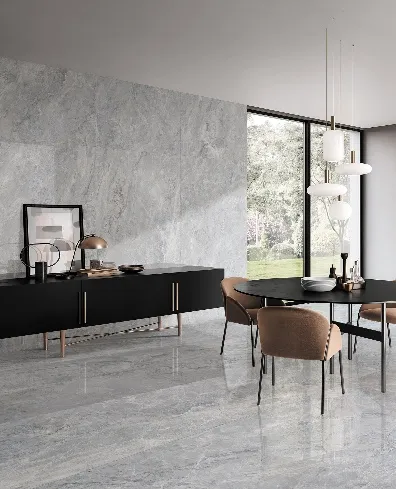
With so many sustainable wall options available, how do clients choose the right one for their project? To help, we've compiled a comparison of the key eco-friendly wall solutions offered by leading suppliers, highlighting their carbon footprints, unique benefits, and ideal applications.
| Material | Carbon Footprint (kg CO2e per m²) | Key Eco Features | Best For |
|---|---|---|---|
| Porcelain Slab Tiles | 8–12 (traditional); 4–6 (low-carbon production) | Recycled materials (10–20%), renewable energy-powered production, long lifespan (20+ years) | Bathrooms, kitchens, commercial lobbies (high moisture, high traffic) |
| Bamboo Charcoal Board Wall Panels | 3–5 | Renewable bamboo sourcing, air-purifying properties, low-VOC, biodegradable at end of life | Bedrooms, nurseries, yoga studios (wellness-focused spaces) |
| WPC Wall Panels | 5–7 | Up to 50% recycled plastic/wood waste, no deforestation, 100% recyclable | Outdoor walls, restaurant exteriors, high-traffic commercial areas |
| Class A Fireproof CPL Inorganic Boards | 6–8 | Mineral-based (no harmful chemicals), low-energy curing, fire safety + low-VOC | Hospitals, schools, senior centers (safety-critical spaces) |
*Carbon footprint estimates based on industry averages for low-carbon production methods. Traditional production methods may have 2–3x higher emissions.
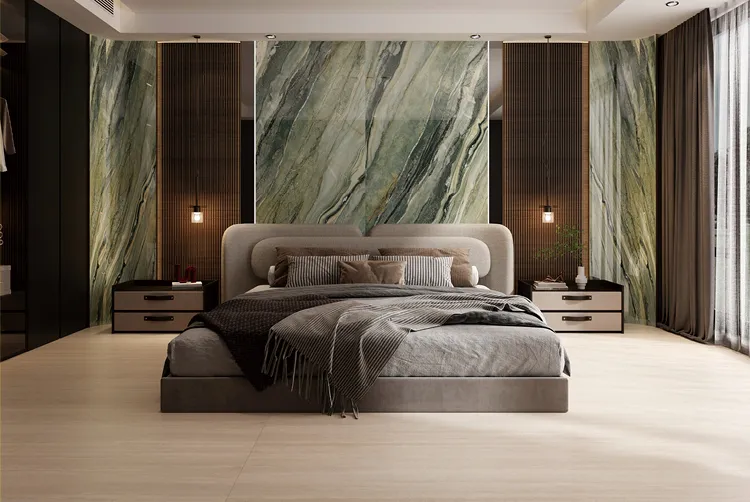
For architects, contractors, and developers, working with a one-stop architectural solution provider—one that offers everything from porcelain slab tiles to bamboo charcoal panels to fireproof CPL boards—isn't just a convenience; it's a strategic advantage. It streamlines communication, ensures consistency in quality and sustainability standards, and often leads to cost savings (thanks to bulk ordering and reduced shipping emissions from a single supplier). But beyond logistics, it fosters a partnership built on shared values. When a supplier understands the full scope of a project—residential or commercial—they can offer tailored advice, suggesting combinations of materials that maximize sustainability without compromising on design or budget.
Case Study: Green School Renovation in Riyadh
In 2024, a public school in Riyadh embarked on a renovation to improve safety, reduce energy costs, and create healthier classrooms. The project manager partnered with a local one-stop supplier specializing in eco-friendly materials. Together, they chose:
• Class A fireproof CPL inorganic boards for corridor walls (fire safety + low-VOC)
• Bamboo charcoal board panels for classrooms (air purification for students with allergies)
• Porcelain slab tiles for the cafeteria (easy to clean, moisture-resistant)
The result? A 30% reduction in indoor air pollutants, a 15% lower carbon footprint than traditional renovation materials, and students reporting better focus and fewer absences due to respiratory issues. "Working with a single supplier made all the difference," the project manager notes. "They didn't just sell us materials—they helped us design a space that puts our students' health and the planet first."
Residential projects, too, benefit from the one-stop approach. Consider a family building a villa in Jeddah, dreaming of a home that's both luxurious and eco-friendly. They want a spa-like bathroom (porcelain slab tiles), a cozy home office (bamboo charcoal walls), and a durable outdoor patio (WPC panels). Instead of coordinating with three separate suppliers—each with their own sustainability claims—a one-stop supplier can deliver all these materials, ensuring that every product meets the same low-carbon standards. The family gets peace of mind, knowing their home is beautiful, healthy, and kind to the planet, while the supplier builds a relationship that extends beyond a single sale.
"Our clients aren't just customers—they're partners in this sustainability journey," says a sales director at a leading Saudi Arabia building materials supplier. "When a homeowner chooses us for their whole-house customization, or a developer trusts us with a commercial project, they're not just buying walls or floors. They're investing in a vision: a world where buildings don't take from the planet, but give back. And that's a vision we're honored to help them bring to life."
As the demand for eco-friendly building materials grows, suppliers are already looking to the future, investing in research and development to push the boundaries of what's possible. One exciting area is carbon capture and storage (CCS) in production—technology that captures CO2 emissions during manufacturing and repurposes them, for example, to strengthen concrete or create synthetic fuels. Some porcelain slab tile suppliers are experimenting with CCS, aiming to reduce their carbon footprint to near-zero in the next decade.
Another trend is circular design: creating materials that are not just recyclable, but recyclable into the same product . Imagine a WPC wall panel that, after 20 years of use, is collected by the supplier, broken down, and reprocessed into a new WPC panel—no loss in quality, no waste. Suppliers are also exploring bio-based materials, like mycelium (mushroom roots) for insulation or algae-based coatings for tiles, which grow quickly and sequester carbon as they develop.
But perhaps the most promising innovation is transparency. Today's clients don't just want to hear that a product is "eco-friendly"—they want proof. Leading suppliers are responding with blockchain technology to track materials from sourcing to production, allowing clients to scan a QR code on a tile or panel and see its full carbon footprint, recycled content percentage, and energy source. "Transparency builds trust," a sustainability consultant explains. "When a client can see exactly where their materials come from and how they're made, they feel confident that their choice is making a real difference."
In the end, the story of eco-friendly building material suppliers isn't just about products or production processes. It's about people: the families breathing cleaner air in their bamboo-walled homes, the students learning in safer, healthier classrooms with fireproof CPL boards, the communities taking pride in buildings that reflect their values. Porcelain slab tile for wall suppliers, bamboo charcoal board wall panel suppliers, WPC wall panel suppliers—they're all part of a larger movement, one that says: building better doesn't have to mean sacrificing the planet. In fact, it's the only way forward.
As we look to the future, the choice is clear: we can continue building with materials that take more than they give, or we can partner with suppliers who see sustainability not as a marketing buzzword, but as a responsibility. For architects, contractors, and homeowners, the power to drive change lies in every decision—every tile, every panel, every wall. And for suppliers, the opportunity is equally clear: to lead with purpose, to innovate relentlessly, and to prove that business success and environmental stewardship can go hand in hand.
So the next time you walk into a building—whether it's a hospital, a school, or a home—take a moment to look around. The walls you see might just be more than walls. They might be a testament to a better way of building: one that honors the past, serves the present, and protects the future. And that, perhaps, is the most beautiful thing about sustainable building materials of all.
Recommend Products











