
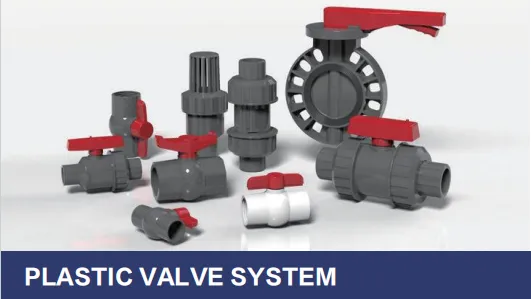
In an era where sustainability isn't just a buzzword but a critical business imperative, the construction and building materials industry is undergoing a quiet revolution. From skyscrapers to residential homes, every component—right down to the pipes and valves that keep buildings functional—is being reimagined with the planet in mind. Among these, plastic valve systems play a yet vital role: controlling the flow of water, gas, and other fluids, they're the unsung heroes of modern infrastructure. But not all plastic valve system suppliers are created equal. Today, we're diving into the world of eco-friendly plastic valve system suppliers, exploring how they stand apart from conventional counterparts, and why this difference matters for builders, homeowners, and the environment alike.
Let's start with the basics: plastic valve systems have long been a staple in construction due to their affordability, corrosion resistance, and ease of installation. But traditional plastic valves—and the suppliers who make them—have historically prioritized cost and convenience over environmental impact. Think about it: many conventional systems are made from virgin plastics derived from fossil fuels, manufactured using energy-heavy processes, and designed with little thought for recyclability. The result? A lifecycle that contributes to carbon emissions, plastic waste, and long-term environmental harm.
Eco-friendly plastic valve system suppliers, by contrast, are flipping that script. They're not just selling products—they're selling a commitment to sustainability, woven into every step from raw material sourcing to end-of-life disposal. This shift isn't just good for the planet; it's increasingly becoming a requirement for projects aiming for green certifications (like LEED or BREEAM) and for clients who want to align their builds with global climate goals. But what exactly makes a supplier "eco-friendly," and how do they differ from the conventional players we've grown used to?
Before we compare, let's clarify what we mean by "eco-friendly." These suppliers distinguish themselves through three core pillars: sustainable materials, responsible manufacturing, and circular design. Let's break each down:
Sustainable Materials: Instead of relying solely on virgin plastics, eco-friendly suppliers often use recycled or bio-based materials. For example, some upvc pipe suppliers now incorporate post-consumer recycled (PCR) plastic into their UPVC formulations, reducing the need for new petroleum-based inputs. Others experiment with bioplastics derived from plant starches, though these are still emerging in the valve system space.
Responsible Manufacturing: It's not just what goes into the product, but how it's made. Eco-friendly suppliers invest in energy-efficient factories—think solar panels, wind power, or biomass energy—to reduce carbon emissions during production. They also prioritize water conservation, waste reduction, and safe, low-VOC (volatile organic compound) processes that minimize harm to workers and local communities.
Circular Design: A truly eco-friendly product is designed to have a second life. This means valves and pipes that are easy to disassemble, recycle, or repurpose at the end of their lifespan. Some suppliers even offer take-back programs, ensuring old products don't end up in landfills but are instead melted down and reused to make new components.
To appreciate the difference, let's first understand how conventional plastic valve system suppliers operate. For decades, the industry has thrived on a "take-make-dispose" model. Here's a typical scenario: a conventional supplier sources virgin PVC or PE (polyethylene) from petrochemical companies, uses energy-intensive machinery to mold valves and fittings, and ships them to clients in non-recyclable packaging. The focus is on producing high volumes at low costs, often cutting corners on sustainability to stay competitive.
Take PVC DWV (Drain-Waste-Vent) pipes, for example. A conventional pvc dwv pipe supplier might prioritize thickness and rigidity over material efficiency, using more plastic than necessary. The manufacturing process could involve high heat and toxic additives (like phthalates, used to make plastic flexible), which release harmful emissions. And when these pipes reach the end of their life—say, after 20-30 years—they're often buried in landfills, where they can take centuries to decompose, leaching chemicals into soil and water in the process.
Conventional suppliers also rarely prioritize transparency. Ask a typical sales rep about the carbon footprint of their products or the percentage of recycled material used, and you might get a vague answer or a deflection. Sustainability, for them, is an afterthought, not a core value.
To make this tangible, let's compare eco-friendly and conventional plastic valve system suppliers across five critical areas. The table below summarizes the contrasts, but we'll dive deeper into each afterward:
| Criteria | Eco-Friendly Plastic Valve System Suppliers | Conventional Plastic Valve System Suppliers |
|---|---|---|
| Material Sourcing | Uses recycled plastics (PCR), bio-based materials, or FSC-certified inputs; minimizes virgin fossil fuel plastics. | Relies heavily on virgin plastics derived from petroleum; little to no recycled content. |
| Manufacturing Emissions | Invests in renewable energy (solar, wind) and energy-efficient processes; carbon-neutral or low-carbon production. | Uses fossil fuel-based energy; higher carbon footprint due to inefficient machinery and processes. |
| Product Lifespan & Durability | Designs for longevity (50+ years in some cases) with corrosion-resistant, UV-stable materials to reduce replacement needs. | May prioritize cost over durability; shorter lifespans (20-30 years) leading to more frequent replacements and waste. |
| End-of-Life Management | Offers take-back programs; products are recyclable or biodegradable; provides guidance on proper disposal/recycling. | No formal take-back systems; products often end up in landfills; limited recyclability due to mixed materials/additives. |
| Certifications & Transparency | Discloses carbon footprint, recycled content, and manufacturing practices; holds certifications like ISO 14001, EPD (Environmental Product Declaration). | Limited transparency; few sustainability certifications; focuses on product specs (pressure rating, size) over environmental impact. |
Let's start with the foundation: materials. Conventional suppliers often stick to virgin plastics because they're cheap and consistent. But eco-friendly suppliers are proving that recycled materials can be just as reliable—with the added bonus of reducing waste. For example, a forward-thinking plastic valve system supplier might use 30-50% PCR plastic in their valve bodies, sourced from recycled bottles, packaging, or even old pipes. This not only diverts plastic from landfills but also cuts down on the energy required to extract and refine crude oil into new plastic.
Some suppliers go further, exploring bio-based alternatives. While still niche, bioplastics made from sugarcane or cornstarch are being tested in low-pressure valve applications. Imagine a valve that, at the end of its life, breaks down into natural compounds instead of persisting as microplastics—sounds like science fiction, but it's already in development.
Even when using traditional materials like UPVC or PPR, eco-friendly suppliers are choosy. A responsible ppr pipe and fitting supplier, for instance, might source PPR (polypropylene random copolymer) from manufacturers that use renewable energy in production, ensuring the material itself has a lower carbon footprint before it even reaches the valve factory.
The manufacturing process is where the environmental impact of valve systems really starts to add up. Conventional factories often run on coal or natural gas, with machinery that's decades old and inefficient. The result? High energy use and significant carbon emissions. Eco-friendly suppliers, by contrast, are retooling their facilities with sustainability in mind.
Take a supplier that's invested in solar panels on its factory roof. By generating its own electricity, it reduces reliance on fossil fuels and cuts emissions. Others use heat recovery systems to capture and reuse energy from molding processes, or switch to low-emission fuels like biogas. Water usage is another area: conventional factories might waste thousands of gallons daily on cooling and cleaning, while eco-friendly ones recycle water through closed-loop systems, returning only minimal, treated wastewater to local ecosystems.
Additives matter too. Conventional valves often contain lead, phthalates, or other toxic chemicals to enhance performance. Eco-friendly suppliers avoid these, opting for non-toxic alternatives that are safer for workers, installers, and the environment. For example, a valve designed for potable water systems might use food-grade lubricants instead of chemical-heavy ones, ensuring no harmful substances leach into drinking water.
Here's a common misconception: eco-friendly products are flimsy or short-lived. Nothing could be further from the truth. In fact, eco-friendly plastic valve system suppliers often design their products to last longer than conventional ones—and for good reason. A valve that needs replacement after 15 years is worse for the environment than one that lasts 50, even if the latter costs more upfront. Longer lifespans mean fewer resources used in production, less waste, and lower overall carbon footprints.
How do they achieve this? Through better materials and engineering. For example, UPVC valves from eco-friendly upvc pipe suppliers are often reinforced with fiberglass or additives that resist UV degradation, making them suitable for outdoor use without cracking or weakening over time. PPR fittings might feature thicker walls or precision threading to prevent leaks, reducing the need for repairs or replacements. The result? A product that not only performs better but also reduces long-term environmental impact.
The "end-of-life" phase is where conventional suppliers often drop the ball. Once a valve or pipe is removed during renovation or demolition, it's typically tossed in a dumpster, destined for a landfill. Eco-friendly suppliers, however, are pioneering circular models to keep products in use. Some offer take-back programs: when a building is renovated, the supplier collects old valves, grinds them down, and repurposes the plastic into new components. Others design products for easy recycling by avoiding mixed materials (e.g., plastic valves with metal cores that are hard to separate) or using universal recycling codes to simplify processing.
Even better, some eco-friendly systems are designed to be modular, allowing parts to be replaced instead of the entire valve. A leaky seal, for example, can be swapped out, extending the valve's life by years. This "repairability" not only reduces waste but also saves money for builders and homeowners in the long run.
Anyone can claim to be "eco-friendly," but eco-friendly suppliers back it up with data and certifications. Look for suppliers that publish Environmental Product Declarations (EPDs), which quantify a product's carbon footprint, water usage, and waste generation from cradle to gate. ISO 14001 certification is another red flag—this international standard ensures the supplier has a robust environmental management system in place, with goals to reduce impact over time.
Transparency is key. A trustworthy supplier will readily share details about their material sources, manufacturing processes, and recycling programs. They might even invite clients to tour their factories or provide third-party audit reports. Conventional suppliers, by contrast, often keep this information under wraps, making it hard to verify their sustainability claims (if they make any at all).
Still on the fence? Let's talk about real impact. Consider a mid-sized commercial building project: it might require hundreds of valves, miles of pipes, and countless fittings. Choosing an eco-friendly plastic valve system supplier over a conventional one could reduce the project's carbon footprint by tens of tons. Multiply that across thousands of projects worldwide, and the collective impact is staggering.
Take the example of a hospital in Riyadh, Saudi Arabia, that recently renovated its plumbing system. By partnering with an eco-friendly plastic valve system supplier and specifying recycled UPVC pipes and low-emission valves, the project achieved a 35% reduction in embodied carbon (the carbon emitted during material production and manufacturing) compared to using conventional materials. Plus, the valves' longer lifespan means the hospital won't need to replace them for at least 40 years, saving on maintenance costs and further reducing environmental impact.
Or consider a residential developer in Europe that switched to a ppr pipe and fitting supplier using 100% renewable energy in production. Over 500 homes, the developer cut its annual carbon emissions by 120 tons—enough to offset the energy use of 15 average households for a year. These aren't small wins; they're steps toward a more sustainable built environment.
Ready to make the switch? Here's how to find a reputable eco-friendly plastic valve system supplier:
1. Ask for certifications: Look for ISO 14001, EPDs, or third-party green certifications like Green Seal. These aren't just badges—they're proof of commitment.
2. Inquire about materials: What percentage of recycled content do they use? Do they source from responsible suppliers? A good supplier will have detailed answers.
3. Check manufacturing practices: Do they use renewable energy? What measures do they take to reduce waste and emissions? Ask for a sustainability report or factory tour.
4. Evaluate durability: Don't sacrifice performance for sustainability. Ask for test data on lifespan, pressure ratings, and resistance to corrosion or UV damage.
5. Look for take-back or recycling programs: A supplier that cares about end-of-life will have systems in place to keep products out of landfills.
Eco-friendly plastic valve system suppliers aren't just a niche market—they're the future of the industry. As builders, architects, and homeowners increasingly prioritize sustainability, the demand for products that align with environmental goals will only grow. Conventional suppliers can either adapt or risk being left behind, but the choice for clients is clear: partnering with eco-friendly suppliers isn't just good for the planet; it's good for business, too. From reduced long-term costs to green certifications that boost property values, the benefits are undeniable.
So the next time you're sourcing valves, pipes, or fittings, take a moment to ask: What's the story behind this product? Who made it, and at what cost to the environment? By choosing suppliers who prioritize sustainability, you're not just building structures—you're building a better future. And that's a legacy worth investing in.
Recommend Products












