
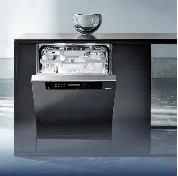
Let's cut straight to the chase: modern dishwashers can save more than just time—they can save our planet's most precious resource. But here's what most folks won't tell you upfront: not all "eco-friendly" dishwashers deliver on their promises. Water efficiency labels are more than just energy guide stickers – they're your roadmap to environmental impact and real cost savings.
Think about your kitchen sink for a second. That constant drip? It's nothing compared to the hidden water waste happening with outdated appliances. An inefficient dishwasher can guzzle up to 12 gallons per cycle , while the latest water-sipping models use just 2-3 gallons. That difference isn't just pennies on your bill—it's hundreds of gallons saved annually that protect stressed water systems.
Water efficiency labels look straightforward but pack complex science into a simple graphic. Two metrics matter most:
1. Annual water use: Calculated based on 4 cycles/week. The gold standard? Models under 2,500 gallons/year.
2. Water Factor (WF): Gallons per cycle per cubic foot capacity. Under 5 is exceptional; over 8 means keep shopping.
Don't overlook the ENERGY STAR® rating either. Water heating constitutes 90% of dishwasher energy use, meaning water efficiency and energy conservation go hand-in-glove.
• 8-12 gallons/cycle
• Up to 1,600 gallons/year
• 4+ kWh per cycle
• Frequent pre-rinsing needed
• Inefficient spray patterns
• 2.5-3.5 gallons/cycle
• As low as 500 gallons/year
• 0.5-1.5 kWh per cycle
• Soil sensors eliminate pre-wash
• Targeted spray technology
Let's get concrete with real numbers:
• Average household savings: 3,000+ gallons/year
• Equivalent to 45 full bathtubs
• Water bill savings: $50-$130/year
• Combined water/energy savings: $150+ annually
•
Carbon reduction:
Like taking a car off the road for 200+ miles
Imagine multiplying this across your neighborhood—conservation at scale without changing daily habits. That's the power behind an eco dishwasher upgrade.
Today's eco-models aren't just using less water—they're using it smarter:
1. Triple Filtration: Recirculates water through multiple filters, catching food particles without clogging
2. Targeted Spray Arms: Precision nozzles concentrate water where grime accumulates most
3. Moisture Sensors: Detects soil levels and automatically adjusts water volume
4. Heat Exchange Tech: Recaptures heat from final rinse for drying, cutting energy by 30%
Pairing your dishwasher with eco vinyl flooring creates an environmentally harmonious kitchen. Just like how efficient appliances conserve resources, sustainable floor materials reduce manufacturing waste while maintaining durability against water exposure.
Even the most efficient dishwasher needs smart operation:
• Load strategically - face soiled surfaces toward spray jets
• Run full loads whenever possible
• Scrape, don't rinse - modern enzymes need food particles
• Skip heated dry - air drying saves another 15% energy
• Clean filters monthly - clogged filters increase water use by 20%
We're seeing game-changing innovations on the horizon:
• Water recycling systems that filter and reuse rinse water
• Connection to greywater systems for garden irrigation
• AI-driven consumption tracking via smartphone apps
• Ultra-low WF models (under 2 gallons/cycle)
The next decade will see dishwashers transition from water users to part of home water management ecosystems.
The Bottom Line: Understanding water efficiency labels empowers you to make choices that ripple beyond your kitchen. Upgrading to a truly eco-friendly dishwasher combats water scarcity while saving tangible money—proving sustainability isn't sacrifice, but smart living.
Recommend Products












