
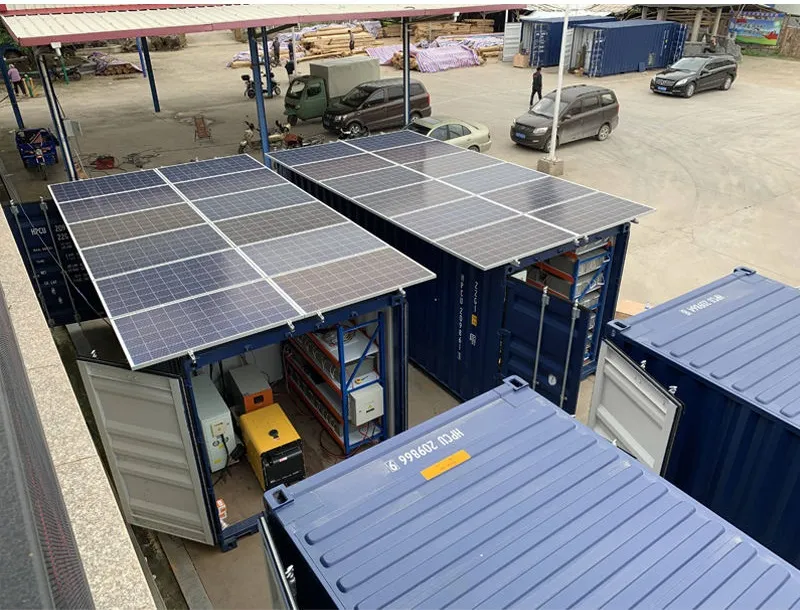
Imagine standing in the Atacama Desert – the driest non-polar desert on Earth – where mining operations power Chile's economy but face an invisible adversary: dust. Here, photovoltaic installations can lose up to 40% of their efficiency within weeks as fine particulate matter coats their surfaces. This isn't just about dirty panels; it's about millions in lost energy production and sustainability goals derailed by mineral-rich dust clouds unique to mining regions.
"Dust accumulation isn't a nuisance – it's an energy emergency," explains Dr. Gustavo Funes from Universidad de los Andes. "In northern Chile, we face a perfect storm: desert minerals, mining byproducts, and topography that traps particulates. Traditional cleaning methods fail against this complex cocktail."

Most mine operators start with manual cleaning – sending crews with squeegees across vast solar arrays. This approach creates its own problems:
Water consumption: Cleaning a 1MW solar plant can use 10 million liters annually – unthinkable in water-scarce regions
⚡️ Downtime: Panels offline during cleaning lose up to 5% of annual production
Cost escalation: Labor and water expenses often exceed $20,000/year per MW
Automated solutions like rotating brushes cause microfractures that ironically trap more dust over time. Even electrostatic systems struggle with Chile's unique dust composition where conductive minerals create unpredictable charge distributions.
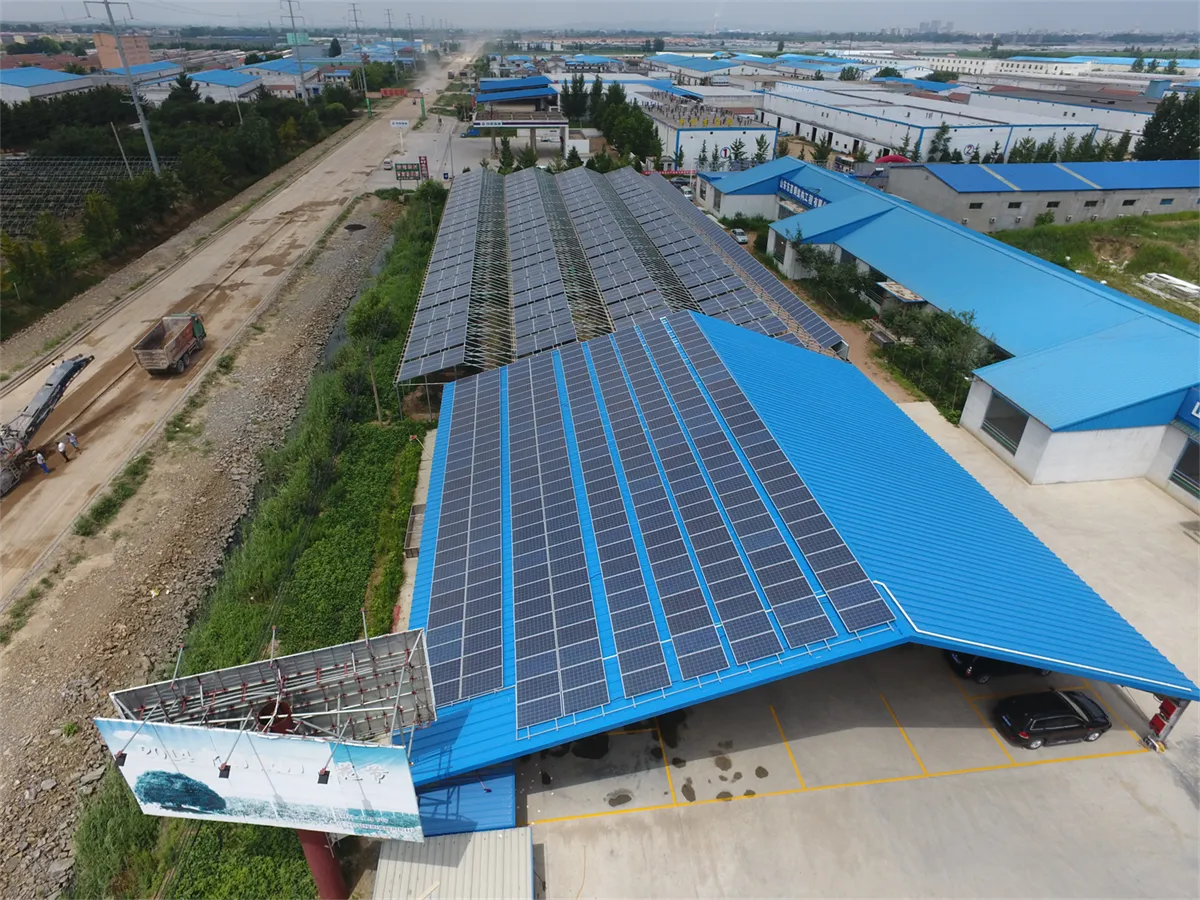
Recent breakthroughs from laboratories like Sharif University of Technology offer game-changing solutions through multi-functional coatings:
Layer 1: "Electro-Repel" Conductive Film
A transparent aluminum zinc oxide layer that acts like an invisible force field. When activated with low-voltage current (7kV), it creates repulsive fields that eject dust particles.
Layer 2: "Slip-Shield" Anti-Soiling Surface
Titanium dioxide nanoparticles embedded in a silica matrix create a self-cleaning surface that reduces dust adhesion by 300%. When UV light hits the surface, photocatalytic reactions break down organic residues.
Lab tests show these coatings achieve 97% dust repellency while boosting light transmission by 1% – a counterintuitive win since most coatings reduce light capture. For Chilean mines, this could mean preserving over 32% more annual energy yield compared to uncoated panels.
University researchers in Santiago have developed drone-based monitoring that transforms how mines approach dust management:
"Our single-pixel detection algorithms create granular contamination maps," says Dr. Funes. "Instead of cleaning entire arrays on schedules, mines can target precise coordinates showing efficiency loss exceeding 15%. This cuts cleaning frequency by half while maintaining optimal output."
The system identifies dust composition through spectral analysis – critical in mining areas where iron-rich particles require different cleaning protocols than silica dust. When combined with coating technology, it creates a responsive defense system:
1. Coatings minimize initial accumulation
2. Drones detect emerging hotspots
3. Targeted cleaning addresses residual buildup
4. Data optimizes future coating applications
Consider a typical copper mine with 50MW solar capacity:
$2.1 million/year saved on water (using coating + targeted cleaning)
18,500 fewer maintenance hours/year
7-9% net increase in energy yield
2.5 year return on investment for coating systems
But the benefits extend beyond spreadsheets. Solar installations are increasingly providing remote operations with emission-free power. Preserving their efficiency directly supports Chile's ambitious goal of carbon-neutral mining by 2050.
Transitioning to advanced dust management involves three phases:
Phase 1: Dust Auditing
Drone mapping establishes baseline contamination patterns and creates a "dust fingerprint" unique to each mine's location and operations.
Phase 2: Coating Integration
Field-applied nano-coatings retrofit existing panels during routine maintenance, applied by specialized teams in as little as 45 seconds per panel.
Phase 3: Responsive Maintenance Cycle
Continuous monitoring triggers cleaning only when and where efficiency drops below optimal thresholds, with proprietary formulations targeting specific mineral compositions.
Emerging technologies promise even greater gains:
Smart-Coatings 2.0
Phase-change materials that become hydrophobic during fog events - critical in coastal mining regions where morning moisture turns dust into concrete-like crusts.
AI Prediction Engines
Machine learning models that forecast dust events 72 hours in advance using weather patterns, operation schedules, and satellite imagery.
These advancements could eventually integrate with robotic cleaning fleets - an area where mining companies already excel with autonomous haulage systems.
Northern Chile possesses the world's highest solar radiation levels but also its most aggressive dust conditions. The solution isn't brute-force cleaning, but intelligent prevention systems where nano-engineered surfaces meet precise contamination monitoring. For mining companies, these innovations transform solar power from unpredictable supplement to reliable energy backbone.
The future isn't just cleaner panels – it's fundamentally reimagining how industrial solar installations survive and thrive in extreme environments. As the photovoltaic sector expands in mining regions from Copiapó to Calama, dust management becomes the critical link between potential and performance.
The revolution won't require massive infrastructure but rather a coating measured in micrometers and algorithms that read dust like words on a page. That's Chile's real mineral treasure: not just copper beneath the ground, but the inexhaustible solar wealth above – now finally protected against its desert rival.
Recommend Products












