


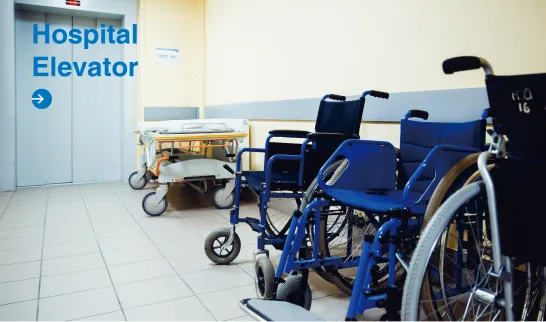
Walk into any hospital, and you'll notice that the elevators feel different from those in office buildings or shopping malls. That's because they're designed for a very specific purpose: to support life-saving care. In critical care units (CCUs), ICUs, and emergency departments, elevators are in constant use—24 hours a day, 7 days a week, 365 days a year. They don't get weekends off, and they can't afford to break down during a shift change or a medical emergency. Let's break down the unique challenges these elevators face:
- Unpredictable Loads: One minute, an elevator might be carrying a patient on a stretcher with medical staff and monitors; the next, it could be transporting a heavy MRI machine or a cart full of sterile supplies. This means the elevator's structure and mechanics need to handle variable weights without strain.
- Strict Hygiene Standards: In critical care, infection control is everything. Elevator surfaces must be easy to disinfect, resistant to bacteria growth, and designed to prevent the accumulation of dust or moisture. Even the smallest crevice could become a breeding ground for pathogens—something no healthcare facility can risk.
- Silent but Urgent Operation: Imagine a patient in respiratory distress being wheeled into an elevator that jolts or makes loud noises. Stress levels are already high, and unnecessary noise can disrupt both patients and medical teams. Hospital elevators need to run smoothly, quietly, and with precise control over acceleration and deceleration.
- Emergency Readiness: Power outages, natural disasters, or technical glitches can't take these elevators offline. Backup power systems, emergency communication tools, and fail-safe mechanisms are non-negotiable to ensure they can operate even in crisis situations.
These challenges aren't just "nice-to-haves"—they're regulatory requirements. Healthcare facilities must comply with strict codes, such as those set by the World Health Organization (WHO) or local authorities like Saudi Arabia's Ministry of Health. For a saudi arabia building materials supplier like Coloria, understanding these regulations isn't just about checking boxes; it's about embedding compliance into every step of the manufacturing process.










