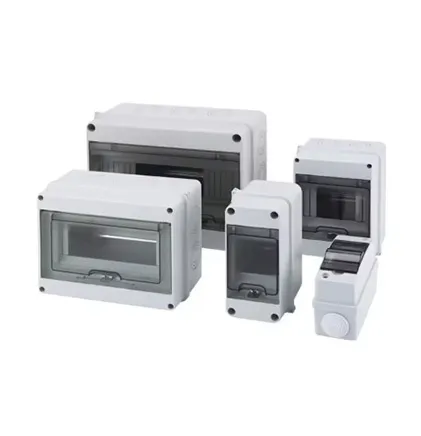
Distribution boxes form the backbone of industrial operations - these workhorses face constant use cycles while protecting critical components. The locking mechanisms controlling access to these containers stand as literal gatekeepers of functionality. Through extensive durability testing, manufacturers ensure these locks withstand daily punishment while providing unwavering security. This deep dive explores how these tiny components prove their mettle against relentless industrial pressures.
The Critical Role of Locks in Distribution Systems
When technicians reach for distribution boxes – whether accessing electrical control points, communication junctions, or utility access hubs – they need reliable entry points. These containers safeguard essential systems in environments like manufacturing plants, communication centers, and infrastructure networks. The locking mechanisms installed on them serve as the first line of defense against unauthorized access while providing smooth entry to authorized personnel. Without durable, dependable locking systems, distribution systems become vulnerable to operational failures and security breaches.
Real-World Performance Demands
Out in the field, distribution boxes face punishing conditions year after year. We're talking extreme temperature swings from blistering desert heat to freezing arctic blasts, relentless moisture penetration during rainstorms, plus constant exposure to dust, chemicals, and vibrations from nearby equipment. Technicians cycle locks dozens of times daily – inserting keys, turning handles, engaging latches – each action gradually wearing components down. Manufacturers simulate these intense operating environments through specialized testing protocols to verify their locks can endure decades of such treatment.
Standard Testing Protocols: Proving Grounds for Hardware
Cycle Testing: The Endurance Gauntlet
At the heart of lock durability testing lies cycle testing – mechanical torture designed to mimic years of daily usage compressed into controlled laboratory sessions. Industrial standards require locks to complete anywhere between 25,000 to 100,000 operational cycles without component failure:
-
Key Operation Cycles:
Simulating daily technician interactions, keys are repeatedly inserted and turned with measured torque equivalent to real-world force. This replicates years of regular access routines.
-
Temperature Extremes:
Locks undergo cycling in environmental chambers fluctuating between -40°F to 185°F (-40°C to 85°C) – simulating installation locations from arctic sites to desert power stations.
-
Corrosion Acceleration:
Salt spray chambers subject components to condensed brine mist replicating years of coastal exposure within weeks of testing. Engineers examine mechanisms for rust development and compromised mobility.
Security Verification Testing
Beyond endurance, testing ensures resistance to forced entry. Specialized equipment attempts:
-
Impact Testing:
Controlled pendulum strikes deliver measured kinetic force equivalent to sledgehammer blows, assessing housing integrity under attack.
-
Prying Simulation:
Hydraulic systems apply incremental pressure against bolt mechanisms and lock housings to measure resistance levels against leveraged entry attempts.
-
Tamper Resistance Evaluation:
Technicians attempt bypass using tools mimicking improvised burglar implements to identify potential vulnerabilities before production.
Quality distribution boxes and enclosures require high-quality building materials throughout their construction – not just in the locking mechanisms themselves but in their integration with protective housings. Every surface requires specialized preparation and treatment. The synergy between materials and manufacturing precision determines ultimate longevity.
Manufacturing Requirements for Distribution Box Locks
Material Specifications
Manufacturers select corrosion-resistant alloys to withstand harsh operating environments:
-
Zamak Alloys:
Zinc-aluminum composites used in lock bodies provide excellent dimensional stability for precise internal mechanism operation. Their resistance to electro-corrosion prevents material degradation even in humid industrial settings.
-
Marine-Grade Brass:
Used in lock cylinders, handles, and critical moving components. The high copper content resists salt spray corrosion while maintaining lubricated internal movement for decades.
-
316 Stainless Steel:
Employed in bolt mechanisms and structural reinforcements. Its chromium-nickel composition provides pitting resistance against industrial chemicals while maintaining tensile strength.
Production Environment Controls
Beyond materials, manufacturing protocols ensure consistency:
-
Dust-controlled assembly areas prevent microparticles from compromising lubricated components
-
Environmental chambers maintain consistent temperature/humidity during precision milling processes
-
Automated optical inspection systems verify dimensional tolerances within ±0.01mm accuracy
-
Lubrication stations apply controlled amounts of marine-grade grease to critical contact points
Installation & Maintenance: Protecting Your Investment
Environmental Considerations
Location factors significantly impact lock lifespan even for high-durability models:
-
Coastal deployments require monthly freshwater rinsing to remove accumulated salt deposits
-
Dust-intensive locations benefit from quarterly compressed air blowouts to clear internal mechanisms
-
Freezing environments demand specialized low-temperature lubricants to maintain cylinder functionality
-
High-security sites implement quarterly physical inspections for signs of attempted tampering
Key Control Protocols
Maintaining hardware integrity involves rigorous key management:
-
Restricted keyways preventing unauthorized duplication
-
Serialized key tracking systems matching keys to specific containers
-
Automated key control cabinets requiring electronic credentials for access
-
Biannual rekeying programs replacing lock cylinders in high-turnover locations
Future Testing Methodologies
AI-Assisted Failure Prediction
Innovative labs now use artificial intelligence to analyze test data, creating predictive wear models:
-
Machine learning algorithms process acoustic emissions during cycling to detect subaudible component stresses
-
3D modeling simulates molecular degradation under environmental extremes at accelerated timescales
-
Digital twin simulations compare identical virtual and physical components under parallel stresses
Integrated IoT Monitoring
Next-generation locks feature embedded sensors providing real-time diagnostics:
-
Strain gauges detecting abnormal force patterns indicating tampering attempts
-
Internal humidity sensors warning about compromised seals before corrosion develops
-
Cycle counters triggering preventative maintenance alerts as usage thresholds approach
-
Accelerometers logging vibration exposure to measure cumulative fatigue stress
Modern standards keep evolving too. The latest certification requirements add extreme environmental simulations including sand/dust intrusion testing that pumps airborne abrasive particles into operating mechanisms – mimicking desert industrial sites or construction environments. Each advancement aims to create locks that become nearly invisible through their flawless, long-term operation.
Balancing Durability with Security
Physical Security Layers
Robust locks incorporate protection against physical attacks:
-
Borgard pins prevent lockpicking and bump-key attacks
-
Interlocking ball bearings jam bolt mechanisms if forced
-
Tempered steel inserts embedded in lock cylinders defeat drilling attempts
-
Microswitch alarms trigger when excessive force gets applied
Electronic Integration
Modern distribution systems increasingly incorporate electronic access controls:
-
RFID readers enabling contactless credential scanning
-
Biometric authentication like fingerprint scanners for high-security sites
-
Remote authorization systems enabling temporary access codes from central security stations
-
Audit trail capabilities logging every access event with timestamps
Regulatory Landscape
Industrial Standards Compliance
Leading regulatory frameworks include:
-
IEC 62262 (Impact protection ratings)
-
NEMA 250 (Environmental protection classifications)
-
UL 437 (High-security locks)
-
IP66 (Particulate and moisture ingress protection)
-
ISO 9001 (Quality management systems)
Industry-Specific Requirements
Specialized sectors impose additional demands:
-
Utilities require NERC compliance with physical security protocols
-
Telecom installations follow IEEE GR-487 equipment protection standards
-
Industrial facilities adopt ANSI/ISA compliance for control system security
This rigorous testing isn't just about meeting specifications – it's about preserving functionality. Quality manufacturers understand technicians need reliable access points that function perfectly for decades regardless of environmental punishment. That predictable, seamless operation during every access cycle represents the ultimate success of this intensive development process.
The Human Factor
Ergonomic Considerations
Durability testing also addresses human interaction patterns:
-
Handle designs accommodating gloved operation without compromising grip
-
Force measurement systems ensuring acceptable torque requirements across user demographics
-
Positioning studies optimizing lock placement for intuitive access under poor visibility
-
Color-contrasted visual indicators showing lock status at various angles
Failure Mode Analysis
Engineering teams meticulously catalog potential failure modes:
-
Sticking mechanisms under temperature extremes
-
Keyway binding from microscopic debris accumulation
-
Lubricant degradation creating excessive wear points
-
Corrosion between dissimilar metals in seawater exposure
-
UV degradation of polymer components in constant sunlight
Closing Thoughts
The humble lock on a distribution box embodies remarkable engineering refinement – components designed to withstand brutal environmental conditions while providing perfect operation cycle after cycle. Behind every smooth key turn or handle rotation lies intensive durability validation testing, precision manufacturing controls, and rigorous installation protocols. When technicians access vital distribution systems with reliable, durable locks, they're experiencing the culmination of this complex engineering journey – hardware that disappears into perfect operation year after year despite facing industrial extremes. That flawless functionality represents true manufacturing excellence.