
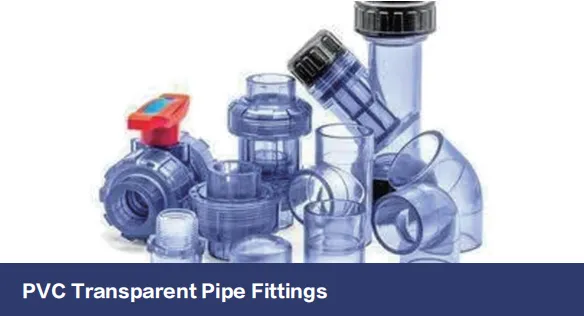
Let's cut right to the chase—when you're building or renovating a home, plumbing is probably not what gets your heart racing. But those clear plastic pipes snaking through your walls? They're the unsung heroes keeping everything flowing smoothly behind the scenes. Today, we're pulling back the curtain on clear PVC fittings to help you make smart choices for your home's plumbing system.
Picture this: You're worried about that gurgling sound in your bathroom pipes. With traditional opaque piping, you'd be playing detective with guesswork. But transparent PVC turns plumbing into a spectator sport. You can literally watch water flow, spot bubbles, identify sediment buildup, or catch leaks early—no X-ray vision required.
This see-through advantage explains why you'll find these pipes everywhere from:
Here's what makes that clarity possible: While standard PVC gets its chalky look from stabilizers and fillers, transparent formulas use crystal-clear additives that maintain structural integrity. Imagine swapping tinted sunglasses for perfectly clear lenses—you get visibility without sacrificing UV protection. These formulations must walk a tightrope between optical clarity and maintaining:
Standards might seem like boring paperwork—until your pipes fail. Here's how to decode quality certifications:
The ASTM D1784 standard is like a bouncer for raw materials—it decides what gets into the club. For clear PVC, it demands:
Meanwhile, ASTM D2665 plays security guard for drainage systems. It tests how pipes handle:
Across the pond, DIN 8063 is the German standard trusted for pressure systems. When you see a PN10 or PN16 rating, that's DIN's pressure threshold—like a speedometer limit for water flow.
The UK's BS4346 is the plumber's favorite for threading. It ensures:
Ever wonder how that PVC fitting travels from factory to your faucet? Here's the behind-the-scenes journey:
Top suppliers like NINGBO SALVADOR build pipes like craftsmen bake artisanal bread—controlling every variable:
During PVC shortages, shady suppliers may cut corners with:
How pipes travel matters as much as how they're made. Temperature fluctuations during shipping can:
Don't take claims at face value—become your own inspector:
Even perfect pipes fail with bad technique. Remember:
What those certificate stamps actually mean:
This only confirms processes are documented—not that outputs are good. It's like saying a restaurant files recipes correctly.
NSF/ANSI 14 certification involves actual product torture tests:
Transparent PVC isn't just convenient—it's saved systems from catastrophe:
A commercial grower saw dwindling fish stock through clear pipes—trapped air bubbles starving the system. Quick valve adjustment saved $28K in tilapia.
Microbrew staff spotted yeast biofilm accumulating in transfer lines before it contaminated 500 gallons of IPA. A sanitation cycle fixed it preemptively.
Emerging innovations changing the game:
New ASTM F412 specifications are in development specifically addressing:
Before buying any transparent fitting:
Transparent PVC transforms plumbing from a buried mystery to an observable system. But visibility isn't enough—understanding how standards like ASTM D1784 protect you and recognizing supply chain vulnerabilities ensures your pipes won't just look good—they'll last. As innovations merge visibility with intelligence, that simple clear pipe might become your home's smartest sensor.
Recommend Products












