
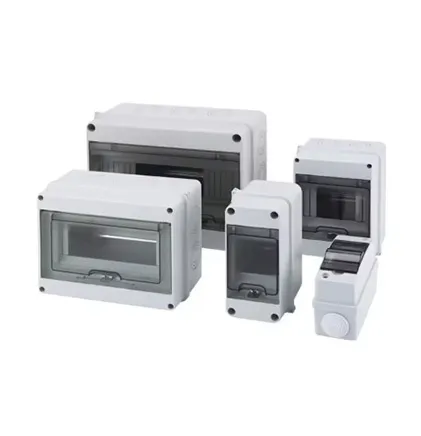
Distribution boxes are the nervous system of any electrical installation, silently managing the flow of power to every corner of your building. The choice between copper and aluminum components isn't just about cost - it's a critical safety decision. This comprehensive guide cuts through the technical jargon to explore why copper bars matter, how mixed-metal connections become ticking time bombs, and what you can do to prevent disaster.
Picture your building's electrical system like a circulatory system - the distribution box is its heart, and copper bars are the major arteries. Copper's dominance isn't industry habit; it's physics. This remarkable metal delivers electricity with less resistance than aluminum, meaning less energy wasted as heat. It's also more forgiving in demanding environments, maintaining stable connections under vibration or temperature swings that would loosen aluminum joints.
The difference between copper and aluminum conductors becomes obvious when you look at everyday situations. During peak summer heat when everyone's blasting AC, copper maintains its composure while aluminum connections can start overheating. In older buildings where you might find aluminum wiring behind the walls, these copper-aluminum junctions have often become what fire investigators call "potential ignition points."
Why can't copper and aluminum play nice together?
It's a personality clash at the atomic level. Aluminum wears down faster when touching copper - a process called galvanic corrosion. This happens because aluminum is more "electrically active" than copper. When moisture sneaks in (and it always does), these dissimilar metals create a tiny battery effect that eats away at the aluminum. Over months or years, this transforms your solid connection into a crumbling, high-resistance weak spot.
What's the big deal about a little oxidation?
Aluminum oxidation isn't just surface rust - it creates aluminum oxide, an insulator with resistance hundreds of times higher than clean aluminum. This means the electricity struggles to cross the connection, generating intense heat. That's when you get the telltale signs: blackened terminals, flickering lights, and that worrying plastic-burning smell. It's a slow-motion short circuit in the making.
Why does aluminum wiring need special attention?
Aluminum wire feels deceptively solid but is actually a diva compared to copper. As one veteran electrician told me: "Copper stays put, aluminum creeps." This "creep" phenomenon means compressed aluminum wires slowly deform under pressure. What started as a tight connection can loosen over years as the aluminum flows away from the pressure point. That's why aluminum requires periodic re-torquing of connections - a maintenance step copper rarely needs.
What makes copper bars worth the higher cost?
Consider copper your electrical insurance policy. With aluminum bus bars, we're talking about 80% more expansion when heated. That constant breathing motion puts stress on connections. Copper bars stay more dimensionally stable, dramatically reducing those micro-movements that loosen terminals. In emergency situations when a circuit breaker needs to trip instantly, copper's superior conductivity provides that split-second speed difference that prevents disaster.
A hospital in Florida learned this the hard way when their backup generator distribution panel failed during a hurricane. Post-failure analysis showed their aluminum bus bars had oxidized joints hidden within laminated insulation. During surge loads, these resistance points became micro-heaters, baking surrounding materials until insulation failed catastrophically.
Manufacturing plants with heavy machinery create constant vibration that works like sandpaper on connections. Copper's denser structure resists this fretting motion. Aluminum's softer composition gradually wears at connection points, creating conductive dust that can trigger arc flashes when power surges occur.
When improperly made copper-aluminum joints cool after heating cycles, they don't shrink at the same rate. This creates microscopic gaps where moisture collects, starting the corrosion cycle anew. With each power-on/power-off cycle, the damage compounds until failure occurs.
When mixing metals is unavoidable, there are proven solutions:
Transition Solutions: Special connectors with both copper and aluminum contact surfaces are engineered to separate the metals with anti-oxidant compounds, preventing galvanic interaction. These bi-metallic connectors act as peacekeepers between the two metals.
Protective Barriers: Using antioxidant pastes isn't optional - they're your first defense. Modern compounds remain pliable for decades, filling microscopic gaps that would otherwise invite moisture and corrosion. Think of it as constantly replacing the protective coating on your connections.
Compromise Solutions: Copper-clad aluminum (CCA) provides an alternative, with aluminum's lightweight economy surrounded by copper's connection-friendly surface. But this approach requires careful handling to avoid nicking the thin copper layer during installation.
| Connection Strategy | Installation Complexity | Long-Term Reliability | Cost Factor |
|---|---|---|---|
| Direct copper-aluminum connection | Simple | Poor | Low (initial) |
| Bi-metallic connectors | Moderate | Excellent | Moderate |
| Full copper distribution | Simple | Superior | Higher |
| Copper-clad aluminum | Delicate | Good (when perfect) | Moderate |
While copper bus bars represent the gold standard, real-world constraints sometimes demand alternative solutions. What matters is understanding the risks inherent in each approach. For new installations where safety trumps budget, copper distribution delivers peace of mind for decades. When upgrading older systems or facing budget constraints, bi-metallic solutions and meticulous maintenance protocols can achieve reliable performance.
Modern electrical standards have evolved precisely because of copper-aluminum connection failures. Building codes now specifically address these challenges, requiring either complete material separation or approved transition methods. Today's thermographic inspection technologies also let maintenance teams spot developing hot spots long before failure occurs - but only if they're checking regularly.
The Bottom Line: Your distribution box isn't just a metal box - it's the heart of your building's electrical lifeblood. While aluminum may offer short-term savings, copper components provide long-term reliability. For existing mixed-metal systems, professional mitigation strategies applied during critical power cables upgrades transform risky installations into dependable infrastructure that protects both property and lives.
Preventing copper-aluminum failures requires vigilance:
Distribution boxes with copper bus bars represent an investment in safety and reliability that transcends initial cost calculations. When lives and property protection matter, copper's inherent stability provides the electrical backbone that aluminum alone simply can't match. For systems where mixing metals is unavoidable, understanding the risks and implementing professional mitigation strategies makes all the difference between reliable power and preventable disasters.
Recommend Products












