


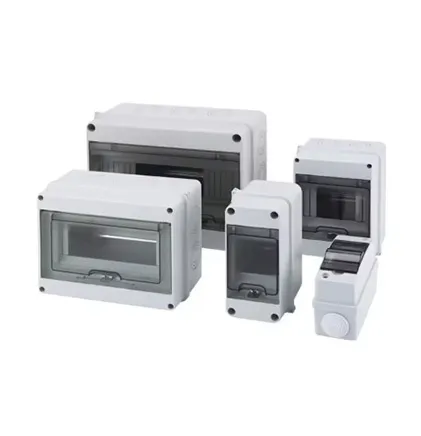
How advanced engineering meets uncompromising safety in hazardous industrial settings
Introduction: When Safety Can't Be an Afterthought
Picture this: You're walking through a petrochemical plant where invisible vapors linger in the air, or maybe a grain processing facility where combustible dust coats every surface. In these environments, a single spark isn't just dangerous – it's catastrophic. That's where explosion-proof distribution boxes become the unsung heroes of industrial safety. These aren't just metal boxes; they're meticulously engineered fortresses designed to contain potential blasts and prevent disaster.
Since the ATEX Directive came into force, equipment for explosive atmospheres has transformed from primitive safeguards to sophisticated protection systems. This directive isn't red tape; it's the accumulated wisdom from decades of industrial accidents and hard-won safety lessons. When we talk about ATEX-certified junction boxes, we're discussing systems that undergo rigorous testing to earn that classification. They're designed to meet two critical challenges: contain internal explosions and prevent external ignition sources from interacting with volatile atmospheres.
But beyond compliance paperwork, what makes these solutions truly valuable? It's about protecting lives, preventing environmental disasters, and ensuring business continuity. The investment pays dividends every day that passes without incident, safeguarding workers and communities surrounding industrial facilities. When you install ATEX-rated equipment, you're not just checking a regulatory box – you're building a culture of safety.
Design Philosophy: More Than Just a Metal Box
The Core Principles Behind Every ATEX Solution
The magic of explosion-proof enclosures lies in what you don't see – the physics and engineering principles built into every curve and joint. Manufacturers like Atex Global and Supermec approach design with three non-negotiable principles:
Containment Engineering
These enclosures are built like miniature fortified bunkers. Wall thickness isn't arbitrary; it's calculated based on potential explosive pressure curves. Materials must withstand extreme stresses without warping or cracking. The explosion proof enclosures contain blasts internally through reinforced construction and specially engineered flame paths that cool escaping gases below ignition temperatures.
Ingress Protection
It's not just explosions – environmental enemies like dust, water, and corrosive chemicals constantly battle to penetrate electrical systems. Advanced gasket systems create hermetically sealed environments regardless of external conditions. The IP66/67/68 ratings you see aren't marketing fluff; they're verified through punishing simulated sandstorms and high-pressure water jets.
Thermal Management
Electrical components generate heat – and heat is the enemy of safety in explosive environments. Clever thermal management uses heat-sinking materials, ventilation labyrinths, and sometimes liquid cooling systems to bleed away heat without compromising the seal. It's like installing an invisible air-conditioning system inside a vault.
Material Science: Choosing the Right Armor
"Metal boxes" oversimplifies the sophisticated material selection involved. Different hazardous environments demand different material solutions:
- Marine-Grade Aluminum: Lightweight yet strong, with natural corrosion resistance from salt-spray environments. Perfect for offshore platforms where every kilogram matters in helicopter transport.
- 316L Stainless Steel: The ultimate warrior against chemical corrosion in pharmaceutical and petrochemical plants. Some versions feature passivation treatments creating molecular-level protective barriers against aggressive substances.
- Composite Plastics: Where electromagnetic interference matters or weight concerns dominate, engineered polymers like glass-reinforced polyester provide non-conductive alternatives without sacrificing integrity. Modern formulas can match metal strength while being 70% lighter.
- Cast Iron: For extreme mechanical protection where heavy equipment might impact enclosures, nothing beats traditional ruggedness.
Real-World Scenario: North Sea Oil Platform
At the Magnus platform, stainless steel distribution boxes weren't just protecting against explosions – they were combatting constant saltwater corrosion. Engineers specified special low-nickel alloys to withstand salt spray while preventing potential nickel leaching into seawater. The electrical boxes installed in 2016 are still fully operational today despite some of the world's harshest marine conditions.
Beyond Basics: Smart Features in Modern Systems
Monitoring & Intelligence Integration
Today's explosion-proof boxes aren't passive containers – they're intelligent monitoring stations. New designs incorporate:
- Wireless Condition Sensors: Monitoring internal temperature, humidity, and potential gas buildup without compromising seals through special waveguide designs.
- Predictive Maintenance Systems: Vibration sensors detect developing faults in terminal connections before failures occur.
- Emergency Shutdown Circuits: Integrated safety relays trigger immediate isolation during abnormal conditions.
- Seal Failure Alarms: Advanced gasket integrity monitoring alerts maintenance teams about degraded seals.
"Our food processing plant used to schedule gasket replacements annually regardless of condition," shares safety manager Elena Rodriguez. "Now the enclosures self-report seal health. Last year we prevented an ethanol vapor leak because the system alerted us to gasket fatigue before it failed. That warning alone justified the upgrade cost."
Modular Configuration: Lego® Blocks for Industry
Leading manufacturers like Supermec have shifted from fixed designs to modular systems. Consider the advantages:
| Module Type | Functions | Application Flexibility |
|---|---|---|
| Power Distribution | Circuit breakers, busbars, terminals | Expandable with load changes |
| Signal Processing | Intrinsic safety barriers, isolators | Add instrumentation without redesign |
| Communication Hubs | Fiber optic terminals, wireless gateways | Enable IIoT connectivity upgrades |
| Surge Protection | Lightning and ESD suppression | Configurable for regional risks |
This approach future-proofs installations. Adding automation sensors or upgrading to 5G monitoring? Simply slot in new modules without replacing the entire enclosure. The savings on recertification alone typically recoups the initial investment within two equipment upgrade cycles.
Implementation Guide: Installing for Decades of Service
Common Pitfalls & How to Avoid Them
Even the best-engineered systems fail if installed incorrectly. Field audits reveal recurring mistakes:
- Gasket Neglect: Damaged during installation or compressed unevenly. Always replace during maintenance and follow torque patterns religiously.
- Cabling Errors: Incompatible cable glands or improper bending radii create long-term failure points. Use manufacturer-approved accessories only.
- Ventilation Blockage: Installing in corners where heat can't dissipate compromises thermal management. Maintain clearance zones.
- Mixed Zones: Using Zone 1 equipment in Zone 0 areas invalidates safety ratings. Always verify zone classifications.
Maintenance Protocol That Matters
Unlike standard electrical boxes, ATEX systems require specialized care. A proper maintenance routine includes:
- Quarterly visual inspections for corrosion, seal condition, and integrity labels
- Annual thermal imaging surveys to detect hot spots
- Torque calibration checks every two years (critical for lid fasteners)
- Five-year internal inspections with gas concentration monitoring
- Seal replacement every 7 years regardless of apparent condition
At BASF's Ludwigshafen facility, strict adherence to this protocol helped identify a developing problem with cast aluminum corrosion that wasn't visible externally. Preventive replacement of affected distribution boxes prevented what could have been a catastrophic incident in their ethylene processing area.
Compliance Journey: Understanding ATEX Certification
Getting a product ATEX-certified isn't a checkbox exercise – it's a demanding engineering gauntlet. Certified testing laboratories put products through punishing trials:
Explosion Containment Tests
Units are filled with explosive mixtures precisely calibrated for maximum destructive force. Sensors measure exactly how the enclosure withstands and contains the energy.
Environmental Torture Chambers
Salt-spray chambers simulate decades of coastal decay in accelerated timeframes. UV exposure, chemical immersion, and extreme thermal cycling assess long-term resilience.
Mechanical Abuse
From vibration testing that mimics heavy machinery impacts to drop tests verifying survival in industrial accidents. Certification requires surviving impacts that would destroy commercial enclosures.
The documentation trail matters as much as the physical tests. Manufacturers must provide detailed technical construction files demonstrating material traceability, production quality controls, and installation boundary conditions. This paper trail gets reviewed annually to maintain certification.
Industrial Applications: Where These Solutions Shine
Chemical & Petrochemical Landscapes
Consider a refinery where volatile hydrocarbons flow through pipes under extreme pressures. Distribution boxes here manage critical systems like emergency shutdown valves – where failure means catastrophe. Specialized versions include nitrogen purging systems maintaining inert atmospheres inside the enclosures themselves.
Food Processing Environments
Flour mills and sugar refineries combat explosive dust. Here, plastic composite enclosures prevent metal sparks while resisting starch-based corrosive substances unique to food processing.
Mining Operations
Underground coal mines combat methane pockets and coal dust. Mining-spec enclosures feature flame paths engineered for longer flame quenching since methane burns differently than refinery vapors.
Emerging Frontiers
Battery production facilities for electric vehicles now present new explosion risks from lithium compound dust. Leading manufacturers are developing specially grounded enclosures to dissipate static charges that could ignite these sensitive compounds.
Conclusion: Safety Engineered Into Every Connection
Explosion-proof distribution boxes represent where regulatory wisdom meets engineering excellence. What appears as simple protective enclosures are actually sophisticated safety systems honed through decades of industrial experience. They stand guard where invisible dangers lurk – in refinery pipe racks, grain silos, and chemical plants.
Choosing ATEX-certified solutions isn't about compliance paperwork. It's about protecting the people working in hazardous environments. It's about preventing catastrophic events that damage communities. It's about responsible operations where safety gets built into infrastructure, not tacked on as an afterthought. Every quality enclosure represents thousands of engineering hours and meticulous testing – all dedicated to ensuring that unseen risks remain safely contained.
In explosive environments, your electrical distribution points should offer more than connectivity; they should provide peace of mind. That's the true value of solutions engineered to the ATEX directive – silent guardians that transform potential disaster zones into managed, predictable spaces where industry can safely thrive.










