
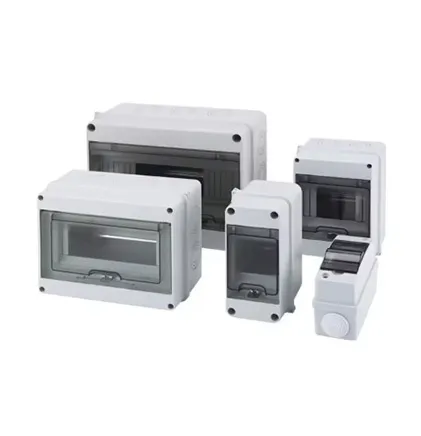
Walk through any modern building in Shanghai or Dubai, and you're standing on the shoulders of unsung heroes: distribution boxes. These unassuming metal cabinets form the nervous system of our structures, silently channeling power to everything from elevator systems to LED lighting fixtures. As the world's factory floor, China dominates this sector with thousands of manufacturers concentrated in industrial hubs like Guangdong and Zhejiang. When Saudi Arabia needs reliable power distribution for new commercial towers, or Europe seeks affordable residential solutions, they increasingly turn eastward.
⚡ What makes China's distribution box sector thrive? Three ingredients: integration with power cables suppliers right next door, vertically controlled production chains cutting manufacturing timelines by 40%, and engineers who eat complexity for breakfast. Unlike fragmented supply chains elsewhere, Chinese factories might source components like industrial & domestic PPR piping fittings from sister plants, then assemble the final product under one roof.
Modern distribution box factories resemble surgical theaters more than gritty workshops. In Suzhou, robotic arms perform micro-welds with 0.02mm precision while laser cutters shape stainless steel housings. Downstream, workers perform stress tests on units destined for Canadian winters or Saudi summers, exposing them to temperatures from -40°C to +70°C. The secret weapon? Collaboration with specialized China cable manufacturers who provide custom harnesses – reducing wiring chaos by pre-bundling cables like color-coded spaghetti.
| Feature | Residential Units | Commercial Systems | Industrial Grade |
|---|---|---|---|
| Materials | Galvanized steel/IPC housing | Stainless steel/anti-corrosion | Explosion-proof composites |
| Environmental Proofing | IP54 dust/moisture | IP66 weather resistance | IP68 submersion proof |
| Electrical Capacity | ≤400A single-phase | 1200A three-phase | 5000A+ heavy duty |
| Smart Features | Basic surge protection | Remote monitoring | AI fault prediction |
Remember that shimmering Riyadh skyscraper with its kinetic facade? Its power distribution network likely originated in Ningbo. Chinese factories now design for global compatibility – whether integrating with German DIN rails or American NEC standards. For hospital projects, medical-grade boxes feature separate circuits for life-support equipment and lighting fixtures . Modular designs allow Dubai contractors to snap together units like Legos for rapid hotel deployments.
Pro tip from Shenzhen engineers: Modern distribution systems now prioritize scalability. Smart factories build cabinets with 20% extra conduit space upfront, saving fortune when adding circuits later.
The plumbing integration is revolutionary too. Factories precut entry points for industrial & domestic PPR piping – no more jobsite drilling that weakens structural integrity. For data centers, they'll even weave fiber conduits alongside power channels in "hybrid spine" configurations. This holistic approach positions Chinese manufacturers as full electrical ecosystem architects rather than box suppliers.
Beyond traditional panels, China's manufacturers are reimagining distribution itself. Subfloor pods for open-plan offices eliminate wall clutter. Solar-ready units with built-in MPPT controllers support green buildings. Most impressive? Waterproof units buried beneath pedestrian plazas that withstand Tokyo monsoons and Dubai irrigation leaks alike, accessible via sleek street-level service hatches.
Material science breakthroughs mean corrosion-resistant magnesium alloys now replace 30% of steel. Shanghai engineers chuckle remembering the "copper crisis" when they redesigned busbars using graphene-coated aluminum. For modular schools across Southeast Asia, factories ship flat-pack units with pre-labeled components – teachers assemble them faster than Ikea furniture.
As distribution systems evolve into building neural networks, Chinese factories lead the IoT integration race. Next-gen cabinets analyze energy patterns, predicting transformer failures weeks early. They'll text facilities managers when breakers approach capacity or detect abnormal heat signatures near power cables . The humble distribution box is becoming a building's AI-powered energy heart.
Behind the innovation: Production lines now embrace circularity. Top Zhejiang factories recover 97% of metal scraps – the shavings from your junction box might become smartphone casings. Even packaging uses recycled rice husk composites that biodegrade within 18 months.
From prefab housing complexes to hyperscale data centers, China's distribution specialists continue proving that the most critical infrastructure isn't always the most visible. Their engineered containers literally empower our lives – one safely routed electron at a time.
Recommend Products












