


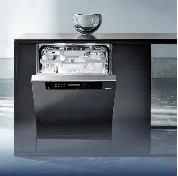
Let's be honest - handwashing dishes is nobody's favorite chore. A great dishwasher isn't just about convenience; it's about getting sparkling clean results while saving time, water and energy . But with so many models touting fancy features, how do you find your perfect match?
Having tested dozens of models in real kitchens, I'm here to cut through the marketing noise. We'll break down the four pillars of dishwasher excellence: capacity (because cramming shouldn't be an Olympic sport), cleaning power (that baked-on cheese needs to disappear!), drying performance (say goodbye to towel-drying!), and energy efficiency (hello, lower utility bills!).
Finding Your Fit: Dishwasher Dimensions & Capacity
Size Matters: Measuring Your Space
Before falling for a model, grab your tape measure . Standard built-ins fit 24-inch openings, but compact models at 18 inches work for small kitchens. Drawer styles offer modular flexibility, while portable units roll to your sink when needed.
The Place Setting Game
Capacity ratings range from 8 settings (compacts) to 16+ (full-size). But real life isn't place settings:
- Singles/Couples: 10-12 settings suffice
- Families of 4: 14+ settings handle dinner parties
- Entertainers: Look for 16+ with adjustable racks
Max Capacity Solutions
- Tiered racks for utensils & cutting boards
- Fold-down tines for awkward shapes
- Adjustable upper racks (life-changing for tall glasses)
Capacity Killers
- Fixed racks that won't accommodate stemware
- Thick tines that waste space
- Small flatware baskets limiting utensil count
The Deep Clean: Performance Beyond the Hype
Spray Arm Science
This isn't just a rinse - it's a high-pressure attack on grime . Top performers have:
- Multi-directional spray arms reaching corners
- Zone-specific jets targeting baked-on pots
- Soil sensors adjusting water/power to the mess level
Models like GE Profile's "UltraFresh" line proved especially effective on greasy lasagna pans during testing.
Cycle Savvy
Your detergent needs the right partner:
| Cycle | Best For | Avg. Duration |
|---|---|---|
| Heavy Duty | Baked-on casseroles, pots/pans | 2.5+ hours |
| Auto/Smart Wash | Daily mixed loads | 1.5-2.5 hours |
| Express | Lightly soiled items | Under 1 hour |
| Sanitize | Baby bottles, cutting boards | Adds 15-30 min |
Dry Spell Solved: Ending the Damp Dish Dilemma
Heat vs Condensation
Traditional dryers blow heated air (fast but energy-hungry). Advanced condensation models use:
- Residual heat + cool stainless steel tub to evaporate moisture
- Mineral chambers absorbing humidity
- Fan-assisted systems speeding evaporation
Bosch's "CrystalDry" system earned top marks for drying plastics - usually the toughest to dry completely.
Drying Boosters
- "Extra Dry" or "Turbo Dry" settings
- Rinse aid dispensers improving water sheeting
- Automatic door popping venting steam
Drying Disasters
- No fan-assisted options
- Weak rinse aid systems
- Poorly designed racks trapping water
Eco & Wallet Friendly: Decoding Energy Ratings
The ENERGY STAR Advantage
Certified models use:
- 3-5 gallons per cycle vs. 15+ for handwashing
- Annual electricity equivalent to 10-15 light bulbs
- Smart sensors optimizing water temperature
Expect just $30-$35/year in energy costs for efficient models versus $60+ for older units.
Reading the Labels
Beyond the blue star, check:
- kWh/year: Lower = better electricity efficiency
- Water Factor: Gallons per cycle (under 3.5 is excellent)
- Estimated yearly cost: Based on average use
The Final Rinse: Making Your Decision
Balancing Needs & Budget
| Budget Level | What to Expect | Recommended Models |
|---|---|---|
| Under $500 | Basic cycles, no frills, higher noise | LG Front Control |
| $500-$1,000 | Quiet operation, advanced drying | GE Profile Series |
| $1,000+ | Precision cleaning, smart features | Miele AutoDos, Bosch Benchmark |
Key Questions Before Buying
- "What fits my existing cabinet opening?"
- "Will it handle my biggest cookware?"
- "How quiet is 44 dB vs 49 dB?" (library whisper vs rainfall)
- "Are smart features worth extra cost?"
Putting It All Together
Choosing a dishwasher isn't about finding the most expensive model or one stuffed with features you'll never use. It's about matching your household's rhythm to a machine's capabilities.
Families will prioritize capacity and durability while empty-nesters might value quiet operation. Entertainers need flexible racks, eco-warriors focus on water savings. Remember - it's a 10+ year relationship ! Take time to consider how your needs might evolve.
One final tip: That stainless steel tub we keep mentioning? Non-negotiable in my book. It lasts longer, heats quicker, and dries better than plastic alternatives.










