
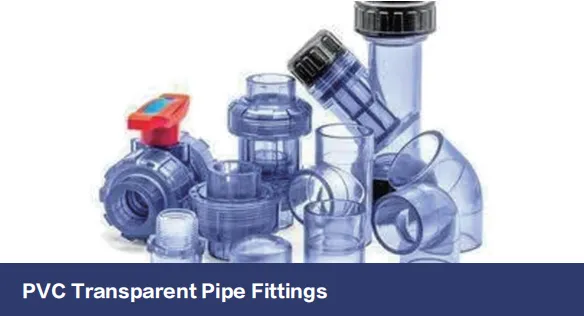
Let's talk about something we use every day but rarely think twice about: PVC pipes. You've seen them in plumbing systems, electrical conduits, medical devices, and countless applications. But there's a specific type that's gaining traction in specialized applications – transparent PVC pipe fittings. Today, we're diving deep into both the environmental friendliness and recyclability of these clear plastic workhorses.
Why should you care? Because sustainability isn't just a buzzword anymore – it's a survival strategy. As we face growing environmental challenges, understanding the lifecycle of materials like PVC becomes critical. We'll unpack the good, the bad, and the recyclable aspects of these transparent fittings, giving you a complete picture without any corporate spin.
PVC (polyvinyl chloride) is that familiar plastic that's everywhere in modern life. But transparent PVC? That's PVC without the added pigments or fillers, relying on carefully controlled manufacturing to maintain clarity. Think of it like regular PVC's see-through cousin that performs the same functions but lets you see what's flowing inside.
• Visual Monitoring: In labs, breweries, or pharmaceutical applications, seeing what's moving through the pipes prevents cross-contamination
• Quality Control: Manufacturers can spot impurities or flow issues immediately
• Aesthetic Flexibility: Surprisingly popular in design-forward installations where function meets form
From an environmental standpoint, PVC has some built-in advantages. It's incredibly durable – we're talking about pipes that can last 50-100 years with minimal maintenance. That longevity means fewer replacements, less resource consumption, and reduced waste over time. Compared to alternatives like metal pipes that corrode, PVC's chemical resistance is a genuine environmental benefit.
But let's not sugarcoat things – PVC has baggage. Traditional production methods involved toxic additives like lead stabilizers (now largely phased out). Chlorine is fundamental to PVC's structure, which causes concerns about dioxin release during manufacturing or improper disposal. What's important is understanding that like any material, PVC has environmental impacts at different lifecycle stages.
PVC's environmental story is a mixed bag, and we should acknowledge both sides. On the plus side:
• Energy Efficiency: PVC production consumes less energy than metals or glass
• Lightweight Nature: Easier transport means lower carbon emissions
• Corrosion Resistance: Unlike metal pipes, PVC won't leach into groundwater or soil
• Water Conservation: Durable PVC plumbing systems minimize leaks
Transparent PVC maintains these advantages while serving specialized roles. But the flipside includes chlorine-based production, historical use of phthalate plasticizers (though alternatives now exist), and the elephant in the room: end-of-life disposal.
Clear PVC formulations often require specific stabilizers and plasticizers to maintain transparency. While industry has moved toward safer alternatives like calcium-based stabilizers, this remains a sensitive area. The good news? Major manufacturers are transparent (pun intended!) about their formulations if you ask.
Here's where things get complicated. Yes, PVC is technically recyclable, but transparent PVC pipe fittings follow the same difficult path as their opaque cousins. The recycling landscape for PVC has always been bumpy compared to PET or HDPE plastics.
Mechanical Recycling : This is the shred-and-remelt approach. Clean, uncontaminated PVC gets ground up and reformed into new products. But here's the catch – each cycle degrades quality slightly. It's like photocopying a document repeatedly; eventually, you lose clarity. For transparent PVC, this quality degradation is especially problematic as it affects the crucial see-through quality.
Chemical Recycling : The superhero method that breaks PVC down to its chemical building blocks. This can handle contaminated materials and creates virgin-quality PVC without degradation. The problem? It's currently more expensive and complex than mechanical recycling. However, investments are rapidly growing in this space.
| Recycling Method | Transparency Impact | Limitations | Current Adoption |
|---|---|---|---|
| Mechanical | Significant clarity loss | Requires pristine material | Common but declining for quality applications |
| Chemical | Full clarity restoration possible | High cost, complex technology | Growing rapidly |
Transparent pipe fittings often get contaminated with adhesives, solvents, or other materials during installation. This makes recycling incredibly difficult. When PVC gets mixed with other plastics in recycling streams, it becomes problematic because chlorine contamination ruins batches of other recyclable plastics.
Finding places that actually recycle PVC remains challenging. Most municipal programs won't touch it, and specialized recyclers are sparse. This leads to what I call "aspirational recycling" – people put PVC in blue bins hoping it gets recycled, but too often it ends up in landfills anyway.
The numbers tell a sobering story: global PVC recycling rates hover around 5-15% depending on region. For niche products like transparent fittings, the rates are likely even lower. But here's where transparent PVC fittings might have an edge – their specialized nature means they're often used in controlled environments with better potential for clean disposal streams.
The industry isn't standing still. Major innovations are transforming PVC's environmental footprint:
Manufacturers have phased out lead and cadmium stabilizers. Bio-based plasticizers derived from renewable sources are becoming commercially viable for maintaining transparency while reducing toxicity concerns.
New product designs simplify disassembly. Picture fittings with quick-release mechanisms instead of permanent solvent welds. This might cost a bit more upfront but drastically improves recyclability.
Companies like Loop Industries are perfecting depolymerization techniques specifically for PVC. These chemical recycling methods can break down even contaminated transparent PVC and recover monomers at near-virgin quality.
Industry leaders now offer take-back programs. Certain manufacturers will take back their transparent PVC fittings at end-of-life, ensuring proper recycling. It's like a library system for plastic piping – borrow it for decades, then return it.
These aren't just theoretical – large-scale projects like eco-industrial parks in Northern Europe now incorporate PVC recycling infrastructure. The key is developing economically viable recycling channels specifically for high-value transparent PVC.
A craft brewery in Colorado implemented a transparent PVC system for monitoring wort transfer. After ten years of service, they worked with a specialized recycler who processed 500 pounds of clear PVC fittings into pellets. These became durable composite lumber for outdoor decking – proving specialty PVC doesn't have to be single-use.
Research facilities at MIT established a recycling pipeline for their transparent PVC lab equipment. What was once waste now reemerges as underground irrigation piping with 40% recycled content. It's a beautiful circular model when properly executed.
Specialized recyclers like New Jersey-based ReVital Polymers now profitably process over 5,000 tons of PVC annually. As more manufacturers incorporate recycled content mandates into their environmentally friendly building materials programs, demand keeps growing.
Individuals and organizations can dramatically improve PVC's sustainability:
• Ask manufacturers about recycled content – many now offer transparent PVC with 20-30% recycled material
• Choose products certified under programs like UL Ecologo or Cradle to Cradle
• Prioritize manufacturers with established take-back programs
• Avoid solvent welding when mechanical joints suffice
• Keep fittings clean and label PVC components for future recyclers
• Create separation plans during decommissioning
• Never landfill – search for specialized PVC recyclers through platforms like VinylPlus
• Participate in manufacturer take-back programs
• Advocate for PVC inclusion in municipal recycling where practical
The journey of transparent PVC pipe fittings mirrors our broader relationship with plastics – incredibly useful yet environmentally problematic. The technology for sustainable PVC exists today. What's needed is collective will – from manufacturers improving formulations and recycling systems, to designers specifying recycled content, to end-users properly disposing of materials.
Transparent PVC doesn't have to be an environmental burden. In laboratories implementing zero-waste programs, in factories with closed-loop material systems, in cities with advanced recycling infrastructure, we're already seeing sustainable models working. With chemical recycling breakthroughs and additive innovations accelerating, PVC could become a circular material within this decade.
As consumers and professionals, we all influence this trajectory. Every time we choose products with recycled content, every time we divert PVC from landfills, and every time we demand better solutions, we accelerate the transition to sustainable material systems. Transparent PVC pipe fittings – like all materials – come with environmental responsibilities, but handled thoughtfully, they remain valuable components of our engineered world.
Recommend Products












