
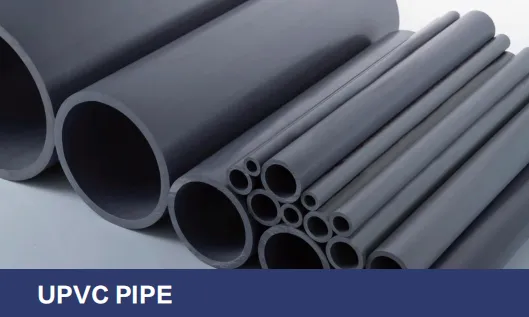
In the bustling world of construction, where deadlines loom and precision is non-negotiable, even the most unassuming components play a starring role. Take UPVC pipes, for example—those unglamorous but essential workhorses that carry water, waste, and utilities through homes, offices, hospitals, and skyscrapers. For decades, the process of sourcing, designing, and installing these pipes has relied on manual calculations, paper blueprints, and gut-driven inventory management. But today, a quiet revolution is unfolding: digitalization is reshaping every step of the UPVC pipe journey, from the initial design sketch to the final turn of a wrench on-site. As an UPVC pipe supplier navigating this shift, the goal isn't just to keep up with trends—it's to redefine what "reliable" and "efficient" mean for UPVC pipe solutions in the 21st century.
Digitalization, in this context, isn't about replacing human expertise with machines. It's about equipping engineers, architects, contractors, and suppliers with tools that turn complexity into clarity, guesswork into data, and delays into streamlined success. Whether it's a small residential project or a sprawling commercial complex, the integration of digital tools is making UPVC pipe solutions more customizable, more sustainable, and more aligned with the needs of modern construction. Let's dive into how this transformation is happening, step by step.
Before we unpack the digital tools, let's ground ourselves in why UPVC pipes are worth the digital investment. UPVC (Unplasticized Polyvinyl Chloride) has long been a favorite in construction for its durability, corrosion resistance, and cost-effectiveness. Unlike metal pipes, UPVC doesn't rust; unlike concrete, it's lightweight and easy to handle. These qualities make it ideal for everything from residential plumbing to industrial water management. But as construction projects grow more complex—think smart cities, green buildings, and mega-infrastructure—so do the demands on UPVC pipe suppliers . Clients now expect pipes that fit unique architectural designs, meet strict sustainability standards, and integrate seamlessly with other systems like HVAC and electrical.
Enter digitalization. By leveraging technology, UPVC pipe suppliers can move beyond one-size-fits-all products. They can collaborate in real time with architects to tweak designs, use data to predict how pipes will perform over decades, and ensure that every fitting, joint, and valve arrives on-site exactly when it's needed. For example, a PVC DWV pipe supplier (DWV stands for Drain, Waste, and Vent) might use digital tools to optimize pipe diameters for a high-rise's drainage system, reducing clogs and improving flow—something that would have taken weeks of manual calculations in the past. Similarly, pipes fittings suppliers can now customize connectors for non-standard angles, all thanks to 3D modeling and rapid prototyping.
Design is where the digital transformation often begins. Not long ago, an architect would sketch pipe layouts by hand, an engineer would double-check the math, and a supplier would manufacture based on those static drawings. If a mistake was discovered mid-construction—say, a pipe diameter was too small for the building's water demand—it meant costly rework and delays. Today, that process looks drastically different, thanks to tools like Building Information Modeling (BIM), 3D rendering software, and cloud-based collaboration platforms.
BIM, in particular, has become a game-changer for UPVC pipe solutions . Imagine a digital replica of the entire building, where every UPVC pipe, valve, and fitting is a 3D object with real-world properties—material type, pressure capacity, even thermal expansion rates. Architects, engineers, and UPVC pipe suppliers can all log into the same BIM model, make edits, and see how changes ripple through the system. For instance, if an architect adjusts a wall's position, the BIM software automatically flags if a UPVC pipe runs through the new space, prompting the supplier to adjust the pipe's route or length. This level of coordination cuts down on design conflicts by up to 60%, according to industry reports, saving both time and money.
But BIM is just the start. Many UPVC pipe suppliers now use parametric design software, which allows them to create flexible, rule-based models. Want to design a UPVC pipe system for a school with varying water pressure needs on different floors? The software can automatically adjust pipe thickness and fittings based on input parameters like flow rate and elevation. This isn't just about speed—it's about precision. A PPR pipe and fitting supplier (PPR stands for Polypropylene Random Copolymer, a material often used alongside UPVC) might use similar tools to ensure that their products work in harmony with UPVC systems, avoiding compatibility issues that could arise from manual design.
Cloud collaboration tools take this a step further. Teams spread across different locations—an architect in Riyadh, an engineer in Dubai, and a Saudi Arabia building materials supplier in Jeddah—can now work on the same design in real time. Comments, revisions, and approvals happen instantly, eliminating the lag of email chains or physical blueprint deliveries. It's a small shift, but it turns what was once a linear process into a dynamic conversation, ensuring that UPVC pipe solutions are tailored to the project's unique needs from day one.
Design is only half the battle. Once the UPVC pipe system is finalized, the next challenge is getting the right materials to the right place at the right time. For UPVC pipe suppliers , this means managing a supply chain that spans raw material sourcing, manufacturing, warehousing, and transportation—each with its own set of risks, from delayed shipments to inventory shortages. Digitalization is turning this complex web into a streamlined, transparent process.
Let's start with inventory management. In the past, suppliers relied on spreadsheets and manual stock checks to track UPVC pipes and fittings. Today, Internet of Things (IoT) sensors and radio-frequency identification (RFID) tags are taking over. Imagine a warehouse where every pallet of UPVC pipes has an RFID tag that sends real-time data to a central dashboard. The system knows exactly how many 10-inch UPVC pipes are in stock, when the next shipment is arriving, and even how long they've been stored (important for materials sensitive to temperature or humidity). If stock levels dip below a threshold, the system automatically alerts the procurement team, preventing last-minute shortages. For a pipes fittings supplier dealing with hundreds of part numbers, this level of visibility is a lifesaver.
Then there's demand forecasting. Traditional methods often relied on historical sales data and gut feelings, leading to overstocking (and wasted resources) or understocking (and missed deadlines). Now, artificial intelligence (AI) algorithms analyze a wealth of data—past project timelines, seasonal trends, even regional construction booms—to predict future demand with accuracy. For example, an UPVC pipe supplier in Saudi Arabia might use AI to anticipate a surge in orders during the cooler months, when construction activity peaks, and adjust production schedules accordingly. This not only reduces waste but also ensures that clients get their UPVC pipe solutions without unnecessary delays.
Blockchain technology is also making waves in supply chain transparency. By creating an immutable digital ledger of every transaction—from the purchase of raw PVC resin to the delivery of finished pipes—blockchain gives all stakeholders, including clients, visibility into the supply chain. A contractor waiting for UPVC pipes can log into a platform and see exactly where their order is: "Produced in Factory A on October 15, loaded onto Truck B on October 16, arriving at the site by 9 AM on October 18." This level of transparency builds trust and reduces disputes, as everyone has access to the same real-time information.
Finally, transportation logistics are getting a digital upgrade. route optimization software uses AI to map the fastest, most fuel-efficient paths for delivery trucks, taking into account traffic, weather, and road closures. For a PVC DWV pipe supplier delivering to a remote construction site, this can cut delivery times by 20% or more. Some suppliers are even experimenting with drones for last-mile deliveries of small fittings, though this is still in the early stages for heavy materials like UPVC pipes.
Once the UPVC pipes arrive on-site, the focus shifts to installation—and here, too, digitalization is making a tangible difference. Installing pipes in a crowded construction site, where space is limited and other trades are working simultaneously, has always been a logistical puzzle. Now, tools like augmented reality (AR), mobile apps, and digital checklists are helping contractors get the job done faster and with fewer errors.
AR, in particular, is transforming how installers visualize and execute designs. Picture this: A contractor puts on AR glasses and sees a holographic overlay of the BIM model directly onto the construction site. The hologram shows exactly where each UPVC pipe should run, how deep it needs to be buried, and which fittings to use. If the installer drifts off course, the AR system alerts them in real time. This isn't just a cool tech demo—it's practical. A study by the Construction Industry Institute found that AR-guided installations reduce rework by up to 35%, as installers can spot clashes with other systems (like electrical wires or HVAC ducts) before they become problems.
Mobile apps are another unsung hero of smart installation. Many UPVC pipe suppliers now offer custom apps that put critical information at installers' fingertips. Need to check the pressure rating of a specific UPVC pipe? Scan the QR code on the pipe with your phone, and the app pulls up the specs. Forgot the torque setting for a PPR fitting? The app has a built-in guide. Some apps even allow installers to take photos of completed work and share them instantly with project managers for approval, eliminating the need for paper reports and speeding up the sign-off process. For a PPR pipe and fitting supplier , this level of support not only improves installation quality but also strengthens relationships with clients, who appreciate the added value.
Digital checklists and project management software are also streamlining workflows. Instead of carrying around a clipboard with pages of tasks, installers can mark items off on a tablet: "Pipe cut to length: ", "Fitting secured: ", "Pressure test passed: ". The software tracks progress in real time, so project managers can see if the installation is on schedule or if bottlenecks are forming. For large projects with multiple teams working in parallel, this visibility is crucial. It ensures that, for example, the PVC DWV pipe installation in the basement doesn't fall behind, holding up the flooring team upstairs.
| Process Stage | Traditional Approach | Digital Approach | Key Benefits of Digitalization |
|---|---|---|---|
| Design & Engineering | Manual blueprints, 2D drawings, and physical mockups; limited collaboration between stakeholders. | BIM models, 3D rendering, and cloud-based collaboration platforms (e.g., Autodesk BIM 360). | 60% reduction in design conflicts; faster iteration on custom UPVC pipe solutions. |
| Inventory Management | Spreadsheets and manual stock checks; risk of overstocking or stockouts. | IoT sensors, RFID tags, and AI-driven inventory dashboards. | 30% lower inventory holding costs; 95% accuracy in stock level tracking. |
| On-Site Installation | Paper blueprints, verbal instructions, and post-installation rework. | AR overlays, mobile apps for specs, and digital checklists. | 35% reduction in rework; 25% faster installation times. |
| Quality Control | Manual inspections and testing; delayed identification of defects. | Automated pressure testing, thermal imaging, and AI analytics. | 99% defect detection rate; real-time performance monitoring. |
Installing UPVC pipes correctly is one thing; ensuring they perform reliably for decades is another. Quality control has always been a priority for UPVC pipe suppliers , but digital tools are taking it to new heights—moving from reactive inspections to proactive monitoring.
Start with testing. Traditional methods often involved destructive testing (e.g., bursting a pipe to check its pressure capacity) or manual pressure checks with gauges. Today, automated testing machines equipped with sensors can perform these tests more accurately and efficiently. For example, a machine might subject a UPVC pipe to 10,000 cycles of pressure changes, simulating 50 years of use, and record every data point—pressure, temperature, deflection—for analysis. AI algorithms then crunch this data to identify weak points, ensuring that only pipes meeting the highest standards reach clients. For UPVC pipe solutions in critical applications like hospitals or schools, this level of rigor is non-negotiable.
Thermal imaging and ultrasonic testing are also becoming staples in quality control. These non-destructive techniques allow inspectors to "see" inside pipes without cutting them open, detecting hidden defects like cracks or air bubbles in the material. A pipes fittings supplier might use ultrasonic testing to check the integrity of a weld on a PPR fitting, ensuring it can withstand the system's operating pressure. Digital reports from these tests are stored in the cloud, making it easy to track a product's quality history from manufacturing to installation.
But quality control doesn't end once the pipes are installed. IoT sensors embedded in UPVC pipes can monitor performance in real time, sending alerts if something goes wrong. For example, a sensor might detect a drop in water pressure, indicating a leak, or a rise in temperature, suggesting a blockage. This allows maintenance teams to address issues before they escalate into major problems. In commercial buildings, this kind of predictive maintenance can reduce repair costs by up to 40%, according to industry research. For an UPVC pipe supplier , offering this level of post-installation support turns a one-time sale into a long-term partnership.
In 2024, a leading hospital in Riyadh embarked on a $50 million expansion, adding a new wing with 100 beds, operating rooms, and a state-of-the-art laboratory. The project required a plumbing system that could handle high water demand, strict hygiene standards, and compliance with Saudi Arabia's rigorous building codes. The hospital's contractors turned to a local UPVC pipe supplier with a reputation for digital innovation—and the results were striking.
The project began with a BIM model that integrated the UPVC plumbing system with the building's structural, electrical, and HVAC systems. The UPVC pipe supplier collaborated with the hospital's architects and engineers in real time via a cloud platform, adjusting pipe routes to avoid clashes with medical gas lines and electrical conduits. This early coordination eliminated 12 potential design conflicts, saving an estimated 3 weeks of rework.
For the supply chain, the supplier used AI-driven demand forecasting to predict material needs, ensuring that UPVC pipes, PVC DWV pipes , and PPR fittings arrived exactly when the construction schedule called for them. IoT sensors in the supplier's warehouse tracked inventory levels, and blockchain technology gave the hospital full visibility into the origin of materials—critical for meeting the project's sustainability goals (the UPVC resin used was sourced from a recycled material supplier).
On-site, installers used AR glasses to overlay the BIM model onto the construction site, ensuring pipes were placed with millimetric precision. Mobile apps provided instant access to specs, and digital checklists streamlined approvals. When a last-minute change was needed—relocating a pipe to accommodate a new medical equipment layout—the BIM model was updated in hours, and the supplier adjusted production schedules using real-time data, avoiding delays.
Post-installation, IoT sensors were embedded in key sections of the UPVC plumbing system, monitoring flow rates, pressure, and temperature. The hospital's maintenance team now receives alerts via a dashboard if anomalies are detected, allowing for proactive repairs. To date, the system has operated with 99.8% uptime, exceeding the hospital's expectations.
"Digitalization didn't just make the project faster—it made it smarter," said the hospital's facilities manager. "We're not just building for today; we're building for the next 30 years, and the data from this system will help us maintain that reliability."
As impressive as today's digital tools are, the journey is far from over. The future of UPVC pipe solutions will see even deeper integration of technology, with AI, machine learning, and sustainability taking center stage.
AI-driven design is one area poised for growth. Imagine a system that can generate multiple UPVC pipe layouts based on a building's specifications, ranking them by cost, efficiency, and sustainability. For example, if a client wants to minimize water waste, the AI could suggest a layout with variable-speed pumps and pressure-regulating valves, paired with UPVC pipes optimized for low flow. This kind of "generative design" would empower UPVC pipe suppliers to offer truly customized solutions at scale.
IoT will also become more sophisticated, with sensors not just monitoring performance but also predicting lifecycle. A sensor in a UPVC pipe might analyze water chemistry, flow patterns, and environmental factors to estimate when the pipe will need replacement—allowing for planned maintenance instead of emergency repairs. For critical infrastructure like hospitals or schools, this predictive capability could be life-saving.
Sustainability is another key driver. Digital tools will help UPVC pipe suppliers reduce their carbon footprint by optimizing manufacturing processes (e.g., using AI to cut energy use in production) and designing systems that minimize material waste. Some suppliers are already experimenting with "digital twins"—virtual replicas of UPVC pipe systems that simulate performance under different conditions, allowing for tweaks that reduce water and energy consumption over the system's lifetime.
Finally, the rise of 3D printing could revolutionize on-site manufacturing. While large-scale 3D printing of UPVC pipes is still in its infancy, the technology holds promise for producing custom fittings or small-batch components on-site, eliminating the need for long-distance shipping and reducing lead times. For remote construction projects, this could be a game-changer.
Digitalization in UPVC pipe solutions isn't just about adopting new software or buying fancy sensors. It's about reimagining what's possible—for UPVC pipe suppliers , for contractors, and for the buildings and communities they serve. From BIM models that turn blueprints into living, breathing systems to IoT sensors that keep pipes performing at their best, every digital tool is rooted in a simple goal: to make construction more efficient, more reliable, and more responsive to the needs of the modern world.
As we've seen through the hospital case study, the impact is tangible: fewer delays, lower costs, better quality, and happier clients. For UPVC pipe suppliers willing to invest in this transformation, the reward is clear: not just a competitive edge, but a seat at the table as trusted partners in building the future. And for the construction industry as a whole, digitalization is turning the once-siloed world of pipes and fittings into a connected ecosystem—one where every component, from the smallest PVC DWV pipe to the largest UPVC mainline, works in harmony to create spaces that are safer, smarter, and built to last.
So the next time you walk into a building, take a moment to appreciate the UPVC pipes hidden behind the walls and under the floors. Chances are, they're not just carrying water—they're carrying data, too. And that data is quietly revolutionizing how we build, one pipe at a time.
Recommend Products












