
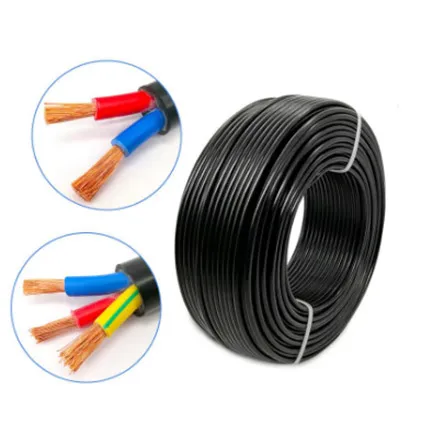
In a world racing toward sustainability, renewable energy isn't just a trend—it's the foundation of a greener future. From sun-drenched solar farms to wind-swept turbine fields, every clean energy project relies on a critical yet often overlooked component: the cables that transmit power from source to socket. Choosing the right cables isn't just about technical specs; it's about ensuring efficiency, safety, and long-term reliability. As a global partner in building solutions, we understand that the right cables turn renewable potential into real-world impact. Let's explore the cables powering tomorrow's energy landscape—and how they fit into a seamless, sustainable building journey.
Renewable energy systems—solar, wind, hydro, or geothermal—operate in tough conditions: extreme temperatures, high humidity, constant UV exposure, or even saltwater for offshore projects. A subpar cable can lead to energy loss, safety hazards, or premature system failure. That's why selecting cables tailored to specific environments is as crucial as choosing the right solar panels or turbines. For businesses and developers, this means partnering with suppliers who don't just sell cables, but deliver solutions designed to grow with your project—from initial design to long-term maintenance.
At Coloria, we've seen firsthand how the right cables transform renewable projects. In Saudi Arabia, where solar installations face scorching heat and sandstorms, our clients rely on cables that withstand 50°C+ temperatures and resist corrosion. In Europe, wind farms trust our low-loss cables to maximize energy transmission over vast distances. It's not just about supplying products; it's about understanding the unique challenges of each project and crafting solutions that last.
Renewable energy installations demand cables built for purpose. Here's a breakdown of the most common types, their roles, and why they matter for your project:
| Cable Type | Primary Use | Key Features | Typical Environments | Coloria Advantage |
|---|---|---|---|---|
| Photovoltaic (PV) Cables | Connect solar panels to inverters/batteries | UV-resistant, flame-retardant, low electrical loss | Solar farms, rooftop installations, desert climates | Custom-engineered for high temperatures (up to 90°C) and sand abrasion—ideal for Middle Eastern projects |
| Wind Turbine Cables | Transmit power from turbine generators to grid | Flexible (for turbine movement), oil-resistant, (-40°C) | Onshore/offshore wind farms, coastal areas | Reinforced insulation to withstand constant bending and saltwater exposure |
| Energy Storage Cables | Link batteries in solar/wind storage systems | High current capacity, chemical-resistant | Residential/commercial battery banks, microgrids | Compliant with global safety standards (UL, IEC) for indoor/outdoor use |
| Submarine Cables | Transmit power from offshore wind/solar to land | Waterproof, pressure-resistant, armoured | Offshore renewable projects, island grids | Collaborative design with marine engineers for deep-sea durability |
| Low-Voltage Distribution Cables | Distribute power within renewable facilities (e.g., solar farm control rooms) | Cost-effective, easy to install, fire-safe | Industrial plants, commercial buildings, data centers | Available in pre-cut lengths to reduce waste and installation time |
Solar panels generate DC power, which needs to travel to inverters (to convert to AC) and then to the grid or batteries. PV cables are the bridges in this journey, and their performance directly impacts energy output. In hot, sunny regions like Saudi Arabia, a cable that melts or degrades under UV rays isn't just a hassle—it's a financial loss. Coloria's PV cables are built with cross-linked polyethylene (XLPE) insulation, which stands up to extreme heat and won't crack under years of sun exposure. We've supplied these cables to solar farms across the Middle East, where projects often span thousands of panels—each one relying on a cable that won't let them down.
Wind turbines aren't static—their blades spin, and their nacelles (the housing atop the tower) rotate to face the wind. This constant movement means the cables inside must bend repeatedly without breaking. Coloria's wind turbine cables use a special elastomer jacket that stays flexible even in freezing temperatures, while copper conductors ensure minimal energy loss. For offshore turbines, we add a lead or aluminum armor layer to protect against fish bites and saltwater corrosion. It's the kind of attention to detail that turns a "good" cable into a "reliable for 20 years" cable.
Renewable energy isn't always available on demand—solar panels stop working at night, wind turbines need breeze. That's where energy storage comes in, and the cables connecting batteries must handle high currents without overheating. Coloria's storage cables are designed with thick, tinned copper conductors and flame-retardant sheathing, making them safe for both residential battery setups and large-scale commercial storage facilities. In Saudi Arabia, where solar power dominates, these cables help businesses keep the lights on long after sunset.
Selecting cables isn't a one-size-fits-all process. It starts with asking the right questions: What's the project's lifespan? Will the cables be exposed to sunlight, water, or chemicals? How much power needs to be transmitted? At Coloria, we don't just hand over a catalog—we work alongside your team to answer these questions and more. Here's what we prioritize:
A cable for a rooftop in Riyadh needs to handle 50°C heat and blowing sand; one for a Norwegian wind farm must survive snow and ice. We map your project's climate and terrain to recommend materials that won't degrade prematurely.
From IEC 60228 (conductor standards) to UL 4703 (solar cables), compliance isn't optional. Our cables undergo rigorous testing to meet global and local regulations—critical for projects in Saudi Arabia, where safety codes align with international best practices.
Cheap cables might save money upfront, but frequent replacements or energy loss cost more in the long run. We balance quality and budget, helping you invest in cables that pay off over 25+ years—aligning with the lifespan of most renewable systems.
Renewable energy projects are about more than cables and solar panels—they're about building a sustainable future. At Coloria, we've spent decades supporting this mission, especially in regions like Saudi Arabia, where the push for "2030 Vision" is driving unprecedented growth in clean energy. Here's why developers and contractors trust us:
Why coordinate with multiple suppliers when you can get everything from solar panels to cables in one order? Our "end-to-end" approach saves you time and reduces logistical headaches—perfect for tight project deadlines.
With a presence in Saudi Arabia, we understand the unique challenges of Middle Eastern renewable projects: extreme heat, local regulations, and the need for fast, on-the-ground support. Our cables are engineered in Europe and Asia but tested locally to ensure they thrive here.
We don't just supply "green energy" cables—we make them green, too. Our manufacturing processes cut carbon emissions by 30%, and we use recycled materials in insulation where possible. It's our way of contributing to Saudi's "" (dual carbon goals) and global climate action.
We invest in training our local teams to stay ahead of renewable tech trends. Whether you're building a small rooftop solar system or a mega solar farm, you'll work with experts who speak your language and understand your vision for a sustainable future.
Real Impact in Saudi Arabia: Last year, we partnered with a Riyadh-based developer on a 50MW solar farm. By supplying PV cables, solar panels, and even the mounting systems as a single package, we reduced their procurement time by 40%. Today, that farm powers over 10,000 homes with clean energy—and our cables are still performing like new, even after two harsh desert summers.
As renewable energy grows, so does the demand for smarter, more efficient cables. Tomorrow's cables will do more than transmit power—they'll monitor themselves for wear, communicate with grid systems, and even repair minor damage automatically. At Coloria, we're already exploring these innovations, from AI-powered cable health sensors to bio-based insulation materials.
In Saudi Arabia, where the "2030 Vision" calls for 50% renewable energy by 2030, these advancements will be game-changers. Imagine a solar farm where cables alert maintenance teams before a fault occurs, or wind turbines that adjust power flow based on real-time cable performance data. That's the future we're building—one cable at a time.
Recommend Products












