
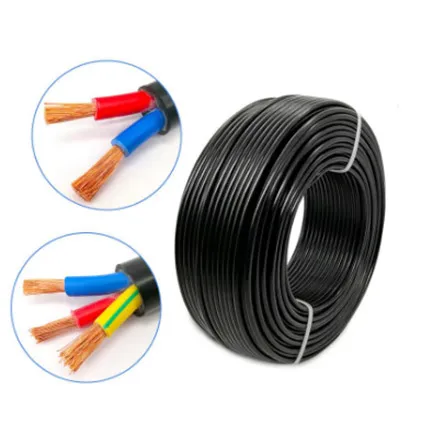
In the heart of modern supply chains, cold storage and warehousing facilities stand as silent guardians of freshness and quality. From frozen foods that feed communities to pharmaceuticals that save lives, these spaces operate around the clock, maintaining precise temperatures that can drop as low as -30°C. But behind the scenes of this icy efficiency lies an often-overlooked hero: the cables that power, control, and connect every system. Imagine a warehouse where temperatures swing, moisture lingers, and heavy machinery rumbles—any cable failure here isn't just a technical glitch; it's a threat to product integrity, operational safety, and business continuity. That's why choosing the right cables for these environments isn't just a purchase decision; it's an investment in reliability.
For facility managers, contractors, and project planners, navigating the world of cold storage cables can feel overwhelming. With so many options—each claiming to be "cold-resistant" or "industrial-grade"—how do you separate marketing hype from genuine performance? And in regions like the Middle East, where cold storage demands are growing alongside urbanization and food security goals, finding a partner who understands both local needs and global quality standards is even more critical. This is where specialized expertise and integrated solutions make all the difference.
Cold storage environments aren't just "cold"—they're hostile to ordinary cables. Let's break down the unique hurdles these systems face:
These challenges aren't just technical nuisances—they directly impact a facility's bottom line. A single cable failure in a pharmaceutical cold room could lead to $100,000+ in lost vaccines. In a food warehouse, downtime might mean spoiled produce and violated health codes. The solution? Cables engineered specifically for these environments—and a supplier who can deliver them as part of a seamless, end-to-end plan.
Not all cables are created equal. Here's a deep dive into the types that thrive in cold storage, along with why they matter and how they perform:
Every cold storage facility runs on electricity—from compressors and lighting to conveyor belts and temperature sensors. Low-temperature power cables are the workhorses that deliver this energy reliably, even in freezing conditions.
What makes them special? These cables feature insulation materials like cross-linked polyethylene (XLPE) or ethylene propylene rubber (EPR), which remain flexible at temperatures as low as -40°C. Unlike standard PVC-insulated cables (which become brittle below 0°C), they resist cracking and maintain electrical conductivity in extreme cold. Many also include a tough outer jacket (often made of polyvinyl chloride or polyurethane) to protect against moisture and physical damage.
Real-world application : In a 50,000 sq. ft. frozen food warehouse in Riyadh, Saudi Arabia, Coloria supplied low-temperature power cables for the main distribution system. The facility, which stores everything from frozen chicken to ice cream, operates at -25°C year-round. Thanks to the cables' XLPE insulation and UV-resistant jackets, they've maintained consistent performance for over 5 years—even during summer months when outdoor temperatures spike, causing thermal stress at loading dock transitions.
Cold storage isn't just about keeping things cold—it's about controlling the environment with pinpoint accuracy. Control cables carry signals between sensors, thermostats, and HVAC systems, ensuring temperatures stay within 0.5°C of the target. They also manage automated systems, like robotic palletizers and door openers.
Key features : These cables are designed for low signal loss and electromagnetic interference (EMI) resistance—critical in facilities with heavy machinery. Their conductors are often stranded (instead of solid) for flexibility, making them easy to route through tight spaces like ceiling voids or under raised floors. For added protection, many control cables include a foil or braided shield to block EMI from nearby power lines.
Why it matters : Imagine a cold room where the temperature sensor's signal is distorted by EMI. The system might mistakenly think the room is too warm and overwork the compressor, wasting energy. Or worse, it might fail to detect a temperature rise, putting products at risk. High-quality control cables eliminate these risks, ensuring smooth communication between all facility systems.
Modern warehouses are smart—they rely on data to track inventory, monitor energy use, and predict maintenance needs. Communication cables (e.g., Ethernet, fiber optic) are the nervous system that carries this data, linking IoT devices, cameras, and management software.
Challenges in cold environments : Standard Ethernet cables can suffer from signal degradation in low temperatures, while fiber optics need special handling to avoid brittleness. That's why cold storage communication cables often use reinforced jackets and gel-filled cores to repel moisture and maintain flexibility.
Future-proofing with fiber : As warehouses adopt more automated systems (like AI-powered inventory scanners), demand for high-bandwidth communication is skyrocketing. Fiber optic cables, with their ability to transmit data over long distances without loss, are becoming the go-to choice. Coloria, for example, offers fiber optic solutions with low-temperature-rated coatings, ensuring they perform in -30°C environments while supporting speeds up to 10 Gbps—perfect for real-time inventory tracking.
Some facilities have extra-specific demands. Here are two critical specialized cable types:
| Cable Type | Key Features | Typical Temperature Range | Best For |
|---|---|---|---|
| Low-Temperature Power Cables | XLPE/EPR insulation, flexible at -40°C, moisture-resistant jacket | -40°C to +90°C | Main power distribution, compressors, heavy machinery |
| Control Cables | Stranded conductors, EMI shielding, oil-resistant jacket | -30°C to +80°C | Thermostats, sensors, automated systems |
| Fiber Optic Communication Cables | Reinforced coating, gel-filled core, high bandwidth | -40°C to +70°C | IoT devices, inventory tracking, video surveillance |
| Fire-Resistant LSZH Cables | LSZH jacket, flame-retardant insulation, low smoke emission | -20°C to +90°C | Healthcare storage, pharmaceutical facilities |
Selecting cables isn't just about picking a "cold-resistant" label. Here's what to consider to ensure you get the right fit:
For many facility managers, this list feels overwhelming. That's where a one-stop supplier becomes invaluable. Instead of coordinating with multiple vendors for power cables, control cables, and communication systems, you can work with a partner who handles it all—ensuring compatibility, quality, and on-time delivery.
At Coloria, we don't just sell cables—we deliver peace of mind. As a global one-stop architectural solution provider with decades of experience in the Middle East, we understand the unique demands of cold storage and warehousing in regions like Saudi Arabia. Here's how we stand out:
Imagine needing power cables, control systems, lighting fixtures, and even solar panels for your warehouse's energy needs. Instead of juggling 5 different suppliers, you can get everything from Coloria. Our 14 product lines cover everything from electrical fixtures and cables to sustainable green—all under one roof. This integration means fewer delays, consistent quality, and a single point of contact for support.
For example, when a major logistics company in Jeddah built a new cold storage hub, they turned to Coloria for cables, electrical, and LED lighting. By coordinating all these elements, we reduced their project timeline by 20% and eliminated compatibility issues between systems.
With a dedicated in Saudi Arabia, we're not just a distant supplier—we're part of the local community. Our team understands the region's climate (scorching summers, occasional sandstorms), building codes, and even Saudi Vision 2030 goals (like sustainability and). We source cables that meet both international standards (e.g., IEC 60228 for power cables) and local regulations, ensuring your project stays compliant.
We believe in cables that outlast the facilities they power. Our electrical fixtures & cables undergo rigorous testing—including cold-bend tests at -40°C, abrasion resistance checks, and moisture penetration trials—to ensure they perform in the harshest conditions. Many of our cables also feature sustainable materials, aligning with global "" trends and helping you meet green building certifications.
Our commitment doesn't end at delivery. We invest in to stay ahead of industry trends, from smart building technologies to next-gen insulation materials. Whether you need help designing a cable layout for a new warehouse or troubleshooting an existing system, our technical team is available 24/7—because in cold storage, downtime waits for no one.
As cold storage facilities evolve, so do their cable needs. Here's what to watch for in the coming years:
Cold storage and warehousing are the unsung heroes of global supply chains. They keep our food fresh, our medicines safe, and our economies moving. But none of this works without reliable cables—cables that can handle freezing temperatures, moisture, and the chaos of a busy facility.
Choosing the right cables isn't just a purchase; it's an investment in your facility's efficiency, safety, and long-term success. And when you partner with a one-stop supplier like Coloria, you're not just getting cables—you're getting a team that understands your challenges, delivers quality solutions, and grows with you.
Ready to build a cold storage facility that's resilient, efficient, and future-proof? Let's talk. Because in the world of cold storage, the right cables make all the difference.
Recommend Products












