
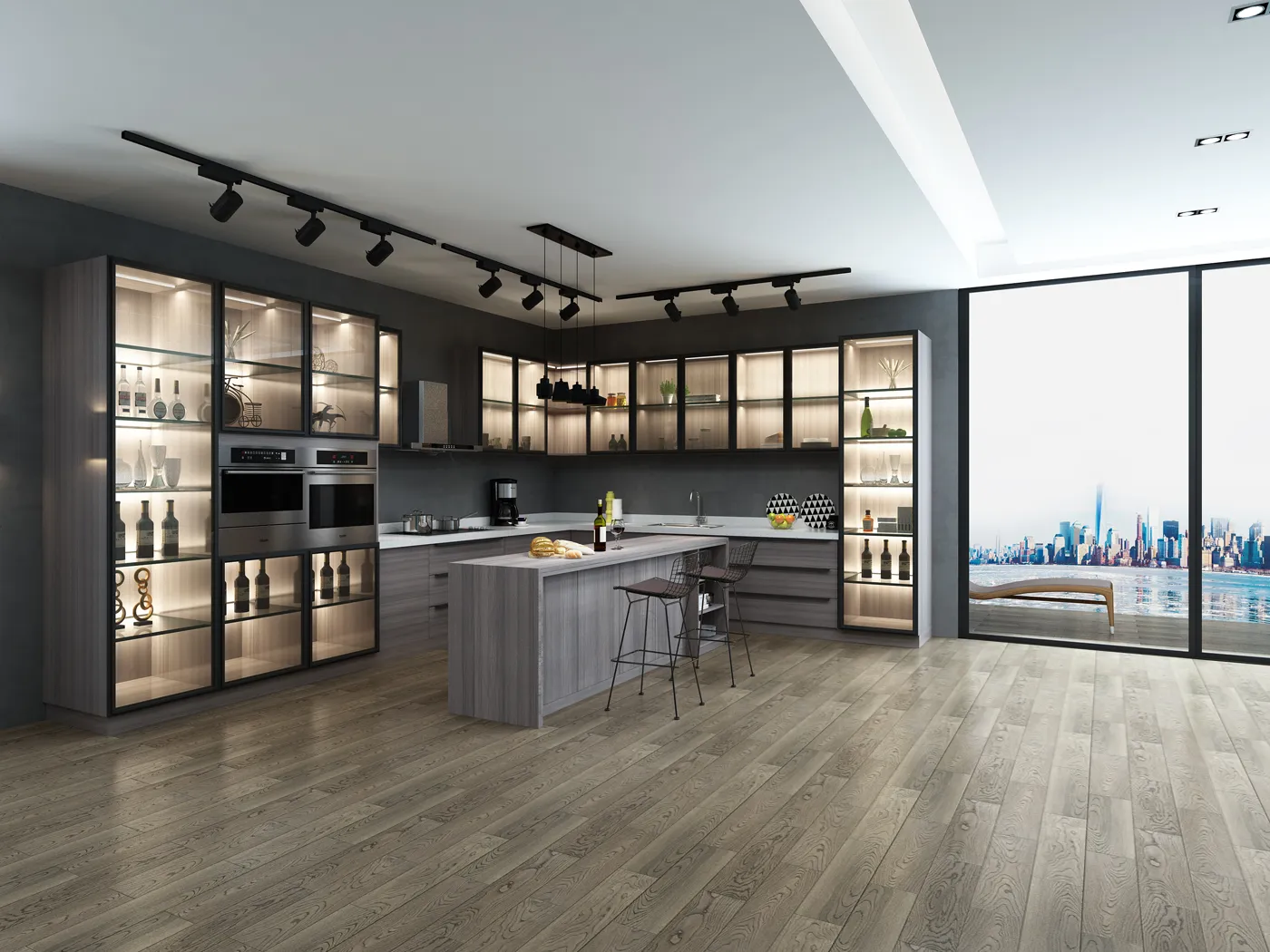
Your Practical Guide to Navigating EU Standards for Safer, Better Kitchens
Let's face it – kitchen renovations are exciting but navigating regulations? Not so much. If you're looking to bring your cabinets to the European market or just want to ensure your kitchen remodels meet top-tier standards, you're in the right place. We're cutting through the legal jargon to explain what the European CE certification truly demands for your kitchen cabinets in plain language you can actually use. No vague legalese, no bureaucratic runarounds – just clear, actionable information that'll help you build cabinets people can trust.
Think of CE certification as your kitchen cabinet's passport to Europe. But it's not just paperwork – it's a promise. When that mark appears on your cabinet, it's silently telling homeowners: "I won't collapse unexpectedly, I won't poison your air, and I won't be a fire hazard." That peace of mind? That's what makes CE certification invaluable.
While the technical documents run for hundreds of pages, the requirements boil down to four non-negotiable pillars:
Forget complicated classifications – these fundamentals protect families and give your product credibility.
Picture this: you've chosen beautiful laminate cabinets only to discover months later they fail formaldehyde emission tests. This is where most DIY enthusiasts and manufacturers get tripped up. The EN 13986 standard doesn't just regulate plywood or MDF – it covers every component including:
Practical Tip: Always request Declarations of Performance (DoP) from your supplier for every material – hinges, handles, adhesives, even sealants. Suppliers with transparent documentation become your safest partners.
The formaldehyde limits under EN 717-1 are brutally strict: Super E0 grade demands ≤1.5 mg/L – a level where you'll barely smell that characteristic "new cabinet" scent. But here's what they don't warn you about: humidity impact. Cabinets that pass dry environment tests might still leach formaldehyde in humid Mediterranean kitchens. Always test under real-world moisture conditions .
Real Talk: Maria, a Barcelona architect, specified "certified materials" for a project. After installation, clients complained of headaches. Testing showed adhesive used for laminate edges emitted formaldehyde at 4.2 mg/m³ – exceeding the 0.1 ppm limit during humid weather. $38,000 in replacements later, she learned: certification must cover EVERY component.
Regulations like EN 14749 sound dry until you've seen a cabinet collapse. Load testing isn't theoretical – it's about cereal boxes stacked two deep, pots piled haphazardly, or that teenager using drawers as steps. The standard requires:
| Component | Test Requirement | Pass Threshold |
|---|---|---|
| Shelves | Static load of 15kg applied evenly for 7 days | ≤3mm permanent deformation |
| Drawers | 15kg load + 250 open/close cycles | Smooth operation, no jamming |
| Wall Units | 4x safety factor of dead load + simulated contents | Zero detachment from wall |
| Cabinet Frames | 150N lateral force applied to doors/panels | ≤1.5° permanent deflection |
But here's the secret test labs don't advertise: The "soft fail." Your shelves might pass with 2.9mm deformation, but that wobble becomes noticeable with plates . Aim for half the permitted deformation – your customers will feel the quality.
Installation Reality Check: Even perfect cabinets fail if installed wrong. CE marks require clear installation instructions showing exact anchor spacing, wall type compatibilities (brick vs. drywall), and tools needed. Ambiguity = liability.
Ever see a cabinet that looked great in photos but stained instantly? The EN 438 standard simulates actual kitchen disasters:
The rating system (Class 1-5) isn't pass/fail – Class 4-5 surfaces are noticeably superior:
Field Lesson: A German manufacturer marketed "Class 4" laminate. After complaints, testing revealed they'd cherry-picked results using older EN 438:2005 standard – which had looser criteria than current EN 438:2016. They'd ignored that spill tests now require 24-hour exposure instead of 16. €250K in fines later, their website finally acknowledged: "Current Edition Requirements Apply."
Nobody expects kitchen cabinets to be fireproof, but regulations prevent them from accelerating flames. The critical standard is EN 13501-1:
Here's where environmentally friendly building materials get misunderstood: Bamboo composite cabinets tested at Fire Class C – unsuitable next to ranges despite being "sustainable." Eco-friendly ≠ fire-safe. Always test finished assemblies – veneers and finishes drastically alter ratings.
Fire Safety Hack: Place fire-rated range hood panels between stove and overhead cabinets. This €50 upgrade can reduce cabinet fire requirements to Class E – significantly cutting material costs.
Getting CE certified isn't a formality – it's a documented process:
Budget realistically: Certification costs €5,000-€12,000+ per cabinet line. But non-compliance fines start at €50,000 and can include mandatory product recalls .
Confused about CARB, FSC, or Greenguard? Here's how CE differs:
CE is the only certification that legally proves your cabinet won't fail dangerously in an EU home. It's comprehensive by design.
Meeting CE standards does more than open markets – it builds brand trust. Document these processes:
In a 2024 EU consumer survey, 78% of respondents said independently verified safety certifications influenced their kitchen purchases more than price. That's your opportunity.
Confirm all boxes are ticked to avoid months of delays:
Bonus: Keep test units identical to production models – auditors WILL compare.
CE marking gets you legal entry – not customer loyalty. How to truly differentiate:
The kitchen cabinets that dominate European markets aren't just compliant – they're provably better. CE certification isn't your ceiling – it's your foundation.
At the end of the day, CE certification shouldn't feel like bureaucratic hoops. It's about delivering cabinets that withstand real life – the spills, the weight, the everyday chaos. By designing to these standards from the start, you're not just avoiding penalties; you're building trust. And in Europe's competitive kitchen market, where consumers deeply value safety and durability, that trust converts to loyalty and referrals. So skip the shortcuts – build cabinets that meet Europe's standards without compromising what makes them beautiful and functional. Because that's how you become more than just compliant – you become recommended.
Recommend Products












