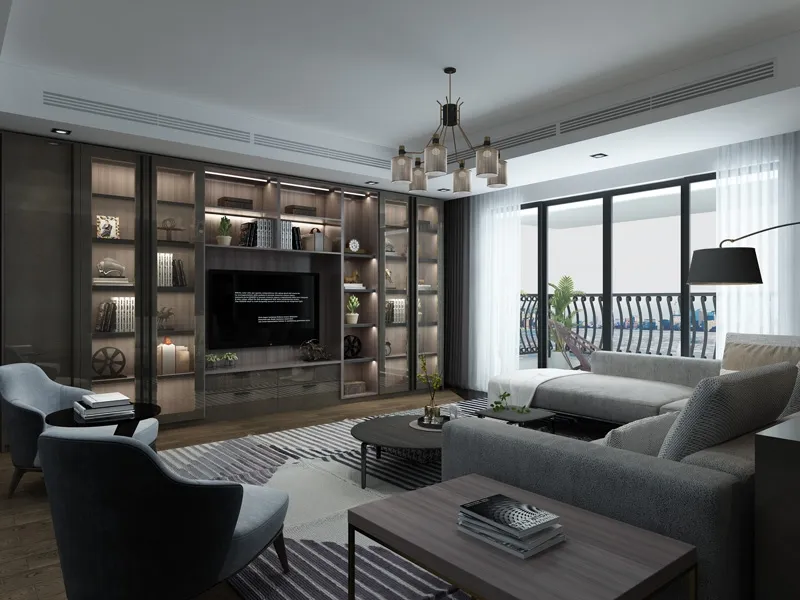
You know that moment when you run your hand across a piece of furniture and it just
feels
different? That slight curve where two pieces meet, that satisfying click when a drawer closes, that sturdy weight when you lean against it? That's what we're talking about when we say "detail" in furniture craftsmanship. It's not just about the big picture - it's those countless little touches that transform a cabinet from a storage box to something that belongs in your living space.
The Unseen Foundation: Structural Strength
Let's start beneath the surface - where the real magic happens. Structural strength isn't something you notice until it's missing. Ever had a
TV cabinet that wobbled when you put your coffee cup down? Or drawers that sagged after a year? That's structural weakness in action. High-end TV cabinets take a different approach. They're built like miniature architecture projects - engineered to support significant weight while maintaining perfect alignment over years of use.
Premium manufacturers don't just use thicker wood - they engineer stress points with joinery that would make a shipbuilder proud. Dovetail joints aren't just pretty; they're designed to handle the constant push-pull forces of daily use. Corner braces aren't an afterthought but a calculated reinforcement strategy. And that solid wood back panel? It's not just for looks - it creates torsion resistance that prevents the entire structure from twisting.
The material selection plays a huge role too. Solid hardwoods like oak, walnut, or maple aren't chosen just for their beauty but for their density and stability. And when engineered woods come into play, it's not just any particle board - it's high-density moisture-resistant cores designed specifically to avoid the dreaded swelling that ruins cheaper furniture. There's science behind that beauty: proper cross-bracing placement, weight distribution calculations, and shock absorption considerations that turn static furniture into living, functional art.
Edge Banding: Where Details Shine
Here's where craftsmanship becomes visible. Edge banding - that trim along the exposed edges of panels - seems trivial until you consider what it does. It's the bumper guard for your furniture, the frame for its surfaces, the polished hem on its garments. Cheap versions peel or chip; great edge banding is nearly invisible because it blends so perfectly.
The process reveals everything. Mass-produced furniture uses simple adhesive strips that fail over time. Quality manufacturers use heat-activated adhesives with pressure systems that create permanent bonds. Then there's the finish work: sanding the edges to a slight bevel so they feel soft to the touch, matching not just the color but the wood grain pattern and direction so the trim disappears into the surface. Have you ever seen edge banding that looks like a colored sticker? That's the cheap stuff. Great edge banding should make you question whether the surface is solid wood or trimmed paneling.
And then there are the specialized techniques. Wrapped corners that eliminate seams entirely. Inlaid metal strips that become design elements. Contrasting wood varieties used intentionally as trim highlights. The thickness matters too - premium edges have substance you can feel, not paper-thin veneers that wear through. Next time you examine furniture, run your fingers along the edges. That tactile experience tells you more about quality than any sales tag ever could.
Hardware: The Silent Performer
Hardware in high-end TV cabinets is like the supporting cast in a great movie - you shouldn't notice it doing its job. Soft-close drawers shouldn't just slow before closing; they should glide shut with an authoritative whisper. Hinges should disappear behind door panels while offering a full range of motion. Adjustable feet should actually stabilize on uneven floors.
Hinge Engineering:
Forget the five-cent hinges that scream when they open. Premium concealed hinges have hydraulic dampers controlling their entire motion path. Adjustable in three dimensions, they let craftsmen fine-tune doors to paper-thin alignment tolerances
Slide Technology:
Drawer slides rated for hundreds of pounds might seem overkill until you load one with media equipment. Full-extension slides should offer smooth resistance throughout their travel - no jerky motions or dead spots
Finish Durability:
Hardware finishes aren't just cosmetic - they're armor plating. Quality zinc or brass hardware undergoes multiple plating processes to resist tarnishing and wear. That satin nickel finish should feel smooth like glass, not grainy like sandpaper
Cable Management:
Integrated cable channels with brush grommets show attention to real-world needs. These should allow cable rearrangement without snagging while keeping dust out
The hardware customization opportunities in
custom furniture
allow perfect integration with your living space. Whether it's antique brass pulls that pick up your room's metallic accents or minimalist push-latches that disappear into the grain - this is where personalization meets functionality. The subtle click of a magnet catch versus the clank of metal-on-metal reveals more about quality than any specifications sheet.
Material Marriage: Combining Elements
What happens when wood meets metal? Or glass connects with stone? At the highest quality levels, these intersections are celebrations of craftsmanship, not compromises. Consider a cabinet with a walnut base supporting a marble top. The connection isn't just glue or screws - it's an engineered interface accommodating different expansion rates and weights.
Or examine how
glass doors mount to wood frames. Cheap versions use visible metal brackets; quality installations feature virtually invisible channels with silicone cushions that prevent rattling while protecting the glass. Even the joining of two different wood species requires expertise - ensuring similar moisture content and sealing all end grains prevents future separation.
Then there's the finishing consistency across materials. That satin finish shouldn't just match in color but in tactile feel. Run your hand across different surfaces - the transition between wood and metal should feel intentional, not jarring. And lighting integration takes this further - hidden LED strips that illuminate without glare, wiring concealed through structural elements rather than tacked on as an afterthought.
Touch Points: Where Human Meets Furniture
The best TV cabinets communicate quality through tactile experiences. That drawer pull nestles perfectly in your palm. That door handle clicks with satisfying precision. Even the adjustment levers beneath the cabinet feel substantial and responsive. These are all calculated experiences:
Ergonomic Design:
Handle contours that follow finger anatomy
Weighted Action:
Moving parts balanced for intuitive operation
Thermal Properties:
Surfaces that feel welcoming rather than cold
Texture Transitions:
Thoughtful surface changes signaling interaction points
And it's not just about handling - it's sensory engagement. The subtle scent of real wood. The visual depth of a quality finish. Even the sound matters - solid doors should close with a muted thud, not a hollow clatter. Drawers should glide silently on their bearings. These sensory details transform furniture from objects to experiences.
Lasting Power: Aging with Grace
True quality reveals itself over time. While cheap cabinets deteriorate with peeling veneers and sagging shelves, premium pieces actually improve through proper maintenance and care. That solid wood develops a richer patina. Those mechanical joints settle into even tighter alignment. The hardware develops a soft luster.
Quality TV cabinets are designed with decades of use in mind. They feature:
Finish systems that cure to glass-like hardness
User-serviceable parts
Refinishable surfaces
Replaceable components
Adjustability to compensate for aging structures
This is sustainability through durability - a cabinet that serves generations without replacement. Consider the classic designs that remain relevant because their craftsmanship transcends trends. These pieces become family heirlooms not through sentimental value alone, but through genuine functional longevity.
Wrapping It All Together
At the end of the day, high-end TV cabinets earn their price not through flashy gimmicks but through invisible commitments to quality. That perfect edge banding represents hours of painstaking work. Those smooth-operating drawers reflect engineering precision. That rock-solid stability comes from material and structural integrity.
Next time you shop for media furniture, look beyond the surface. Open the doors and drawers - feel how they move. Run your fingers along the edges - notice how they meet. Study the joinery - see how pieces connect. Check the weight distribution - place pressure on unsupported areas. And most importantly, consider how all these elements create a functional artwork destined to center your living space for decades.
In our disposable culture, choosing craftsmanship means investing in excellence that only improves with time. Because true detail isn't just seen - it's felt, experienced, and appreciated every time you interact with a piece that could only result from uncompromising dedication to the subtle art of perfection.