

In the world of modern architecture, the balance between aesthetic vision and practical functionality has never been more critical. Architects and designers are no longer satisfied with "one-size-fits-all" materials—they crave solutions that adapt to bold curves, unique textures, and site-specific challenges, all while standing up to the test of time and climate. This is where MCM flexible cladding stone wall panel solutions have emerged as a transformative force, redefining what's possible for building exteriors and interiors. As a leading mcm flexible cladding stone wall panel supplier , we've witnessed firsthand how this innovative material, paired with tailored custom services, turns architectural dreams into tangible, stunning realities.
Before diving into design flexibility, let's start with the basics: What exactly is MCM flexible cladding? MCM, or Mineral Composite Material, is a cutting-edge building material crafted from a blend of natural minerals (like marble, granite, or limestone), reinforced with polymers and fibers. The result? A panel that's ultra-thin (typically 3–6mm thick), lightweight (3–5 kg/m²), and surprisingly strong—yet flexible enough to bend and contour to even the most complex surfaces.
Traditional stone cladding, while beautiful, often comes with trade-offs: heavy weight that strains structural supports, rigidity that limits design creativity, and high installation costs. MCM flips that script. Its flexibility isn't just a novelty; it's a solution to some of architecture's oldest headaches. Whether you're designing a residential home with sweeping organic lines or a commercial skyscraper needing a dynamic façade, MCM adapts without compromising on durability, weather resistance, or aesthetic appeal.
But MCM's value goes beyond mechanics. It's also an eco-conscious choice. Many formulations use recycled materials, and its lightweight nature reduces transportation emissions and installation labor. For residential building materials supplier and commercial building materials supplier alike, this makes MCM a standout option in an industry increasingly focused on sustainability.
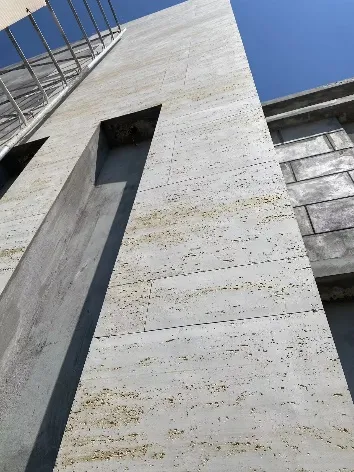
Imagine a boutique hotel with a façade that flows like a wave, or a museum entrance featuring a sweeping archway that mimics natural rock formations. These designs were once near-impossible with traditional stone or rigid cladding. MCM changes that. Its flexibility allows it to be bent to radii as tight as 30cm (and even tighter with specialized manufacturing), making curved walls, domes, and undulating surfaces not just possible, but practical.
We recently worked with an architect on a coastal restaurant project where the client wanted the exterior to evoke the movement of ocean waves. Using MCM panels, we created a seamless, curving façade that shifts in color with the sunlight—something that would have required expensive custom stone cutting (and structural reinforcement) with traditional materials. The result? A building that feels alive, blending with its environment rather than fighting against it.
MCM's flexibility isn't limited to shape—it's also about adaptability across projects. As a residential building materials supplier , we've seen homeowners use MCM for everything from accent walls in modern living rooms to entire exterior cladding for beachfront villas (thanks to its resistance to saltwater and humidity). For commercial clients, it's become a go-to for architectural façade solutions in retail malls, office towers, and even historical building renovations.
Take, for example, a recent renovation of a 1920s bank in a historic district. The client wanted to preserve the building's classic charm while updating its energy efficiency and durability. Traditional stone would have been too heavy for the original structure, and synthetic materials risked looking out of place. MCM panels, custom-colored to match the original limestone, were lightweight enough for the existing walls and flexible enough to follow the building's intricate moldings. The result? A restoration that honors the past while embracing modern performance.
Flexibility in design isn't just about form—it's about texture and visual appeal. MCM panels can be engineered to mimic nearly any natural material: rough-hewn granite, smooth marble, weathered sandstone, or even wood grain. But they can also go beyond nature, offering textures and finishes that don't exist in the wild—matte metallic surfaces, iridescent coatings, or subtle patterns that shift with light.
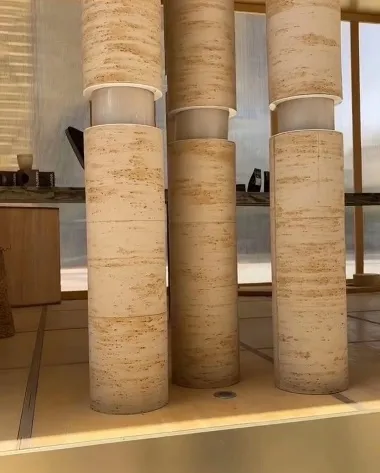
One of our most popular requests is for "cloud stone" textures, where the panel's surface resembles the soft, billowy patterns of sky clouds. For a high-end residential project in Riyadh, we custom-developed a cloud stone MCM panel with a matte finish that glows warmly at sunset, turning the home's exterior into a piece of art. This level of customization is why MCM is often called the "chameleon" of cladding materials—it becomes whatever the design demands.
Great materials are only half the equation. To truly unlock MCM's design potential, you need a supplier that offers more than off-the-shelf products—you need a partner in customization. Our custom services are built around the idea that every project is unique, and the cladding should reflect that. Here's how we bring that to life:
Not all MCM is created equal. Depending on the project's location (desert heat, coastal humidity, cold climates), usage (high-traffic commercial vs. low-maintenance residential), and fire safety requirements, the panel's mineral composition, polymer blend, and thickness can be adjusted. For example, a hospital or school project might require enhanced fire resistance, while a coastal home needs maximum saltwater durability. As a supplier, we work with clients to engineer MCM panels that meet their specific performance criteria—no compromises.
Standard panel sizes (often 1220x2440mm) work for many projects, but when design demands something different, we deliver. Need extra-large panels to minimize visible seams on a high-rise? We can manufacture up to 3000mm in length. Working on a façade with triangular cutouts or hexagonal patterns? Our waterjet cutting technology creates precise, custom shapes that fit together like puzzle pieces. For one university campus project, we produced MCM panels in the shape of the school's mascot—a falcon—to adorn the entrance hall. The result was a bold, brand-forward design that students and alumni instantly recognized.
Color matching is where custom services truly shine. Whether a client wants to match a specific Pantone shade for brand consistency, replicate the hue of local natural stone, or create a custom gradient, our color lab can develop pigments that integrate seamlessly with the MCM matrix. We also offer a range of finishes: polished for a sleek, modern look, honed for a soft matte, or textured for a rustic, natural feel. One luxury hotel client even requested panels with embedded crushed glass for a subtle sparkle—something we achieved by blending recycled glass particles into the mineral mix during production.
Flexibility in design means nothing if the installation process is a headache. That's why our custom services include end-to-end technical support. Our team of engineers works with contractors to create detailed installation guides, including adhesive recommendations, seam sealing techniques, and thermal expansion considerations. For complex projects, we even provide on-site training to ensure the panels are installed correctly the first time. This level of support is especially critical for architects new to MCM, helping them feel confident in pushing design boundaries.
A homeowner in Jeddah approached us with a vision: a modern home with a circular courtyard and exterior walls that curved inward, creating a sense of intimacy while maximizing natural light. Traditional stone was too heavy for the curved structure, and other cladding options lacked the natural stone look they desired.
Our solution? Custom MCM panels in a "desert sand" color, with a honed finish to mimic the texture of local limestone. We manufactured the panels in curved sections (with radii as tight as 50cm) and pre-cut them to fit the home's unique dimensions. The installation team, guided by our technical support, used a specialized adhesive system to secure the panels to the curved substrate. Today, the home stands as a testament to MCM's flexibility—its exterior flows like a natural formation, while the interior benefits from reduced structural load and lower maintenance costs.
A retail developer wanted their new mall in Dubai to stand out with a façade that reflected their brand's bold, energetic identity. They envisioned a dynamic pattern of geometric shapes in the brand's signature blue and orange colors, with varying textures to create depth.
Using MCM, we created custom panels in 12 unique shapes (triangles, trapezoids, and hexagons) and two custom colors (matched to the brand's Pantone codes). The panels were finished with a combination of gloss (for the blue sections) and matte (for the orange) to enhance contrast. The lightweight panels allowed for faster installation than traditional materials, helping the project meet its tight opening deadline. Today, the mall's façade is a landmark in the area—proof that MCM can turn brand identity into architectural art.
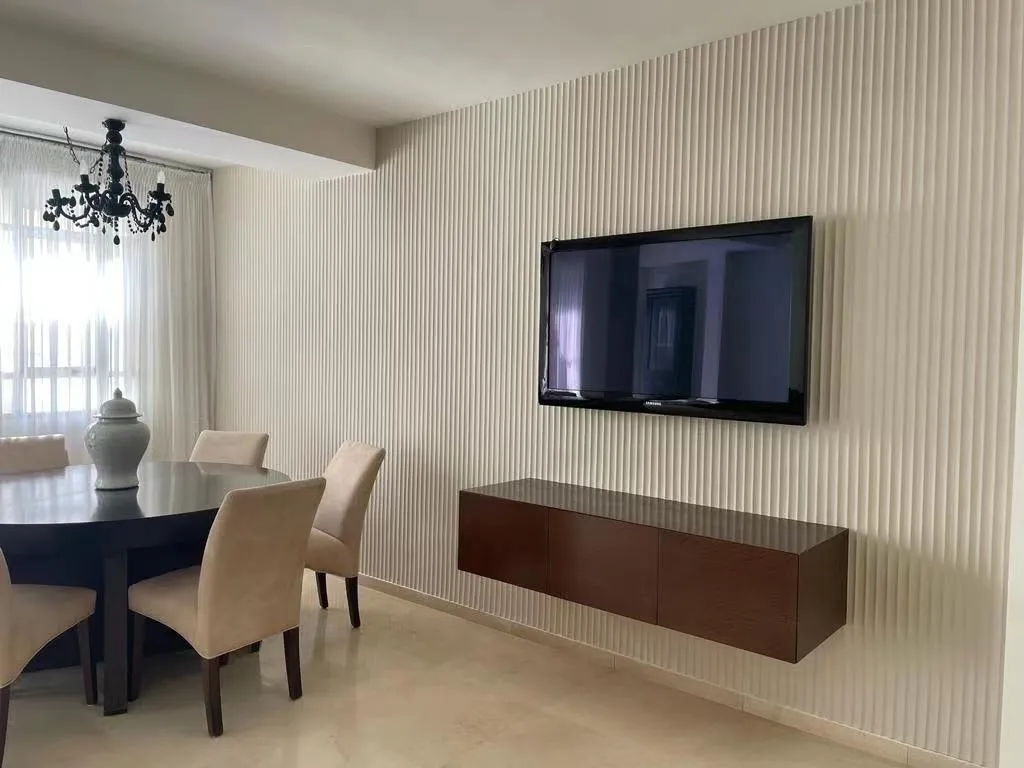
To understand just how flexible MCM is, it helps to compare it with other popular wall panel options. Below is a breakdown of how MCM stacks up against bamboo charcoal board, PU stone, and WPC (Wood-Plastic Composite) wall panels—all common choices for modern projects.
| Feature | MCM Flexible Cladding | Bamboo Charcoal Board | PU Stone Wall Panel | WPC Wall Panel |
|---|---|---|---|---|
| Flexibility (Curved Surfaces) | Excellent (bends to 30cm radii) | Low (rigid, limited to flat/gentle curves) | Moderate (some flexibility, but not tight radii) | Low (rigid, prone to cracking if bent) |
| Weight (kg/m²) | 3–5 | 8–10 | 6–8 | 10–12 |
| Custom Shape/Size Options | High (waterjet cutting, custom radii) | Moderate (standard sizes, limited custom cuts) | Moderate (some custom sizes, but complex shapes costly) | Low (mostly standard profiles) |
| Texture/Finish Customization | High (mimics stone, wood, metal; custom colors) | Low (limited to natural wood grain) | Moderate (stone textures, some color options) | Moderate (wood-look finishes, limited colors) |
| Fire Resistance | Class A (depending on formulation) | Class B (flammable without treatment) | Class B (polyurethane core) | Class B (wood content) |
As the table shows, MCM outperforms other options in flexibility, weight, and customization—making it the clear choice for projects where design innovation is a priority.

Modern architecture demands materials that don't just serve a function, but tell a story. MCM flexible cladding stone wall panels do exactly that—they blend the durability of stone with the adaptability of a modern composite, allowing designers to create buildings that are as unique as the visions behind them. And when paired with a supplier's custom services—material tailoring, custom shapes, color matching, and technical support—there's no limit to what can be achieved.
Whether you're a residential building materials supplier looking to offer homeowners something extraordinary, or a commercial building materials supplier aiming to deliver iconic architectural façade solutions , MCM cladding is more than a material—it's a tool for innovation. At the end of the day, the most exciting part of our work isn't just supplying panels; it's watching a design sketch transform into a building that makes people stop, look, and say, "How did they do that?" With MCM and custom services, the answer is simple: We made it possible.
Recommend Products











