
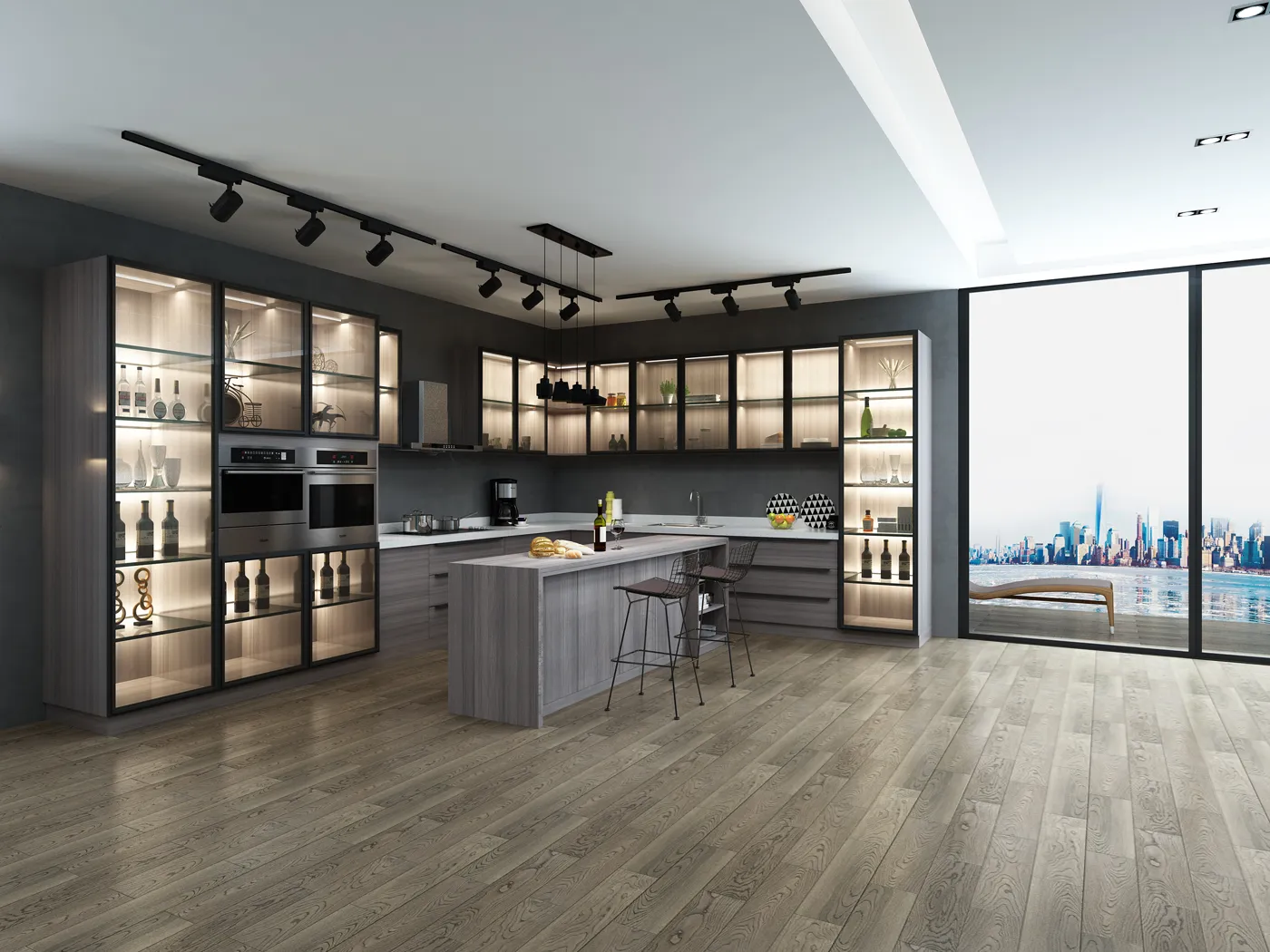
You know that feeling when you walk into a kitchen and immediately feel a sense of calm? That's the magic of Nordic minimalist design. It's not just about aesthetics - it's about creating spaces that breathe. This design philosophy strips away the unnecessary, letting functionality and natural beauty take center stage. Today we'll explore how these principles translate to kitchen cabinets, and why they're taking the global export market by storm.
Nordic design traces back to the early 20th century when Scandinavian designers started reacting against ornate styles. They believed good design should be accessible to all, not just the elite. This democratic approach shaped what we now recognize as Scandinavian Minimalism - where form follows function, but never at the expense of beauty.
What really sets Nordic kitchen cabinets apart isn't just their clean lines, but their soulful practicality. Designers here treat kitchens as living organisms. As one Stockholm-based cabinetmaker told me: "We don't just build boxes - we create habitats for human connection." This philosophy shows in every detail:
These elements mirror how Nordic architects frame interior spaces - never as static containers, but as dynamic partners in daily living. The same architectural philosophy guiding Angel Oaks' courtyard-focused layout applies to how a kitchen cabinet organizes your spices.
Nordic designers treat materials like characters in a story. Each has its own voice:
Birch & Ash: These aren't just "wood options" - they're climate partners. Their light tones bounce precious Scandinavian sunlight deeper into kitchens during winter's darkness. The subtly visible grain becomes a living calendar of seasonal changes.
Plywood Revolution: Don't underestimate engineered woods. Nordic designers pioneered techniques like multi-laminate edges that turn budget-friendly plywood into sculptural statements. It's sustainability made beautiful - using every part of the timber efficiently.
Consider the Jerusalem stone at Angel Oaks - how it moves seamlessly from exterior to interior. Nordic cabinet designers apply similar continuity through:
The genius lies in what's omitted. You'll never find ornate moldings or fussy hardware here. Instead, Nordic cabinet handles are often "negative space" grooves - functional minimalism that becomes an art form. It's the design equivalent of a perfectly edited sentence.
As global demand grows, manufacturers have adapted Nordic cabinetry for diverse markets while preserving its essence. The key export features:
Flat-Pack Symphony: Unlike traditional cabinetry, Nordic designs unpack like 3D puzzles. Clever engineering allows thick panels to interlock with paper-thin margins. One Malmö factory worker described it as "IKEA with soul" - affordable flat-packing without compromising on materials.
Climatic Shape-Shifting: Humidity-resistant birch plywood stays true in Bangkok's steam while thermally treated pine withstands Montreal's freeze-thaw cycles. It's material science wrapped in beautiful design.
Module Magic: Nordic cabinet systems are designed with expansion in mind. Those beautiful base units? They accept international standard appliances - a Swiss induction cooktop slides in as neatly as a Korean kimchi fridge.
The real export superpower? Nordic minimalism speaks everyone's language. From Dubai penthouses to Tokyo micro-apartments, its light palette creates spaciousness, its smart storage solves problems, and its timeless aesthetics never scream "trendy".
What makes these cabinets work globally isn't just physical adaptation but cultural empathy. Nordic designers understand that kitchen cabinets represent different things worldwide:
Successful exporters retain the Nordic soul while making it locally relevant. How?
Color Chameleons: Keeping light-reflecting properties but shifting tones - Swedish "faded pastels" become Korean "air hues" - all staying true to the muted palette.
Hardware Hybrids: Classic finger pulls can be optional add-ons replacing with country-specific hardware preferences while maintaining the clean look.
It's about interpreting rather than imposing. Like how Danish designers added deeper drawers for Middle Eastern clients storing bulk spices, or the Singapore version with humidity-controlled tea cabinets.
Here's why Nordic cabinet makers outcompete ornate styles globally:
Sustainability Story: Simple designs mean less waste. Fewer complex cuts = 98% material utilization. Global eco-certifications practically built-in.
Quality Control Friendly: Without intricate details, flaws glare immediately - forcing higher standards. As one Helsinki quality manager put it: "Minimalism is our most demanding inspector."
Robot-Ready: Straight lines play nice with automation. Norwegian factories can build cabinets with just three programmers - compared to ornate Italian workshops needing twenty artisans.
Future-thinking manufacturers are pioneering smart minimalism. Picture cabinets with invisible charging pads, touch-sensitive surfaces with programmable lighting, or ventless downdraft systems - all seamlessly integrated into the clean aesthetic.
Nordic minimalist cabinets endure because they answer deeper cravings:
In our overstimulated world, they create visual rest. In shrinking urban spaces, they maximize function without bulk. For sustainability seekers, they represent mindful consumption. And in the ultimate paradox - their "emptiness" invites us to fill them with meaning.
The greatest lesson? That true minimalism is never cold. When you open those smooth birch drawers, feel the perfect weight balance, see how the joints breathe in humidity, you understand - this is design with warmth. It's why what began as a practical response to Scandinavian winters has become a global love affair.
Nordic kitchen cabinets show us that minimalism isn't about having less, but making space for more - more connection, more beauty, more possibility. And that's a universal craving.
Recommend Products












