
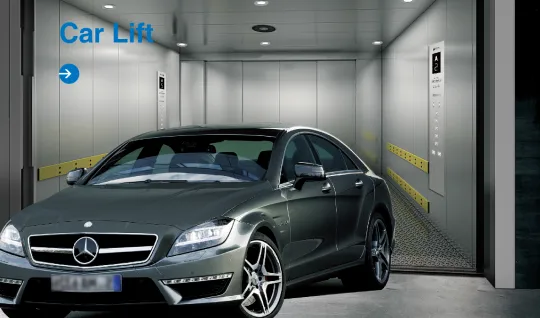
Picture this: Your prized vintage Mustang is suspended 10 feet in the air, balanced on a platform no larger than your living room rug. What stands between that cherished machine and disaster? Not luck or hope, but cold, calculated engineering principles. Auto lifts—the unsung heroes of modern garages—demand more than just metal and bolts. They require a symphony of physics, materials science, and human-centered design.
When we talk about automotive lifts, we're not just discussing convenience tools—these are safety-critical systems that hold thousands of pounds of machinery inches above human heads. The evolution from rudimentary maintenance pits to today's sophisticated elevators represents decades of engineering refinement. But what truly matters? Understanding the marriage between intelligent design and material selection that makes these structures safe for daily use.
Automotive lifts face unique nightmares conventional structures never encounter:
Consider the physics: A standard car lift rated for 8,000 lbs doesn't just bear that weight—it handles impact forces when vehicles enter unevenly, torque stresses during maintenance tilting, and the constant vibration of mechanical systems. This trifecta separates adequate design from truly safe engineering.
Dominating lift construction with yield strengths up to 700 MPa, steel laughs at weights that humble other materials. Its secret? Plastic deformation. When overloaded, steel bends visibly screaming "DANGER!" before snapping—a critical fail-safe humans can actually see. In commercial garages, structural steel framing continues to be the backbone of reliable lift systems, with fatigue life measured in decades rather than years.
Ever bend a paperclip repeatedly until it snaps? That's material fatigue—and it haunts lifts daily. Here's how to win:
Weighing one-third of steel, aluminum sings for low-rise lifts... until corrosion joins the chorus. Salt from winter roads creates battery-like reactions at joints. Coatings matter here: Anodized finishes outperform paint, surviving 1,000+ salt spray test hours. But when engineers require precision walls and minimum bulk, aluminum alloy frames deliver dimensional stability steel can't match.
Modern designers wield FEA software like wizards, creating virtual prototypes that reveal stress patterns invisible to human eyes. Consider these case studies:
Software models chaos:
The goal? Ensure structures survive 3x their rated load capacity—because humans trust machinery with their lives. Real-world validation follows: hydraulic test rigs cycle platforms thousands of times while strain gauges sing the hidden symphony of stress.
While ANSI/ALI ALCTV certification establishes minimum requirements, true safety lives in the margins beyond compliance:
Commercial success in automotive lifts isn't just about wall system components —it's designing systems technicians instinctively use correctly.
Imagine lift beams that blush (via embedded sensors) when stressed. Or polymer coatings healing scratches during a humid summer night. The future whispers:
These innovations aren't sci-fi—they're being tested in university labs worldwide.
The Munich incident of 2021 revealed critical insights: Mechanics had stacked equipment unevenly on a truck lift plate. The audible groaning before automatic lockdown engaged bought 4 seconds of escape time. The hidden hero? Overbuilt pivot joints with triple-bearing assemblies that resisted catastrophic failure when the physics equation went unbalanced.
The strongest structures marry materials thoughtfully:
| Material Combination | Stress Advantage | Practical Application |
|---|---|---|
| Steel base + Aluminum columns | Mass dampening + vertical rigidity | Mobile scissor lifts |
| Carbon fiber + Steel reinforcements | Fatigue resistance with deflection control | High-end commercial 2-post lifts |
These pairings require exquisite structural planning to manage differential expansion rates and galvanic compatibility issues.
Designing load-bearing structures transcends mechanics—it's about acknowledging responsibility. That clang of steel beneath a lifted vehicle? That's the sound of science, pride, and care—holding up far more than machines. When material selection meets intelligent ceiling-to-floor structural integration , we don't just build lifts—we build confidence that stands the test of time.
The next frontier? Material-aware AI that continuously monitors and predicts structural health. Because safety isn't a static achievement—it's a relentless pursuit that honors the trust placed in every bolt, beam, and bearing.
Recommend Products












