
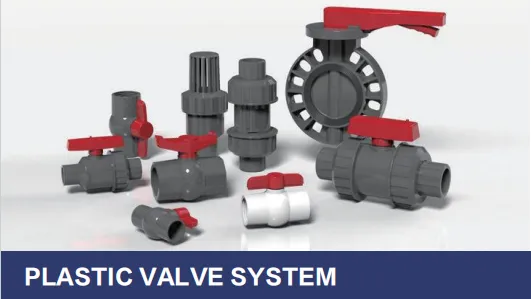
Every time you turn on a faucet, flush a toilet, or walk into a hospital room with running water, there's a silent network working behind the scenes to make it all possible. At the heart of that network are valves—small but mighty components that control the flow of liquids and gases, ensuring safety, efficiency, and reliability. For decades, metal valves dominated the industry, but in recent years, plastic valve systems have emerged as a game-changer. Lightweight, corrosion-resistant, and cost-effective, they've transformed how we build, maintain, and upgrade everything from residential homes to industrial facilities.
But with so many options available—from PVC to PEX, ball valves to check valves—navigating the world of plastic valve systems can feel overwhelming. Whether you're a contractor working on a commercial project, a homeowner planning a renovation, or a facility manager maintaining a hospital, understanding the types, sizes, and applications of these systems is key to making informed decisions. In this guide, we'll break down everything you need to know about plastic valve system solutions, from their core components to how to choose the right supplier for your needs.
At their core, plastic valve systems are assemblies of valves, pipes, and fittings made from various plastic materials, designed to regulate, direct, or control the flow of fluids (liquids and gases) within a system. Unlike traditional metal valves, which are prone to rust, corrosion, and heavyweight installation, plastic valves offer a host of advantages that make them ideal for modern construction and infrastructure:
These benefits have made plastic valve systems a go-to choice for engineers, architects, and contractors worldwide. But to fully leverage their potential, it's essential to understand the different types of valves and how they function.
Plastic valves come in dozens of designs, each tailored to specific tasks. Here are the most common types you'll encounter, along with their unique features and best uses:
Ball valves are perhaps the most recognizable type, featuring a hollow, perforated ball inside that rotates to control flow. When the ball's hole aligns with the pipe, flow is open; when rotated 90 degrees, the hole is perpendicular, blocking flow. They're known for their quick, quarter-turn operation and tight sealing, making them ideal for applications where precise on-off control is needed—like residential plumbing, irrigation systems, and industrial process lines. Most ball valves are made from PVC, CPVC, or PEX and are available in sizes ranging from ½ inch to 12 inches or more.
Gate valves use a flat, vertical "gate" (or wedge) that lifts or lowers to open or close the flow path. Unlike ball valves, they require multiple turns to operate, which makes them better suited for applications where flow needs to be fully open or fully closed (rather than partially restricted). Common uses include main water lines, fire protection systems, and wastewater treatment plants. They're often made from PVC or ductile iron-reinforced plastic for added strength and are valued for their minimal pressure drop when fully open.
Check valves are designed to allow flow in only one direction, preventing backflow that could contaminate water supplies or damage equipment. They work automatically—no manual operation required—using a spring, gravity, or a swinging disc to close when flow reverses. Examples include swing check valves (common in large-diameter pipes) and spring-loaded check valves (ideal for vertical installations or low-pressure systems). You'll find them in sump pumps, hot water heaters, and irrigation systems, where backflow could cause flooding or system failure.
Butterfly valves feature a circular disc (the "butterfly") mounted on a rod that rotates to control flow. When the disc is parallel to the pipe, flow is open; when perpendicular, it's closed. They're lightweight, compact, and offer excellent flow control, making them popular in large-diameter systems like HVAC ductwork, water treatment plants, and chemical processing facilities. Many modern butterfly valves are made from PVC or polypropylene for chemical resistance and are often used in applications where space is limited.
Diaphragm valves use a flexible diaphragm (usually rubber or plastic) to seal the flow path. When pressure is applied to the diaphragm, it presses against a seat, closing the valve; releasing pressure opens it. These valves are prized for their ability to handle abrasive or corrosive fluids (like acids or slurries) without leakage, as the diaphragm isolates the fluid from the valve's mechanical parts. They're commonly used in pharmaceutical manufacturing, food processing, and wastewater treatment, where cleanliness and precision are critical.
| Valve Type | Common Materials | Best For | Pressure Rating (Typical) | Temperature Range |
|---|---|---|---|---|
| Ball Valve | PVC, CPVC, PEX | On-off control, residential/commercial plumbing | 150-300 PSI | 32°F – 180°F (PVC); up to 200°F (CPVC) |
| Gate Valve | PVC, Ductile Iron-Reinforced Plastic | Main water lines, fire systems | 100-200 PSI | 32°F – 140°F |
| Check Valve | PVC, PPR, Polypropylene | Preventing backflow (sump pumps, hot water heaters) | 100-150 PSI | 32°F – 180°F |
| Butterfly Valve | PVC, Polypropylene | HVAC, large-diameter water systems | 150-250 PSI | 32°F – 160°F |
| Diaphragm Valve | PVC, PVDF, PTFE | Chemical processing, pharmaceuticals | 50-150 PSI | 32°F – 250°F (depending on diaphragm material) |
The performance of a plastic valve system depends largely on the material it's made from. Different plastics offer unique properties—like temperature resistance, chemical compatibility, and flexibility—that make them better suited for specific applications. Here's a breakdown of the most common materials used in plastic valve systems:
PVC is the most widely used plastic in valve systems, thanks to its affordability, durability, and versatility. It's available in two main types: rigid PVC (used for pipes and valves) and flexible PVC (used for hoses and fittings). PVC valves are resistant to chemicals, corrosion, and UV rays, making them ideal for residential plumbing, irrigation, and wastewater systems. However, they're not suitable for high-temperature applications (over 140°F), so they're best avoided in hot water lines or industrial processes with extreme heat.
CPVC is a modified version of PVC with added chlorine, which boosts its temperature resistance. Unlike standard PVC, CPVC can handle hot water up to 200°F, making it perfect for residential and commercial hot water systems, as well as industrial applications like chemical processing. It also offers excellent corrosion resistance and is often used in hospitals, schools, and food processing plants where safety and durability are priorities. Many class A fireproof CPL inorganic board for hospital and school supplier solutions pair CPVC valves with fire-resistant materials to meet strict safety codes.
PEX is a flexible plastic that's revolutionized residential plumbing, especially in retrofits where bending around obstacles is necessary. Its cross-linked structure makes it resistant to cracks, freezing, and chemical damage, and it can handle both hot and cold water (up to 200°F). PEX valves are often used with pex pipe and fitting supplier solutions, as they form a secure, leak-proof connection without soldering. They're also popular in radiant heating systems, where flexibility and heat resistance are key.
PPR is a strong, heat-resistant plastic used primarily in hot water systems and industrial applications. It can withstand temperatures up to 212°F and pressures up to 100 PSI, making it a reliable choice for residential boilers, solar water heaters, and chemical transport lines. PPR pipe and fitting supplier solutions often include PPR valves, which are welded together using heat fusion, creating a seamless, leak-proof joint that's ideal for high-pressure systems.
PVDF is a high-performance plastic designed for extreme environments. It's resistant to almost all chemicals (including acids, bases, and solvents), high temperatures (up to 300°F), and UV radiation, making it the go-to choice for industrial applications like semiconductor manufacturing, pharmaceutical production, and chemical processing. While more expensive than PVC or CPVC, PVDF valves are worth the investment for critical systems where failure could have catastrophic consequences.
Choosing the right size for a plastic valve is just as important as choosing the right type or material. A valve that's too small can restrict flow, causing pressure buildup and reduced efficiency; one that's too large can waste space, increase costs, and lead to poor control. Here's how to determine the correct size for your system:
Valves are typically sized to match the diameter of the pipes they're connected to (measured in inches or millimeters). For example, a 1-inch pipe will require a 1-inch valve. This ensures smooth flow and minimizes pressure drop. Always check the pipe's nominal diameter (NPS) or outside diameter (OD) when selecting a valve—don't rely on the inner diameter, as wall thickness can vary between pipe types.
Flow rate (measured in gallons per minute, GPM) is the volume of fluid passing through the system. A valve that's too small for the flow rate will create turbulence, noise, and increased energy costs. To calculate flow rate, use the formula: Q = A × V, where Q is flow rate, A is the pipe's cross-sectional area, and V is fluid velocity (typically 2-5 feet per second for water systems). Most valve manufacturers provide flow coefficient (Cv) ratings, which indicate how much water a valve can pass at a given pressure drop—use this to compare options.
Higher pressure or temperature can affect a valve's performance. For example, a valve rated for 150 PSI at 70°F may only handle 100 PSI at 180°F. Always check the manufacturer's pressure-temperature (P-T) chart to ensure the valve can withstand your system's operating conditions. This is especially critical for industrial applications, where pressure spikes or temperature fluctuations are common.
If you're designing a system that may expand in the future (e.g., adding more fixtures to a commercial building), consider oversizing the valve slightly to accommodate increased flow. This can save time and money later, as replacing a valve is easier during initial installation than after the system is operational.
Plastic valve systems are versatile enough to serve almost every industry, from residential homes to large-scale industrial facilities. Here are some of the most common applications:
In homes, plastic valves are used in plumbing (PVC/CPVC for cold/hot water lines), irrigation (PVC for sprinkler systems), and HVAC (butterfly valves for ductwork). PEX valves, paired with pex pipe and fitting supplier solutions, are popular in modern homes for their flexibility and easy installation. They're also used in sump pumps (check valves to prevent backflow) and water heaters (ball valves for on-off control).
Commercial projects like offices, malls, and hotels rely on plastic valves for plumbing, fire protection, and HVAC systems. For example, PVC DWV pipe supplier solutions often include PVC gate valves for drain, waste, and vent (DWV) systems, which remove wastewater efficiently. CPVC valves are used in hot water lines, while butterfly valves regulate airflow in large HVAC systems. Many commercial buildings also use plastic valves in their sprinkler systems, as they're lightweight and corrosion-resistant.
Hospitals and schools have strict safety and hygiene requirements, making plastic valves an ideal choice. CPVC and PPR valves are often used in these settings, as they're resistant to chemicals and easy to clean. For example, class A fireproof CPL inorganic board for hospital and school supplier solutions pair fire-resistant wall panels with CPVC valves to meet fire safety codes, ensuring that plumbing systems remain intact during emergencies. Check valves are also critical in hospitals to prevent backflow that could contaminate sterile water supplies.
In industrial settings, plastic valves handle everything from chemicals to wastewater. PVDF and PP valves are used in chemical processing plants to resist corrosive fluids, while diaphragm valves are ideal for slurries and abrasive materials. Water treatment plants rely on butterfly valves to regulate flow, and oil refineries use plastic check valves to prevent backflow in pipelines. Many industrial systems also use plastic valve system supplier solutions that include custom-engineered valves for unique applications.
Farmers and landscapers depend on plastic valves for irrigation systems, as they're resistant to UV rays, chemicals, and rough handling. PVC ball valves control water flow to different zones, while check valves prevent contamination of well water. Many irrigation systems also use pvc well casing and screen pipes supplier solutions, which include durable PVC valves that can withstand underground conditions for years.
Even the best plastic valve system will fail if installed or maintained improperly. Here are some key tips to ensure your system lasts:
With so many options on the market, selecting the right plastic valve system supplier is just as important as choosing the right valve. Here's what to look for:
A good supplier should offer a wide range of valves, pipes, and fittings to meet your needs—from standard PVC ball valves to custom-engineered PVDF diaphragm valves. Look for suppliers with expertise in your industry; for example, a residential building materials supplier may specialize in PEX and PVC solutions, while an industrial supplier might focus on CPVC and PVDF. They should also be able to provide technical support, helping you select the right materials and sizes for your project.
Ensure the supplier's products meet industry standards, such as ASTM (for PVC/CPVC), NSF (for drinking water applications), or ISO (for manufacturing quality). Certifications like NSF/ANSI 61 guarantee that the valves are safe for potable water, while ISO 9001 ensures consistent quality control. For critical applications like hospitals or schools, look for suppliers who partner with class A fireproof CPL inorganic board for hospital and school supplier solutions to meet fire and safety codes.
Delays in material delivery can derail a project, so choose a supplier with a proven track record of on-time shipments. Ask about their inventory levels—do they stock common sizes, or will you have to wait for custom orders? Also, check their return policy in case you receive damaged or incorrect products.
A supplier with strong customer service can save you time and money. Look for responsive communication, technical assistance, and after-sales support. Many top suppliers offer training for installers or maintenance teams, ensuring that your staff knows how to properly use and care for the valves.
Plastic valve systems have come a long way since their early days, evolving into reliable, versatile solutions that power everything from our homes to our hospitals. By understanding the types, materials, sizes, and applications of these systems, you can make informed decisions that improve efficiency, reduce costs, and ensure safety. Whether you're working on a residential renovation, a commercial build, or an industrial project, the right plastic valve system—paired with a trusted supplier—can make all the difference.
Remember, the key to success lies in matching the valve to your specific needs: consider the fluid type, pressure, temperature, and environment, and don't hesitate to consult with a supplier or engineer if you're unsure. With the right knowledge and partners, you'll be well-equipped to decode the world of plastic valve system solutions and build systems that stand the test of time.
Recommend Products












