


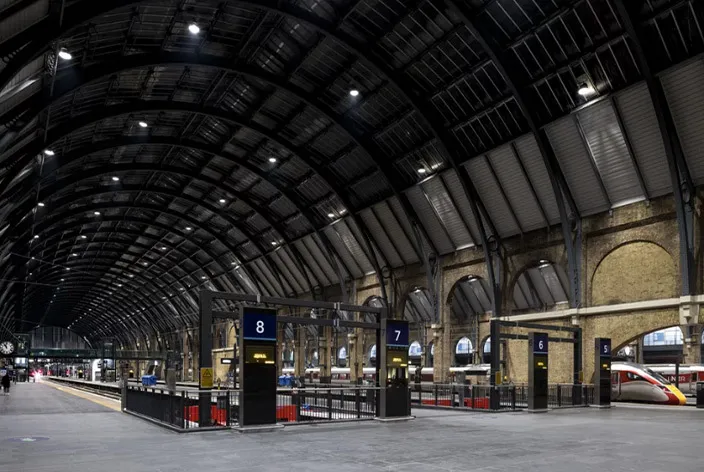
Let's talk lighting – the kind that makes a difference. Not that flickering fluorescent tube that gives you a headache, but properly designed illumination that transforms how spaces feel and function. Industrial lighting solutions are evolving beyond the one-size-fits-all approach, and the shift toward customization brings remarkable results.
When you walk into a manufacturing facility with precisely calibrated light levels or a warehouse where every corner glows with uniform brightness, you're seeing more than bulbs in fixtures. You're seeing a thoughtful strategy that considers shape challenges, space constraints, and tricky installation scenarios. These solutions don't just light up a space – they improve safety, boost productivity, and slash energy bills.
The Custom Lighting Advantage
What makes custom industrial lighting truly valuable? Think of it as tailored clothing versus off-the-rack. When lighting is designed for your exact space and operations, you avoid compromises. Uneven light creates shadowy danger zones in warehouses. Wrong color temperatures distort quality inspections. Improperly spaced fixtures leave gaps that strain workers' eyes.
Specialized lighting becomes critical in environments where standard solutions fall short:
- Non-standard ceiling heights : From low-clearance manufacturing cells to towering distribution centers
- Complex machinery arrangements : Lighting that navigates around equipment instead of competing with it
- Hazardous locations : Explosion-proof fixtures designed for chemical plants or grain facilities
- Temperature extremes : Freezer warehouses and foundries demand specialized lighting resilience
- Unique architectural constraints : Historical buildings or unconventional structures requiring sensitive integration
Companies investing in custom solutions typically discover the benefits multiply. It's not just about illumination; it's about creating environments where people work better, machines operate efficiently, and energy isn't wasted compensating for poor lighting design.
The Design-to-Installation Journey
Creating effective custom lighting isn't about retrofitting odd-shaped bulbs into existing fixtures. It's a comprehensive process that begins long before installation day.
Stage 1: The Deep Dive Assessment
Custom lighting projects start with understanding, not assumptions. Lighting specialists map your facility like architects. They track worker movement patterns, identify critical task zones, measure existing light levels with precision instruments, and document environmental factors like dust levels or moisture exposure. This 360-degree view reveals needs you might not have articulated.
Stage 2: Digital Modeling & Prototyping
Using specialized software, designers build 3D models of your space. This isn't just about fixture placement; it's photometric analysis showing exact light distribution patterns. Companies like TCP create physical prototypes for clients to evaluate – actual light samples mounted in mock-ups to validate brightness, color rendering, and glare control before committing to production.
Stage 3: Beyond the Fixture - Holistic Solutions
Truly custom approaches integrate multiple elements:
- Controls integration : Motion sensors in low-traffic areas, daylight harvesting systems near windows
- Modular components : Fixtures designed for easy access when maintenance is required
- Future-proof wiring : Extra capacity for expanding operations
- Mounting innovations : Flexible positioning systems that adapt to changing layouts
Solving Industrial Lighting Challenges
Real-world industrial settings throw complex curves that standard lighting catalogs can't handle. Here's how customization overcomes them:
Challenge 1: Irregular Spaces
Think about older factories with mismatched ceiling heights or support columns that block light. Custom solutions employ asymmetrical optics that direct light precisely where needed, avoiding wasted spill on walls or ceilings. Angled mounting hardware positions fixtures optimally despite structural obstacles.
Challenge 2: Micro-environments
One warehouse aisle might store electronics needing delicate handling, while the next houses rugged machinery parts. Custom zoning creates different lighting "personalities" within a single facility – cooler, brighter light for detailed work areas, slightly warmer tones for break spaces.
Challenge 3: Access Issues
In facilities like distribution centers with 40-foot racking, changing bulbs becomes an expensive ordeal requiring lifts. Custom designs extend maintenance cycles dramatically while incorporating features like slide-out access panels that allow component replacement from below without disassembling entire fixtures.
Product Innovations in Custom Lighting
The toolbox for custom solutions has expanded dramatically:
High Bay Transformations
These workhorses of warehouses and factories have evolved. Modern custom high bays don't just hang; they integrate. Companies now incorporate thermal management directly into mounting systems in hot environments. Some feature detachable driver compartments mounted at ground level to simplify maintenance. Others use tunable white LEDs that automatically shift color temperature throughout the day to align with natural circadian rhythms.
The Retrofit Revolution
Complete lighting overhauls are expensive and disruptive. Modern retrofit kits designed for specific existing fixtures offer a smarter path. Engineers can take old fluorescent troffers and transform them into modern LED systems with superior optics while maintaining the housing. This cuts waste and installation time by 60-70% compared to full replacements.
Driverless Flat Panels
A game-changer for low-ceiling spaces. By eliminating external drivers and using integrated edge-lit technology, these create ultra-thin profiles perfect for tight spaces. More importantly, they solve heat dissipation problems in confined areas through innovative thermal management. Installation becomes simpler – almost like hanging a picture frame.
Hazardous Location Solutions
Custom design is essential where safety matters most. Class I Div 2 fixtures for flammable vapors get designed with specialized gaskets, non-sparking alloys, and hermetic seals without compromising light output. Engineers develop specialized testing protocols beyond standard certifications for unique high-risk environments.
Beyond the Bulb: Service as Part of the Solution
Truly custom lighting extends beyond the physical products to encompass expertise:
Lighting Audits & ROI Modeling
Before choosing solutions, specialists quantify current energy waste and forecast savings. Sophisticated models predict maintenance cost reductions and productivity gains based on industry-specific data.
Rebate Navigation
Utility rebates and tax incentives for energy-efficient lighting can cover 30-50% of project costs. But maximizing these requires expertise and timing coordination. Comprehensive service providers handle all documentation and submission.
Phased Installation Planning
For 24/7 operations, lighting upgrades can't mean shutting down. Custom installers create detailed sequences - perhaps lighting one warehouse quadrant per weekend. Temporary lighting maintains safety during transitions.
Post-Installation Optimization
Smart providers schedule follow-ups 6-12 months post-installation. This catches minor adjustments - perhaps a relocated workstation needing slight repositioning. It's the sign of a partnership, not just a transaction.
The Tangible Benefits
Custom lighting solutions deliver measurable impact:
Average energy savings vs traditional lighting
Reduction in maintenance costs
Fewer quality control errors with optimized lighting
Average productivity gain in task-intensive areas
Beyond numbers, qualitative improvements matter: reduced eye strain among workers, decreased accident rates in previously shadowed areas, even improved mood in facilities that incorporate human-centric lighting principles.
Case Study: Modernizing a Food Distribution Center
The Challenge : A 500,000 sq ft refrigerated distribution facility was struggling. Their outdated lighting created dangerous cold spots (+/- 50% light level variation), caused daily lift accidents, and consumed excessive energy despite poor illumination.
Custom Solution Development :
- Designed zone-specific optics: wide 150° beams in narrow aisles, focused 90° optics in bulk areas
- Integrated specialty fixtures with cold-rated drivers (-40°F performance), protected from moisture
- Developed modular mounting arms allowing easy height adjustments as racking layouts changed
Results Post-Implementation :
- Energy usage dropped 62% ($236,800 annual savings)
- Reported accidents decreased 47% in first year
- Productivity increased 19% with better visibility
- Rebates covered 31% of project costs through strategic planning
Future Trends: Where Custom Lighting is Headed
The next wave goes beyond LEDs:
Data-Integrated Systems
Future fixtures will double as sensors monitoring temperature, occupancy, and air quality. The lighting itself becomes a building's nervous system, feeding data to optimize all operations.
Predictive Maintenance Platforms
Instead of "replace when dead," monitoring algorithms will analyze driver performance and diode output to schedule maintenance just before potential failure.
Circadian Integration
For 24-hour facilities, lighting that shifts spectrum to support worker alertness overnight or promote natural rest during shift changes. This goes beyond just brightness to spectral quality adjustment.
Hyper-Personalization
Workstations that adjust lighting based on individual preferences or task requirements at that moment – fine inspection versus general material movement.
Getting Started with Your Custom Lighting Project
Ready to transform your industrial space? The journey begins with asking the right questions:
What pain points do workers complain about? Headaches, eyestrain, shadow areas? These symptoms point to lighting issues.
Where are your highest energy bills? Analyze which areas or shifts consume disproportionate energy for lighting.
What changes are planned? New equipment, layout shifts, or expanded operations should inform flexible designs.
When engaging providers, demand more than product catalogs. Seek partners offering:
- Detailed before-and-after photometric analyses
- Full rebate navigation services
- Prototyping capabilities for your specific environment
- Post-installation optimization commitments
Truly customized lighting isn't an expense; it's an investment in efficiency, safety, and future readiness. The solution for your unique space exists – it just requires partners willing to design beyond the standard catalog.
The Bigger Picture: Beyond Illumination
What we're really talking about when discussing custom lighting solutions isn't just photons and fixtures. It's about creating environments where people can work safely and efficiently, where products are handled correctly, and where energy isn't wasted fighting poor design. The right lighting becomes an invisible productivity partner.
In challenging industrial environments - whether it's navigating around complex machinery, fitting into awkward spaces, or surviving extreme temperatures - standardized lighting solutions will always fall short. True progress comes when lighting professionals, facility managers, and workers collaborate to create exactly what's needed - not what's conveniently available.
The next time you see perfectly lit industrial space, look closer. You're not seeing random fixtures placed at standard intervals. You're seeing intentional design meeting specific challenges. You're seeing the exact solution for that exact place. And that's lighting at its smartest.










