


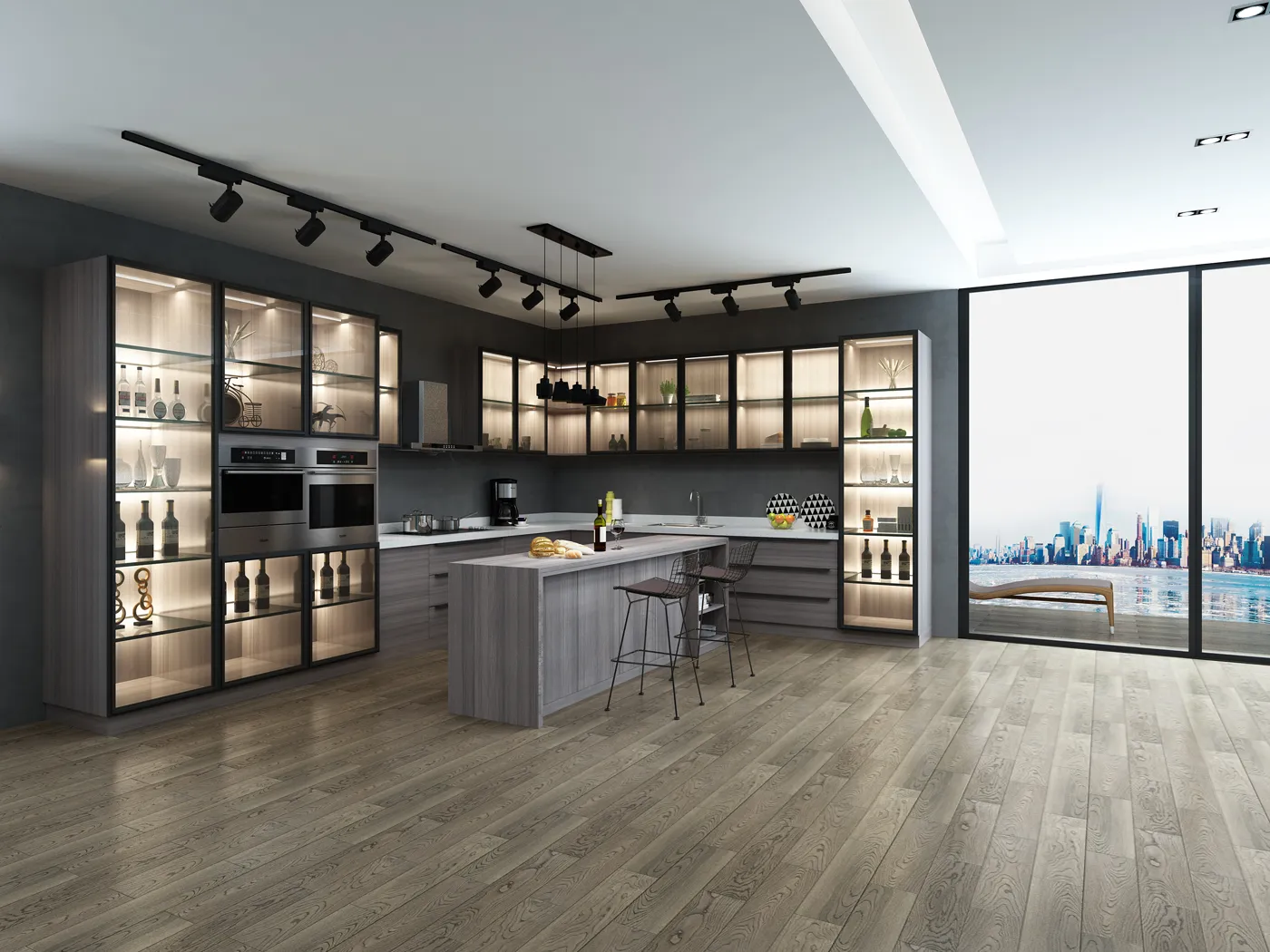
How personal expression battles with mass efficiency in kitchens worldwide – and why your cooking space reflects deeper cultural values
The Heart of the Home at a Crossroads
There's something intimate about a kitchen. It's where burned toast becomes family legends and midnight snacks turn into confessional sessions. Across the globe, this sacred space is undergoing a quiet revolution – torn between the personalized dream kitchen and the efficient modular system.
Picture Sofia in Madrid, carefully selecting hand-painted tiles for her bespoke Mediterranean kitchen island. Now meet Kenji in Osaka, who just installed a factory-made compact kitchenette in his micro-apartment. Both are creating spaces for nourishment, yet their choices reveal divergent paths: customization versus standardization.
The tension between these approaches goes beyond aesthetics and enters the realm of cultural identity, economic strategy, and personal expression. Today's kitchen cabinet market reveals surprising truths about our changing relationship with domestic spaces.
Standardization's Industrial Symphony
The Efficiency Engine
Standardized cabinet systems follow factory precision like a well-rehearsed orchestra. With laser-cut components manufactured by the thousands, companies achieve remarkable economies of scale. Think of IKEA's famous BO-KITCHEN line – flat-packed miracles that turn shipping containers into kitchen-starters for thousands worldwide.
The Democratic Appeal
This isn't just about saving money. Standardization creates accessibility. When Malaysian manufacturer Rubine releases their "SmartChef" series, they're not just selling cabinets – they're selling entry into the modern kitchen aesthetic for apartment dwellers. These ready-to-assemble systems bypass custom design fees, democratizing stylish functionality.
The true magic happens in the installation: a German precision-engineered cabinet system can be assembled by average homeowners in 72 hours flat. That's standardization's promise – transforming complicated projects into weekend accomplishments.
Cultural Adoption Patterns
Notice where standardization thrives: high-growth urban centers from Jakarta to Johannesburg. Megacity living means smaller spaces and faster turnarounds – perfect conditions for modular systems. Developers favor these turnkey solutions when outfitting 500-unit apartment towers. Yet standardization hits cultural barriers too. Mediterranean countries often resist factory uniformity for their social cooking spaces.
Customization's Artisan Renaissance
The Personal Touch Revolution
Walk into a Milan design studio specializing in bespoke kitchens and you'll enter a different universe. Here, custom kitchen cabinets aren't products – they're physical narratives. Veneer selections become chapters about homeowners' travels; integrated wine coolers turn into declarations of hospitality.
This realm dismisses "standard sizes" as irrelevant. Why settle for 24" base cabinets when your vintage copper pots need 28"? This philosophy transforms kitchens into couture:
- Dutch artisans creating curved islands that embrace social cooking
- Japanese craftsmen incorporating customized storage solutions for specialized cookware
- Brazilian studios using reclaimed Amazonian wood
The Luxury Equation
Customization's premium pricing contains hidden value. Saudi clients expect cabinets accommodating massive banquet preparation, while Swiss clients want hidden tech integrations. These aren't whims – they're cultural signatures rendered in maple and hardware.
A Bangkok designer recently told me: "My clients don't buy kitchens – they commission kitchen-shaped memories." The emotional value transforms expense into investment.
The Materials Renaissance
From African Padauk wood to space-age polymers, custom work propels material innovation. German manufacturer Poggenpohl now offers integrated refrigeration that disappears behind seamless cabinetry – an impossibility in standard units. When customization leads, technology often follows.
The Financial & Functional Divide
| Factor | Standardization | Customization |
|---|---|---|
| Cost Per Square Foot | $120-$220 | $350-$800+ |
| Production Time | 2-4 weeks | 8-24 weeks |
| Longevity | 7-12 years | 20-40 years |
| Design Flexibility | Limited to product lines | Boundary-less |
| Space Optimization | Conforms to standard dimensions | Maximizes every millimeter |
| Special Feature Integration | Pre-configured options only | Fully integrated custom systems |
Hidden Value Realities
That standardized kitchen might save money upfront, but consider the human experience: drawers that don't fully extend, awkward corners gathering crumbs, counter heights causing back strain. Customization addresses these silently but powerfully through ergonomic design.
Meanwhile, standardization counters with remarkable reliability. Turkish manufacturer Bellona mass-produces cabinet boxes with 0.05mm precision – tolerances unimaginable in handmade work. It's high-tech uniformity versus artisanal intuition.
Regional Market Spotlights
The American Balancing Act
U.S. markets showcase fascinating dualities. Home centers offer standardized cabinet packages while high-end boutiques cater to custom kitchen cabinet dreams. Yet even here, hybrids emerge. Companies like Semihandnow offer modular components with customizable finishes, bridging both worlds.
Europe's Artisan Fortress
Italy's Cucine Lube proves standardization needn't mean blandness. Their modular systems incorporate designer aesthetics that feel custom-made. Contrast this with Germany's complex custom commissions featuring integrated ventilation and smart lighting – technology wrapped in craftsmanship.
Asia's Innovation Engine
Chinese manufacturers like Oppein demonstrate stunning flexibility. Their catalogs showcase standardized components configured into surprisingly personal layouts. Meanwhile, South Korean firms like Hanssem develop space-maximizing solutions for compact urban dwellings, blending both approaches seamlessly.
The true revelation? Cultural boundaries are blurring fast. IKEA's new Stockholm studio creates semi-custom layouts, while Berlin's premium custom workshops adapt systems for quick installation.
The Environmental Dimension
The Sustainability Paradox
Standardization's factory efficiency reduces waste through precision cutting. But modular systems become dated faster, feeding into replacement cycles. Custom work uses higher quality materials but generates workshop scraps.
Leading manufacturers solve this creatively:
- Bulgarian company Möbelix transforms standardization waste into recycled countertops
- Canadian custom shops use digital fabrication to minimize material loss
- Malaysian firms develop formaldehyde-free materials for mass production
The Longevity Factor
A British study revealed that custom kitchens stay in homes 72% longer than standard installations. That emotional connection translates to sustainability – fewer renovations mean less landfill waste. The cabinet you cherish becomes an environmental statement.
Future Horizons: Where We're Headed
The Technology Convergence
Advanced rendering allows buyers to visualize custom layouts instantly. Spanish firm Cosentino now combines both models: standardized cabinet shells with personalized front panels fabricated locally. This "glocal" approach may define the next decade.
Cultural Syntheses Emerging
Look for hybrid models reflecting regional values:
- Japanese-style micro-customization (small personalized details in compact spaces)
- Scandinavian "democratic luxury" (premium materials in modular systems)
- Middle Eastern statement spaces (custom centerpieces with standardized peripherals)
The Human Factor Endures
Despite technological advancements, kitchens remain profoundly human spaces. Standardization excels at providing functional foundations, while customization nourishes our longing for uniqueness. The emerging winner? Consumers gaining unprecedented choices.
As Toronto designer Elena Petrova observed: "We're moving toward mass-personalization – where cabinet fronts become canvases and interiors become precision tools. The real magic happens when standardization and customization hold hands."
The Final Fork in the Road
Your kitchen cabinets reveal more than storage preferences – they reflect how you inhabit domestic space. Standardization offers democratic access to functional design, while customization transforms practicality into personal legacy. International markets prove there's no single "right" approach, only what resonates with your cooking story.
The most exciting development? This isn't a zero-sum game. As consumers, we're gaining unprecedented options between these once-distant poles. Whether selecting modular units from Malaysia or commissioning artisanal European cabinetry, today's global market offers solutions for every culinary journey.










