
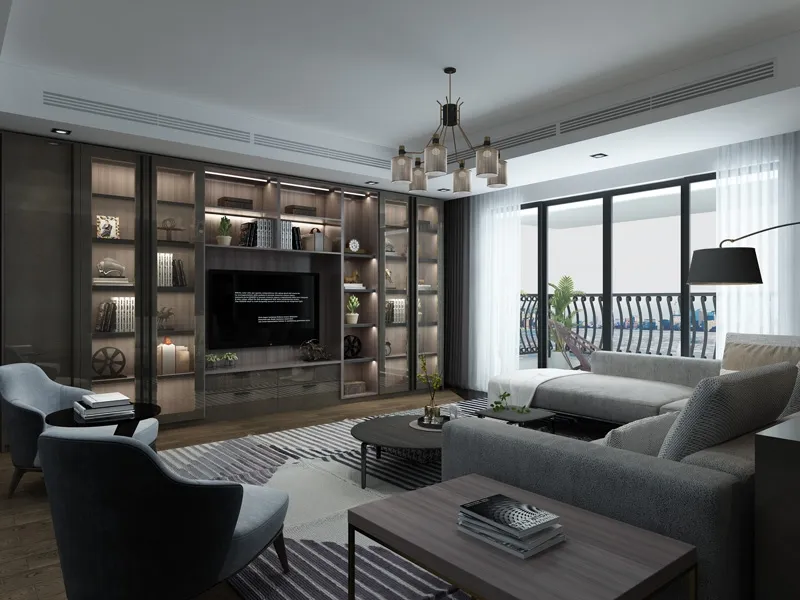
Picture this: You've just bought a stunning new TV that promises theater-quality viewing. But when you place it in your living room, something feels off. It sits awkwardly against the wall with cables snaking everywhere like digital vines. This is where the magic of custom TV cabinets enters the story. And where better to find them than the manufacturing hubs of China, where innovation meets craftsmanship?
TV cabinets are far more than just platforms for your television. They're organizational command centers, art pieces, and room transformers wrapped in one. Today's Chinese manufacturers are elevating them from simple storage solutions to focal points that anchor entire living spaces. A well-designed cabinet makes you pause and say "that looks intentional" rather than "where can I hide those cables?"
Leading factories in Guangdong and Zhejiang are creating groundbreaking models that:
The choice of materials transforms a cabinet from ordinary to extraordinary. Walking through factory showrooms reveals a sensory journey:
Solid Wood Elegance: Sustainably-sourced oak and walnut with natural grain patterns that tell stories of forests and craftsmanship. These woods acquire character over time, developing a patina that machine-made laminates can't replicate.
Industrial Metal Accents: Blackened steel frames with tempered glass create sleek, minimalist designs perfect for lofts and modern apartments.
Eco-Innovations: Bamboo composites and reclaimed wood options that appeal to environmentally conscious buyers without compromising style or structural integrity.
The finishing processes in Chinese factories have evolved dramatically too. While we once worried about durability in laminate finishes, today's UV-cured coatings create scratch-resistant surfaces that mimic natural materials with astonishing accuracy.
Chinese factories excel at transforming "standard" into "personal." Unlike mass-produced alternatives floating in shipping containers, custom pieces begin with conversations. Design teams work from your room dimensions, wall colors, floor types, and stylistic preferences to create something truly yours.
Popular customization requests include:
Beyond cost efficiencies, China's manufacturing dominance comes from integrated ecosystems. A single industrial park might contain:
- Sustainable forestry operations providing responsibly harvested wood
- Metal fabrication workshops creating custom hardware
- Electronics specialists engineering smart integrations
- Finishing experts developing new coating technologies
- Logistics networks streamlining global delivery
This vertical integration creates breathtaking efficiency. Design modifications that would stall production elsewhere for weeks get implemented in days because specialists work within walking distance of assembly lines.
Understanding the sourcing process helps buyers navigate confidently:
1. Design Consultation: Factory reps request photos, measurements and inspiration images to establish direction. For larger projects, video walkthroughs create clarity.
2. Material Selection: Options range from core materials to finishes and hardware. Samples can be shipped internationally.
3. Prototyping: Digital renderings precede physical prototypes, ensuring mutual understanding before fabrication.
4. Production: Skilled artisans assemble cabinets in climate-controlled workshops with precision equipment.
5. Quality Assurance: Every piece undergoes stress-testing, finish inspection, and functional checks.
6. Eco-Conscious Shipping: Flat-pack designs with recyclable packing materials reduce environmental impact.
Chinese factories aren't just keeping pace with trends - they're defining them:
Health-Conscious Design: Height-adjustable units allowing sit-stand viewing positions to reduce sedentary behavior. Far-infrared materials that claim to subtly improve room environments.
Smart Integration: Units with built-in Qi wireless charging, USB-C hubs, and cable-free HDMI solutions that connect via Bluetooth.
Transformative Concepts: Cabinets with flip-top surfaces converting into workstations or game tables. Vertical units that shrink horizontally when space is constrained.
The rapid iteration found in Chinese factories means these innovations move from concept to production faster than elsewhere. An idea proposed during Shanghai's furniture fair in March might reach North American homes by early winter.
The greatest untold story? The personal connections forming between overseas buyers and factory teams. WhatsApp groups buzz with design discussions across time zones. Social media posts show craftsmen signing their names under cabinets. Video calls walk buyers through production stages.
Language barriers dissolve as furniture becomes a universal vocabulary. Technical drawings, material samples, and 3D renders communicate what words sometimes cannot. Custom TV cabinet creation becomes a cultural exchange where Western living preferences blend with Eastern craftsmanship traditions.
Modern Chinese factories are rewriting the narrative about manufacturing ethics. Solar panels top factory roofs. Bamboo reforestation programs replace harvested timber. Water-based finishes replace solvent-heavy lacquers.
Look for suppliers holding FSC certifications and participating in circular economy initiatives. Some now include QR codes linking to "craftsmanship stories" showing the artisans behind each piece and detailing the eco-journey of materials.
In our age of streaming content, the TV cabinet represents something profoundly analog - a custom-crafted anchor in digital lives. Chinese factories have transformed from anonymous workshops to creative partners that help bring personalized vision into homes worldwide. The story of each custom TV cabinet becomes part of your home's narrative, proving that even functional objects can become conversation pieces when imagination meets execution.
Recommend Products












