
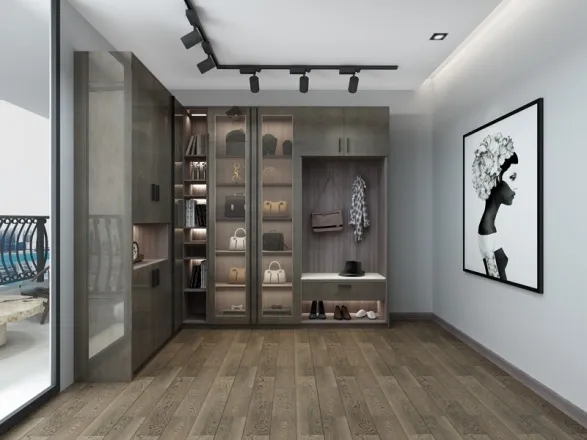
Okay, let's talk about something we all need but rarely think about - where to stash our growing collection of kicks. I mean, who among us hasn't faced that universal struggle of tripping over sneakers by the front door? Or opening a closet to a shoe avalanche? We've all been there. That's where quality shoe cabinets come in, and what's even better - custom solutions tailored exactly to your space and style.
Now here's something fascinating: when you start digging into where these storage solutions actually come from, you'll find most roads lead back to China. And I'm not just talking about those flimsy racks you assemble with shaky instructions. We're talking high-end, custom-designed shoe cabinets that could grace the pages of interior design magazines. It turns out Chinese factories have truly mastered this art, balancing functionality with aesthetic appeal.
The thing is, many people don't realize how extensive the options are when you go the custom route. It's not just about stacking shelves anymore. You can have rotating displays, climate-controlled compartments for those valuable collectors' items, pull-out drawers for flip-flops, and even integrated seating. And guess what? All of this innovation is pouring out of factories across China at prices that'll make you rethink what "custom furniture" should cost.
Let's be real here—how many times have you tried fitting your space with a pre-made cabinet only to find it's a quarter-inch too wide for that perfect alcove? Or just a bit too shallow for your partner's collection of bulky winter boots? That frustration is exactly why custom shoe cabinets make so much sense. You'd be shocked how manufacturers can work with even the most awkward corners and angles in your entryway or closet.
Think about ventilation for a sec. That smell of worn shoes? Yeah, we all know it. Off-the-shelf units often ignore airflow, but Chinese factories engineer ventilation right into their systems—hidden perforations, micro-fans, even carbon filters that neutralize odors without you ever seeing the technology. When I first saw how elegantly they integrated these features into the design, I was genuinely impressed.
Materials are another game-changer. While big box stores might offer laminate or cheap plastics, these factories work with everything from sustainable bamboo composites to high-grade aluminum and reclaimed teak. The craftsmanship is legit. I visited a factory in Guangdong where they hand-finish each cabinet, and the attention to detail was something else—you could see the pride in their work.
But let's talk practical. Your shoe collection changes, right? One season it's all sneakers, then boots takeover. Custom units get this. Many offer modular designs where you can swap shelves, shift compartments, or completely rearrange sections as your collection evolves. That kind of flexibility extends the life of your investment tremendously.
And here's something you might not expect—smart integration. A supplier I know in Shanghai now includes USB charging stations in benches, Bluetooth trackers for finding matching pairs, and even moisture sensors that alert your phone if humidity levels could damage leather. For serious shoe enthusiasts, these features are absolute game-changers.
Walking through these manufacturing hubs gives you a real appreciation for how they've perfected the shoe cabinet. The production lines feel different than what you might imagine. Less like massive factory floors from sci-fi films, more like specialized workshops where teams truly understand furniture-making traditions combined with modern tech.
The process often starts with what they call "dimensional adaptation." Instead of generic sizes, they'll produce cabinets with millimeter precision—angled for sloped ceilings, curved for rounded nooks, or ultra-narrow for cramped hallways. That exact fit? That's what elevates custom from expensive luxury to practical necessity.
Quality control in these facilities is serious business. One factory owner explained his three-stage inspection: raw material checks, structural integrity testing on prototypes, and a full week in a "wear simulation" chamber where they test everything from repeated door openings to weight stress on joints. They're not just making furniture; they're engineering solutions that last.
And sustainability—this isn't just a buzzword here. Several factories have converted to solar power, many use reclaimed wood scraps for smaller components, and I even toured a facility that plants ten trees for every unit sold. That environmental consciousness matters when choosing where your custom pieces come from.
But the real magic happens in what I call the "innovation zones"—sections of factories dedicated purely to developing new cabinet systems. This is where they experiment with materials you've never seen in furniture, like mushroom-based composites or magnetic modular systems. The creativity happening in these spaces rivals high-tech research labs.
Here's where people get nervous—"custom" sounds expensive, right? Well, not as much as you'd think when you understand the economics. By eliminating distributor markups, brick-and-mortar overhead, and excess inventory costs, these factories often deliver better quality at similar prices to premium retail options.
Let's crunch numbers. A solid wood cabinet that might run you $800 in a high-end furniture store often costs $400-500 direct from factories, shipping included. How? Simplified logistics and bulk material sourcing make all the difference. That's not "cheap"—that's smart supply chain management.
Durability plays into value too. I've seen 15-year-old custom cabinets from Chinese manufacturers that look nearly new, while cheaper retail options start showing wear within a couple of years. When you calculate cost-per-year of use, that custom piece suddenly looks like the smarter investment.
And let's not forget space optimization. Properly configured storage that actually holds everything comfortably means you're less likely to outgrow your cabinet and need replacements. That frustration of reorganizing your entryway every few years? Gone. That peace of mind has real value that doesn't show up on the price tag.
There are flexible payment options too. Some manufacturers now offer installment plans directly through their websites, eliminating financing fees. Others have loyalty programs where your first cabinet gets you discounts on future additions as your storage needs evolve. These small touches build real long-term relationships.
Ultimately, what you're paying for is elimination of compromise. No more "this would be perfect if only..." because you're getting exactly what works for your space, habits, and collection. That tailored satisfaction? Priceless.
Ordering custom furniture might feel daunting if you've never done it, but these factories have streamlined the experience beautifully. Most have online configurators where you start with basic dimensions, then layer on features like material choices, shelf configurations, and hardware options. It's surprisingly intuitive, like building your dream solution brick by brick.
Measurement help is readily available too. Many suppliers provide laser-measured templates you print, or even dispatch local professionals to ensure perfect dimensions for tricky spaces. For awkward corner installations I've seen, this precision makes all the difference between a "fine" solution and a "perfect" one.
The design consultation can be eye-opening. When I worked with a Dongguan manufacturer on a project, their designer immediately spotted issues I'd missed: "That wall has humidity issues—we should add moisture barriers" and "For that hallway traffic flow, sliding doors would be smarter." That expertise transforms good ideas into foolproof solutions.
Lead times might surprise you too. While intricate designs can take 4-6 weeks, many standard custom configurations ship in 2-3 weeks—often faster than buying in-store during sales seasons. Production efficiency allows them to work simultaneously on multiple projects without quality compromises.
But here's the real beauty: revision flexibility. Changed your mind about materials midway? They'll usually accommodate. Need to adjust the internal layout when production is already underway? Often manageable. That adaptability contrasts sharply with rigid retail policies where "custom" often means "no changes allowed."
Documentation throughout the process impresses too. You'll get CAD drawings for approval, material sample packages mailed globally, regular production updates with workshop photos, and detailed care instructions upon delivery. That transparency builds trust you just don't get with off-the-shelf purchases.
Behind these functional pieces lies genuine artistry. In Foshan, I watched craftsmen steam-bend wood for curved cabinets that looked more like sculptural pieces than storage solutions. That commitment to form and function remains deeply embedded despite technological advances.
Environmental responsibility has become central to many operations. One Ningbo factory collects sawdust to create pressed wood panels instead of buying new materials. Another near Shanghai filters and recycles wastewater through their own treatment plant. This stewardship matters when furniture accounts for millions of tons of landfill yearly.
Durability equals sustainability too. Unlike fast-furniture options designed for obsolescence, these manufacturers build for longevity. Tenons instead of glue, solid brass hardware, and reinforced load points mean cabinets become heirloom pieces rather than disposable items.
Fair labor practices have improved dramatically. Most export-certified factories now exceed minimum wage requirements, offer skills training programs, and provide clean, climate-controlled workshops. That ethical dimension gives your purchase deeper value beyond aesthetics.
Local artisan collaboration enhances uniqueness as well. Several manufacturers partner with minority woodcarvers or lacquer artists to incorporate region-specific detailing—turning purely functional pieces into cultural showcases that support heritage crafts.
Finally, reparability is designed in. Instead of discarding a damaged unit, you can replace specific components like drawer slides or shelves via lifetime supply programs. That closed-loop thinking reduces waste profoundly compared to replacing entire units when one part fails.
What's coming next in this niche? After touring factories and talking to designers, the innovation pipeline looks seriously impressive. We're moving toward AI-driven systems that photograph your shoes and suggest optimal layouts automatically. Imagine pointing your phone at your collection and getting a custom configuration recommendation within seconds.
Material science breakthroughs are redefining possibilities too. Self-cleaning nano-coatings that repel dust, scratch-resistant surfaces that maintain perfection for years, and even anti-microbial textiles for fabric components—all developed specifically for footwear storage needs.
Modular interconnectivity represents another leap. Instead of standalone cabinets, future systems will link with entire entryway ecosystems—hat racks communicating with shoe storage that coordinates with coat closets. Centralized "storage hubs" will manage everything through one interface, potentially controlling everything from ambient humidity to LED accent lighting.
3D printing integration at factories offers mind-blowing customization potential. Imagine adding unique handles, trim elements, or decorative panels that exist nowhere else. The technology exists now; what's pending is cost refinement and mainstream adoption.
And perhaps most exciting: augmented reality design. Apps that let you "place" virtual cabinets in your actual space using phone cameras, experimenting with different layouts before committing to orders. The preview functions I've tested are already incredibly precise, eliminating guesswork about scale and color matching.
Finally, sustainability will drive revolutionary change. We'll see algae-based composites replacing wood in humidity-prone areas, mushroom leather accents replacing plastics, and solar-powered climate control for delicate materials. This convergence of design, technology and ecology points toward incredibly exciting horizons for shoe storage solutions.
Navigating suppliers requires smart strategy. First, always verify certifications beyond the basics—look for specific furniture-making credentials like FC-QS or China Environmental Labeling. These confirm manufacturing integrity more deeply than generic business licenses.
Sample availability speaks volumes. Reputable manufacturers usually offer small material samples mailed before ordering or provide detailed material composition documents. If they resist transparency about origins, that's a red flag worth noting.
Transport and assembly support matters tremendously. Some suppliers now offer "white glove" delivery that includes installation. Others provide detailed video guides for complex assemblies. This after-sale service differentiates professionals from amateur operations.
Warranty terms reveal confidence. Look for comprehensive, lengthy coverage—five years minimum on structural elements and hardware. Better suppliers often include accidental damage protection for the first year too. That commitment speaks louder than marketing claims.
Hidden costs to watch include local delivery fees (verify whether "delivery" means port or residence), custom duty calculators (some include estimates upfront), and material overage charges if specifications change mid-project. Transparent suppliers outline these possibilities clearly.
Finally, trust your communication experience. Response times matter. When emails get answered within 24 hours with actual solutions instead of form replies, that indicates operational discipline. That attention transfers directly to how they'll handle your order.
So what's the real takeaway here? Those chaotic piles of shoes near your front door? They don't have to be permanent. With thoughtful custom solutions from Chinese factories, you can transform frustrating clutter into elegant organization. The journey from overwhelmed to ordered begins with realizing what truly tailored storage can achieve.
What continues to amaze me about this industry is how democratized customization has become. What once felt exclusive—designed-for-you solutions—now reaches consumers at nearly every budget point through Chinese manufacturers. That accessibility changes how we think about furnishing our homes.
At the end of the day, a shoe cabinet represents more than storage—it represents reclaimed space, reduced stress, and daily convenience. When designed and manufactured thoughtfully, it becomes one of those small but profound upgrades that genuinely improves everyday living. That kind of transformation? That's why custom solutions matter.
As a closing thought, perhaps we've approached this topic backwards. Instead of shoe storage being an afterthought, what if we considered it foundational to home design? A well-conceived storage solution sets the organizational tone for entire living spaces. With manufacturers now offering such remarkable personalization options at accessible prices, we have opportunity to make that vision reality.
Recommend Products












