
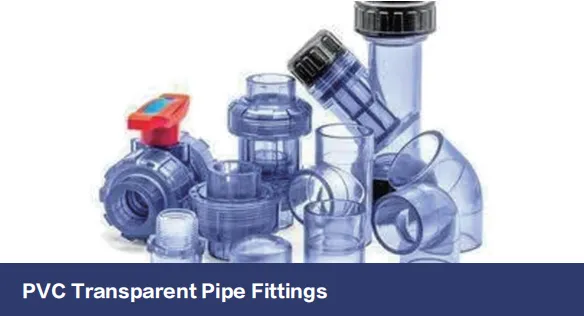
Imagine being able to visually track liquid flow in industrial systems without invasive checks. That's the magic of PVC transparent pipe fittings – unassuming components revolutionizing fluid management across countless industries. From laboratories verifying chemical reactions to breweries monitoring wort transfer, these crystal-clear connectors have become the unsung heroes of modern industrial infrastructure.
Let's cut through the fog: Traditional opaque piping systems operated like black boxes. You'd pump liquids through them hoping everything worked perfectly, only discovering problems when failures occurred. Transparent PVC fittings rip that curtain away. Suddenly, you've got real-time visual confirmation of flow rates, sediment buildup, air pockets, and contamination risks. It's like upgrading from landline telephones to video conferencing.
But why PVC specifically? Three unbeatable advantages:
Walk through any major Chinese pipe fitting facility, and you'll notice something unexpected – quiet confidence. These aren't dark, noisy factories of decades past. Bright workshops hum with precision CNC machines cutting thread patterns finer than watch gears. Laser measurement tools scrutinize every millimeter while quality controllers run chemical resistance tests that make college labs look basic.
The real magic happens in customization. A seasoned pipe fitting manufacturer doesn't just sell standard sizes; they solve puzzles. Got a legacy German machine needing bespoke connectors? They'll reverse-engineer replacements. Need fittings for Antarctic research stations? Special cold-flex formulations emerge. This adaptive spirit is why companies like Zhejiang Shuiyou Pipeline Valve Co. now ship customized solutions to 43 countries.
Did You Know? Top-tier Chinese factories now use polymer blending technologies originally developed for aerospace applications. By carefully adjusting ratios of methyl methacrylate additives, they achieve optical clarity rivalling laboratory glassware while maintaining PVC's legendary impact resistance.
Not all transparent fittings perform equally. The winners share these DNA markers:
I once watched stress tests where substandard connectors shattered at 15°F below rating. Premium units just laughed at the cold, flexing without cracking – a $3 fitting preventing $30,000 system failures.
The revolution continues with innovations emerging from Chinese R&D centers:
One plant manager confessed these prevented three cross-connection disasters last quarter alone. "The tinted lines look like jewelry," she laughed, "but they're saving our bacon daily."
Beyond glossy brochures and slick websites, dig deeper with these practical considerations:
Pro Tip: Request video facility tours before visiting. The camera never lies – clean machines and organized workflows indicate true quality culture. One buyer avoided disaster spotting resin storage violations visible in a supplier's "glamour shot" background.
As environmental regulations tighten globally, transparency literally becomes regulatory compliance. The FDA now encourages transparent lines in food processing while pharmaceutical standards increasingly demand visual verification capabilities.
Chinese innovators aren't resting either. Next-gen biomaterials promise fully recyclable fittings without performance compromises – sustainability meeting transparency. One Guangdong factory already runs trials using rice husk bio-silica as clarity enhancers.
Remember that brewery example earlier? They reduced seasonal changeover time by 60% simply by watching cleaning solutions flow through transparent fittings. Their maintenance chief grinned: "We didn't buy pipes – we bought peace of mind."
So here's the final word: When evaluating PVC transparent pipe fittings suppliers, look beyond price tags and specs. Find partners whose vision aligns with yours – clarity isn't just about seeing fluids, but seeing the future clearly.
Recommend Products












