
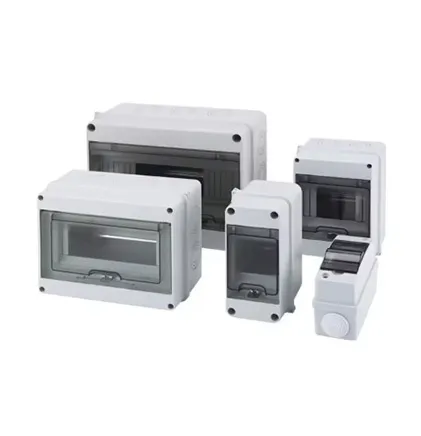
Every construction project, whether a single-family home or a multi-story commercial complex, depends on one critical but often overlooked component: the power distribution system. A custom power distribution box serves as the nerve center of a building's electrical infrastructure, routing electricity safely from the main supply to every outlet, switch, and appliance. Choosing the right unit can mean the difference between a safe, code-compliant installation and a costly rework down the line.
For contractors, developers, and procurement managers, understanding what goes into a quality distribution box and how to source it efficiently is essential. This guide walks through the key considerations, applications, and the advantages of working with an experienced supplier that offers a full range of electrical components.
A power distribution box, also called a distribution board or panel, is an enclosure that houses circuit breakers, fuses, and busbars to divide an electrical feed into subsidiary circuits. In residential and commercial buildings, it is the central hub where electricity enters from the utility grid and gets distributed to lighting, HVAC, kitchen equipment, and other loads.
A custom unit goes beyond off-the-shelf models by allowing you to specify the number of circuits, breaker types, enclosure material, ingress protection rating, and mounting configuration. This flexibility is especially valuable in projects with unique electrical layouts, local code requirements, or specific environmental conditions such as high humidity or outdoor exposure.
Distribution boxes are not one-size-fits-all. Different building types place different demands on electrical infrastructure:
Residential Buildings: Single-family homes, apartment complexes, and villa developments require distribution boxes sized for typical household loads, with provisions for future expansion as homeowners add appliances or EV chargers.
Commercial Offices: Office buildings need panels that accommodate three-phase power for HVAC systems, elevator machinery, server rooms, and floor-by-floor sub-distribution.
Hotels and Hospitality: Hotels demand reliable power distribution across guest rooms, kitchens, laundry facilities, and public areas, often with backup generator integration.
Retail and Shopping Centers: These spaces require flexible distribution to support tenant fit-outs, changing lighting displays, and seasonal power demands.
Industrial Facilities: Factories and warehouses need heavy-duty enclosures with high interrupting capacity to handle machinery and motor loads.
When procuring distribution boxes for a building project, evaluate these critical factors:
Enclosure Material and Protection: Steel enclosures with powder-coated finishes offer durability for indoor use. For outdoor or humid environments, look for IP65 or higher ingress protection ratings. Stainless steel options are available for corrosive atmospheres.
Circuit Configuration: The number of poles, ways, and current ratings should match your load calculations. A well-designed custom panel includes spare capacity for future additions.
Compliance and Certification: The unit must meet local electrical standards. Reputable manufacturers provide products tested to IEC, CE, or equivalent certifications relevant to your market.
Busbar Quality: Copper busbars offer superior conductivity and corrosion resistance compared to aluminum alternatives, making them the preferred choice for long-term reliability.
Ease of Installation: Features like knockouts, DIN rail mounting, clear labeling, and accessible terminal blocks speed up installation and reduce labor costs.
Procuring a distribution box in isolation can lead to compatibility headaches. A custom power distribution box is just one piece of a building's electrical system. Contractors also need switches & socket units, cables, conduits, and lighting fixtures that all work together seamlessly.
Working with a comprehensive electrical fixtures & cables supplier offers several advantages:
Consolidated Procurement: Source distribution boxes, switches, sockets, cables, and lighting from a single supplier, reducing logistics complexity and supplier management overhead.
Guaranteed Compatibility: When all components come from the same supply chain, compatibility issues are minimized, and technical support is streamlined.
Volume Pricing: Bundled orders across multiple product categories typically yield better pricing than fragmented purchasing.
Quality Consistency: A single supplier with established quality control processes ensures uniform standards across all electrical components.
A well-planned building project considers the entire electrical ecosystem. In addition to the distribution panel, here are the complementary components that should be sourced together:
Switches and Sockets: From basic wall switches to smart home-enabled outlets, the quality of these daily-use components directly impacts user satisfaction and safety. Premium sockets with child-safety shutters and fire-retardant materials add long-term value.
Cables and Wiring: The arteries of any electrical system, cables must be sized correctly for their load, installed with proper insulation, and compliant with fire safety codes. Options include PVC-insulated, XLPE, and low-smoke zero-halogen varieties for different applications.
Lighting Fixtures: Interior and exterior lighting products complete the electrical package. Coordinating lighting procurement with distribution equipment ensures consistent voltage compatibility and efficient project scheduling.
Off-the-shelf distribution boxes may work for simple residential projects, but custom solutions deliver measurable benefits for medium and large-scale developments:
Space Optimization: Custom enclosures can be sized to fit specific electrical rooms or wall cavities, eliminating the need for structural modifications.
Pre-Wired Options: Some suppliers offer pre-assembled panels with breakers, busbars, and terminal blocks pre-installed, significantly reducing on-site installation time and labor costs.
Future-Proofing: Custom panels can include spare ways, neutral bars, and earth bars sized for anticipated load growth, such as EV charging stations or solar inverter connections.
Branding and Documentation: Custom labeling, wiring diagrams printed on the enclosure door, and project-specific documentation streamline maintenance and handover processes.
Looking for a reliable supplier of custom power distribution boxes and complete electrical fixtures?
COLORIA GROUP offers a comprehensive range of electrical fixtures and cables, including custom distribution boxes, switches, sockets, and wiring solutions for residential and commercial projects worldwide. As a one-stop building materials provider with over a decade of industry experience, we help contractors, developers, and procurement teams consolidate their sourcing, reduce costs, and ensure quality consistency across every component.
Visit our electrical fixtures & cables page to explore our full product range, or contact our team to discuss your custom requirements and receive a competitive quotation.
Recommend Products












