


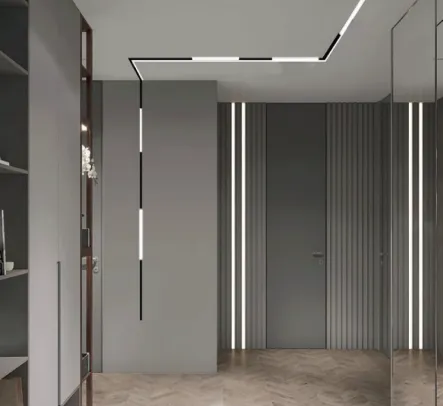
Ever walked into a boutique hotel or designer showroom and been mesmerized by how the lighting just flows across the space? That seamless magic you're seeing? More often than not, it's thanks to cutting-edge magnetic track lighting systems. As a factory insider, I've seen how Chinese manufacturers are revolutionizing this niche – turning what used to be rigid installations into flexible masterpieces.
Why Magnetic Systems Beat Old-School Lighting
| Feature | Traditional Track | Magnetic Track |
|---|---|---|
| Installation Speed | Hours of wiring | Snap-on in minutes |
| Design Flexibility | Fixed layouts only | Reconfigure anytime |
| Maintenance | Electrician required | DIY replacements |
| Architectural Integration | Bulky profiles | Sleek, low-profile |
Just last month, a Dubai hotelier told me they redesigned their entire lobby lighting in one afternoon using magnetic tracks. That's the game-changer: lights that adapt as fast as your creative ideas.
Inside China's Lighting Powerhouses
Having toured over two dozen factories across Guangdong and Zhejiang, I'm constantly amazed by their evolution. Forget the stereotypes – today's top Chinese producers combine German engineering precision with Silicon Valley innovation cycles. Their prototyping labs look like NASA control rooms!
Customization Depth
From color temperatures to track curvature radii, everything is negotiable. One Shenzhen factory even 3D-printed bronze finishings for a Parisian museum project.
Tech Integration
Built-in Bluetooth mesh, daylight sensors, and dim-to-warm functions come standard. It's not just hardware – it's complete architectural lighting solutions.
Volume Agility
I've seen factories handle 50-unit boutique orders and 5,000-unit casino projects with equal precision. Their modular production lines shift scales seamlessly.
Where Magnetic Tracks Transform Spaces
High-End Retail Renaissance
Guangzhou's Teemall recently used color-tunable magnetic spots to make merchandise "glow" under different seasons. Sales jumped 19% - proof that great commercial lighting pays for itself.
Hospitality Hotspots
The W Bangkok used floating magnetic tracks to create "light rivers" above their bar. At 2AM when the vibe shifts? Staff literally slide fixtures to reshape the mood.
Navigating Your Sourcing Journey
Finding your factory soulmate takes strategy. After mediating 200+ buyer-supplier relationships, here's my battle-tested roadmap:
-
Spec with Precision
Bring mood boards, lumen requirements, and renderings. Top factories relish technical challenges like "Can we bend tracks around marble columns?" -
Audit Like a Pro
Don't just check ISO certificates – test their metal finishing labs. Does their anodizing bath look cleaner than your kitchen sink? Good sign. -
Sample Like You Mean It
One client learned this hard way: test samples in extreme environments. Does the connection stay true in Dubai's 50°C heat? -
Master Production Phasing
Stage payments to match material procurement and assembly milestones. Smart buyers use Alibaba Trade Assurance as backup.
The Magnetic Future Unveiled
At Shanghai's lighting expo this year, I geeked out over these emerging innovations:
-
Self-Powering Tracks
Piezoelectric tech that harvests energy from fixture adjustments - great for sustainability goals -
Shape Memory Alloys
Tracks that "remember" curves for seasonal redesigns - no more recutting rails! -
Blockchain Authentication
Scan your fixture to verify materials sourcing - crucial for LEED certification
The Smart Buyer's Advantage
While European brands dominate luxury perception, Chinese factories now lead in magnetic track innovation. Their willingness to co-engineer solutions means you're not just buying lights – you're creating signature environments. The only limit? How boldly you design with light.
After seeing how these systems transform restaurants from bland boxes to moody masterpieces, I'm convinced: the future isn't just bright, it's magnetically attached.










