
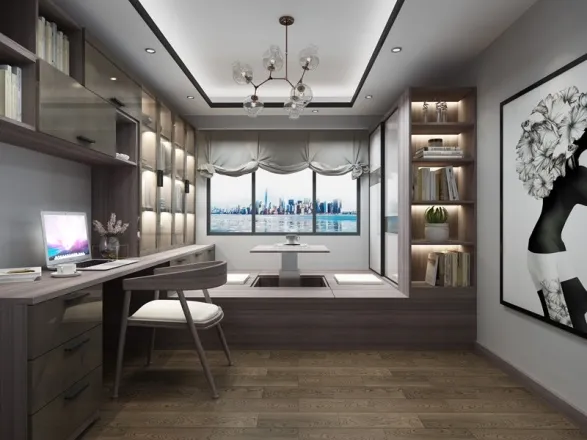
How Tailored Furniture Solutions Transform Traditional Japanese Living Spaces
Traditional Japanese rooms embody harmony, but standard furniture often clashes with authentic tatami flooring. When we talk about custom furniture in this context, we're addressing much more than just measurements. The Merriam-Webster definition reveals "custom" as both a long-established practice and specially made goods – two concepts that perfectly converge in tatami culture.
Cambridge Dictionary emphasizes how customs reflect cultural identity. True custom lift-tables honor Japanese tradition while solving modern accessibility challenges. Consider these dimensions for authentic tatami compatibility:
This isn't just furniture engineering – it's cultural preservation. Like the tatami mats themselves, which require specific bamboo charcoal wallboard treatment to maintain quality, lift-tables demand specialized adaptation.
Creating lift-tables for authentic tatami spaces requires a threefold approach:
Material Harmony: Wood selections should complement tatami's natural palette – hinoki cypress or Japanese ash that whisper "this belongs" rather than shouting "foreign installation".
When Mrs. Tanaka first saw our prototype lift-table in her century-old Kyoto machiya, she touched the wood grain and whispered, "It remembers what trees know about patience." That’s when we understood we'd bridged the gap between utility and soul.
Structural calculations go beyond load-bearing capacity. We account for:
Even the cushion feels deliberate - 22mm of shaved natural rubber that yields like moss underfoot. For wheelchair accessibility, we integrate whisper-quiet hydraulic lifts camouflaged within wooden legs, preserving the aesthetic. The true measure? When visitors don't notice the mechanics – just the harmony.
We begin by measuring not just your space, but your lifestyle. How many generations gather for tea? What seasonal ceremonies matter? These stories inform designs deeper than dimensions.
Choose from eco-sustainable woods matching regional traditions. Our Kyoto artisans source wood with history – reclaimed temple beams or storm-felled cedars with character.
Ninety-three precise steps transform raw wood into functional art. Each lift mechanism undergoes 10,000 motion tests – ensuring decades of smooth operation.
Post-installation, we provide seasonal maintenance kits containing:
Your lift-table should age like fine pottery – gaining character while maintaining function. Bamboo charcoal treatments protect against humidity shifts that challenge even authentic tatami flooring.
Modern solutions often bulldoze traditions, but truly customized furniture can be cultural preservation. Consider these historical touchpoints we honor:
Each adjustable leg features a discreet sakura blossom inlay – not for decoration, but to mark the exact rotational alignment point for seasonal recalibration as wood expands and contracts.
Our apprenticeship program trains younger artisans in both smart home technology and Edo-period joinery. "The shinobi-gaeshi joints connecting tabletop to legs?" master carpenter Yoshida demonstrates, "Same technique used in Himeji Castle's hidden corridors – weight-bearing without adhesives."
When non-verbal dementia patients at Osaka's Sakura Senior Care began engaging more during tea ceremonies after our lift-tables were installed, therapists observed something profound: the familiar elevation triggered muscle memory of family gatherings. Custom furniture became therapy.
For commercial applications like ryokans, we incorporate:
True customization reflects understanding that tatami spaces breathe differently. Seasonal humidity changes, the way light filters through shoji screens, even the psychology of elevation levels – these factors guided our design principles.
Unlike western furniture, Japanese design follows ma (間) – the philosophy of intentional space. Our lift-tables embody this through:
The final test? Traditional Japanese architects evaluate our pieces using the Kenmen Kansō method – "sword-sight inspection" that examines how pieces interact with emptiness. Only when a table enhances the void around it, rather than dominating space, do we consider it successful.
Recommend Products












