
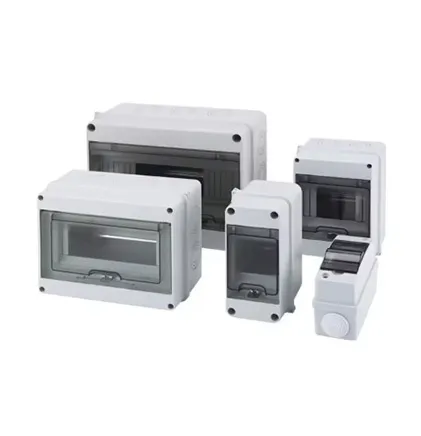
When it comes to building projects—whether a towering commercial complex, a cozy residential development, or a specialized facility like a hospital or school—one component often flies under the radar but holds everything together: the power distribution box. It's the unsung hero that ensures electricity flows safely and efficiently, powering everything from lighting and HVAC systems to critical medical equipment. But here's the thing: no two projects are the same. A standard, off-the-shelf distribution box might work for a small home renovation, but when you're dealing with unique layouts, strict safety codes, or specific performance needs, "one-size-fits-all" just doesn't cut it. That's where custom solutions come in—and why companies like Coloria have become go-to partners for builders and project managers worldwide.
Coloria, a global leader in one-stop architectural solutions, understands that every project has its own personality. With decades of experience and a commitment to tailoring solutions to each client's needs, they've redefined what it means to deliver electrical systems that don't just work—they excel. In this article, we'll dive into why custom power distribution boxes are a game-changer, how Coloria's approach sets them apart, and real-world examples of how these tailored solutions have transformed projects across industries.
Let's start with the basics: What even is a power distribution box? At its core, it's the central hub that takes electricity from the main supply, divides it into circuits, and distributes it to different parts of a building. Think of it as the "traffic controller" of your electrical system—managing the flow to prevent overloads, short circuits, and other hazards. But here's the problem with standard boxes: they're designed to meet general requirements, not your project's specific quirks.
Imagine this scenario: You're overseeing the construction of a luxury hotel in Riyadh. The design features a mix of high-end lighting, smart room systems, and commercial kitchen equipment—each with unique power demands. A standard distribution box might not have enough circuits to handle the load, or its dimensions might not fit the custom-built utility closet. Worse, it might not comply with Saudi Arabia's strict electrical codes, putting the project at risk of delays or fines. This is where a custom solution isn't just a nice-to-have—it's a necessity.
Off-the-shelf boxes often come with fixed circuit configurations, limited space for future expansions, and generic materials that might not stand up to harsh environments (like the extreme temperatures of the Middle East). They're also rarely optimized for energy efficiency, which can lead to higher operational costs down the line. For projects that prioritize sustainability—a growing trend in line with global "dual carbon" goals—standard boxes simply don't offer the flexibility to integrate energy-saving features like smart monitoring or solar panel compatibility.
| Challenges with Standard Distribution Boxes | How Custom Solutions Solve Them |
|---|---|
| Fixed circuit layouts that don't match project needs | Custom circuit configurations tailored to specific power demands |
| One-size-fits-all dimensions that don't fit unique spaces | Flexible sizing and design to fit tight or custom-built areas |
| Generic materials that may fail in harsh environments | High-quality, durable materials selected for local conditions (e.g., heat-resistant components for the Middle East) |
| Limited compliance with regional safety codes | Engineered to meet local standards (e.g., Saudi Arabian electrical regulations) |
| No room for future upgrades or smart tech integration | Modular designs that allow for easy expansion or addition of features like energy monitoring |
The bottom line? When your project's success depends on reliability, safety, and efficiency, a custom distribution box isn't an extra expense—it's an investment in avoiding costly reworks, delays, and long-term operational headaches.
So, what makes Coloria's approach to custom distribution boxes stand out? It starts with a simple philosophy: your project isn't just a job—it's a partnership. With a global network and deep roots in the Middle East, they bring a unique blend of local expertise and international best practices to every project. Let's break down their process, from the first consultation to the final installation.
Every custom solution starts with a conversation. Coloria's team of electrical engineers and project specialists don't just ask, "What size box do you need?" They dig deeper: What's the project's purpose? Are there specific safety requirements (like Class A fireproof standards for hospitals or schools)? How will the building be used in 5, 10, or 20 years? For example, a school might need extra circuits for future tech upgrades, while a hospital requires redundant systems to ensure critical equipment never loses power.
This collaborative approach ensures that the final product isn't just a box—it's a solution designed around your project's unique goals and challenges. "We once worked with a client building a LEED-certified office complex in Dubai," says a senior engineer at Coloria. "They wanted to minimize energy waste, so we integrated smart sensors that monitor power usage in real time and automatically adjust distribution to reduce peak loads. That's the kind of detail you can't get with a standard box."
Once the requirements are clear, Coloria's engineering team gets to work. Using advanced 3D modeling software, they design a distribution box that fits your space, meets all safety codes, and integrates seamlessly with other systems (like solar panels or backup generators). Materials are carefully selected based on the environment: For coastal projects, corrosion-resistant metals; for high-temperature areas, heat-dissipating components; for hospitals, fireproof materials that comply with Class A fire safety standards.
But it's not just about functionality—durability matters too. Coloria's boxes are built to last, with robust enclosures that protect against dust, moisture, and even physical impact. "We had a client in Jeddah whose facility is near the coast," recalls a project manager. "The salty air can wreak havoc on electrical equipment, so we used marine-grade stainless steel for the enclosure and sealed all connections to prevent corrosion. Five years later, that box is still running like new."
No custom solution leaves Coloria's facility without rigorous testing. Each box undergoes a battery of checks: load testing to ensure it can handle peak power demands, short-circuit testing to verify safety mechanisms, and environmental testing to confirm it holds up in extreme conditions (think 50°C heat or high humidity). This commitment to quality is why Coloria's distribution boxes consistently meet or exceed international standards like IEC, ASTM, and DIN.
"We don't just test to pass—we test to perform," says a quality control specialist. "A distribution box is too critical to cut corners. If there's even a 1% chance of failure, we go back to the drawing board."
Once the box is ready, Coloria's global logistics network ensures it arrives on time, anywhere in the world. Their team can even provide on-site support during installation, working with your electricians to ensure everything is set up correctly. And because they're a one-stop solution provider, they can coordinate with other systems—like electrical fixtures and cables—to ensure the entire electrical ecosystem works in harmony.
"What I love about working with Coloria is that they don't disappear after delivery," says a construction manager who partnered with them on a shopping mall project in Riyadh. "When we had a last-minute change to the lighting layout, their team adjusted the distribution box's circuit configuration within days. That kind of responsiveness is priceless."
Numbers and technical specs are important, but nothing tells the story like real projects. Let's look at three case studies where Coloria's custom distribution boxes made a tangible difference.
A leading hotel chain was building a 30-story luxury property in Dubai, featuring suites with smart home systems, high-end restaurants, and a rooftop infinity pool. The challenge? The utility rooms on each floor were compact, leaving little space for a standard distribution box. Coloria's solution? A custom vertical design that stacked circuits vertically instead of horizontally, reducing the box's footprint by 40%. They also integrated smart monitoring to track energy usage per floor, helping the hotel reduce its carbon footprint by 15% in the first year.
A new hospital in Riyadh needed distribution boxes that could handle the demands of operating rooms, ICU units, and medical imaging equipment—all while meeting Saudi Arabia's strict healthcare safety codes. Coloria designed a redundant system with backup power integration, ensuring that even if the main supply fails, critical equipment stays online. They also used Class A fireproof CPL inorganic board for the enclosures, providing an extra layer of safety in case of fire. The result? A system that's now trusted to power life-saving equipment 24/7.
A developer in Doha was building a mixed-use residential complex with 500 units, each with the potential for future upgrades like home EV chargers or smart home systems. Coloria's custom boxes included extra capacity and modular slots, allowing residents to add circuits without replacing the entire box. This forward-thinking design has made the complex more attractive to buyers, with 90% of units sold within six months of completion.
In today's world, sustainability isn't just a buzzword—it's a business imperative. Coloria's custom distribution boxes are designed with this in mind, aligning with global "dual carbon" goals and local initiatives like Saudi Arabia's Vision 2030. Here's how they contribute to a greener built environment:
"We believe that every component in a building should contribute to sustainability, not just the big-ticket items like solar panels," says Coloria's sustainability director. "A well-designed distribution box might not be visible, but its impact on energy efficiency and longevity is significant."
With so many options for electrical components, why choose Coloria for your custom distribution box? It comes down to three key factors:
With a strong presence in Saudi Arabia and decades of experience in the Middle East, Coloria understands the unique challenges of the region—from extreme weather to local regulations. But they're not limited to one market: their global network ensures they can deliver solutions anywhere, with the same level of quality and attention to detail.
As a one-stop architectural solution provider, Coloria can coordinate your distribution box with other building materials—from electrical fixtures and cables to flooring and wall panels. This streamlines the supply chain, reduces coordination headaches, and ensures all components work together seamlessly.
Coloria invests heavily in R&D, constantly exploring new materials, technologies, and designs to improve their solutions. Whether it's integrating AI-powered monitoring or developing more sustainable enclosures, they're always looking for ways to deliver more value to their clients.
Final Thought: Your project deserves more than a generic solution. A custom power distribution box from Coloria isn't just about electricity—it's about peace of mind, knowing that your electrical system is designed to meet your unique needs, stand the test of time, and support your long-term goals. Whether you're building a hospital, a hotel, or a residential complex, partnering with a provider who understands the art of customization can make all the difference between a project that meets expectations and one that exceeds them.
Recommend Products












