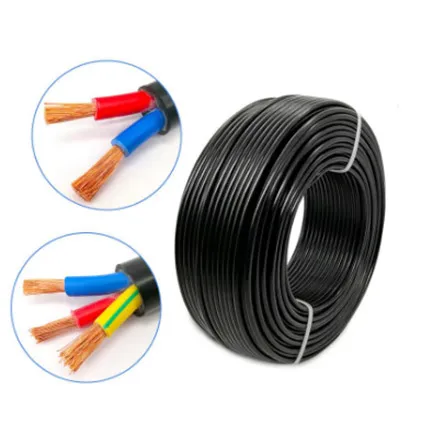
Ever wonder how offshore oil rigs withstand hurricane-force winds, or how mining equipment survives miles underground? There's an unsung hero quietly powering these operations: specialty cables engineered to laugh in the face of destruction. Let's talk about why crush-resistant and corrosion-resistant cables aren't just accessories - they're your frontline defense against disaster.
When Your Workplace Feels Like a War Zone
Picture this: hydraulic presses exerting 50 tons of pressure, chemical spills eating through steel, vibration that'd shake apart an earthquake shelter. This isn't a movie set – it's daily reality for:
-
Deep-sea drilling platforms
where saltwater is the ultimate corrosive enemy
-
Mining tunnels
with falling debris and crushing machinery weight
-
Industrial chemical plants
where acids and solvents dissolve ordinary materials
-
Automotive stamping facilities
where 2,000-pound dies come crashing down
"We lost power three times during storm season before switching
cables. Turns out saltwater was creeping into connectors like termites through wood."
- Miguel R., offshore rig supervisor
The Anatomy of a Cable That Won't Quit
Built to Resist Crushing Forces
Standard cables collapse like cardboard under pressure. The champions? Think titanium-reinforced armor:
Spiral steel wrapping
- Like medieval chainmail protecting vital organs
Kevlar-reinforced insulation
- The same material in bulletproof vests
Hexagonal copper strands
- Fitting together like puzzle pieces to distribute force
|
Crush Test
|
Standard Cable
|
Reinforced Cable
|
|
1,000 psi pressure
|
Complete failure
|
Minor insulation compression
|
|
Impact resistance
|
Cracks at 3 Joules
|
Withstands 15 Joules
|
Engineered to Fight Corrosion
Unlike ordinary cables that rust like abandoned cars, corrosion-resistant versions deploy chemical warfare defenses:
PTFE (Teflon) jacketing
- Creates a non-stick surface chemicals can't adhere to
Chromium-infused shielding
- Forms self-healing oxide layer when scratched
Double-sealed connectors
- Hermetically sealed like undersea laboratories
Why Standard Cables Fail When You Need Them Most
The moment when cables typically give out reveals everything about their limitations:
The Slow Death by Corrosion
It starts invisibly - salt molecules penetrate microscopic pores. Months later: sudden electrical leakage causing:
-
Ghost voltage readings shutting down production
-
Insulation becoming conductive and brittle
-
Increased resistance causing dangerous overheating
The Instant Catastrophe of Crushing
Unlike corrosion's gradual damage, crushing failures happen with terrifying speed:
-
Cable jackets splitting like overripe fruit
-
Conductors flattening into ribbons
-
Instant short circuits tripping critical systems
"Our conveyor belt stoppages cost $9,000 per hour. After cable upgrades? Zero unplanned downtime for 18 months."
- Priya K., mining operations director
Selecting the Right Cable: Your Cheat Sheet
Match Your Environment to Cable DNA
|
Environment
|
Crush Resistance Level
|
Corrosion Protection
|
|
Shipbuilding dry docks
|
Heavy (ISO 6722 Class D)
|
Saltwater immersion grade
|
|
Food processing plants
|
Medium
|
Acid/alkaline resistance (USDA/FDA)
|
|
Automotive manufacturing
|
Extreme (100+ ton rating)
|
Oil/grease resistance
|
The Critical Specifications
When reviewing **electrical fixtures & cables** specifications, these non-negotiables matter:
-
UL 1277/1284 ratings
for industrial toughness
-
IP68/IP69K ingress protection
- not just water-resistant but pressure-proof
-
Operating temp range
(-40°C to 150°C for extreme environments)
Real-World Survival Stories
Deepwater Drilling Platform Rescue
During Hurricane Lorenzo, standard control cables failed simultaneously across Gulf platforms. But one rig remained operational thanks to:
-
Triple-extruded fluoropolymer jackets
-
Torsion-resistant spiral armor
-
Seawater-resistant termination glands
Mine Collapse Near-Miss
When a Utah copper mine experienced rockfall, reinforced power cables continued functioning despite:
-
15-ton boulder crushing the cable tray
-
Acidic groundwater exposure
-
Emergency systems drawing triple normal current
The ROI Revelation:
A chemical plant spent $28,000 upgrading
cables but saved $410,000 in maintenance during the first year alone. Sometimes the best cost-cutting move is spending strategically.
Installation Secrets for Maximum Lifespan
Even superhero cables need proper support:
The 4 Rules of Indestructible Installation
-
Bend Radii Are Sacred
- Never bend tighter than 8x cable diameter
-
Protection at Transition Points
- Use armored conduits between zones
-
Stress-Relief Loops
- Leave service loops for vibration absorption
-
Chemical Compatibility
- Match sealants to your environment
"I used to tell new techs: 'Treat
cables like electrical veins – kinks cause heart attacks for machines.' Proper installation prevents 90% of failures."
- David T., industrial maintenance veteran
When Failure Isn't an Option
In critical systems, cables aren't just components - they're the nervous system. That's why these industries never compromise:
Nuclear facilities
- Quad-redundant
cables in lead-lined conduits
Aircraft carriers
- Electromagnetic pulse-shielded power distribution
Toxic chemical transport
- Self-monitoring
cables with leak detection
The Future: Smarter, Tougher Cables
Next-gen innovations already emerging:
-
Self-healing polymers
- Scratches seal like skin wounds
-
Strain-sensing conductors
- Alerting before critical stress points
-
Graphene-enhanced shielding
- Corrosion resistance increased 400%
The Bottom Line:
In environments where failure means disaster, crush-resistant and corrosion-resistant
cables are your silent guardians. They're not just about preventing downtime - they're about guaranteeing everyone goes home safely.