
Blending centuries-old craftsmanship with modern ingenuity to transform compact living
Okay, let's be real - living in a small space can sometimes feel like playing a never-ending game of Tetris. You're constantly rearranging furniture, struggling to find storage, and wondering how to make everything fit without feeling like you're suffocating. But what if I told you there's an ancient Japanese solution that's perfect for our modern space woes? Yeah, I'm talking about tatami mats. These traditional mats aren't just beautiful – they're absolute game-changers for transforming tight spaces.
Tatami does something magical in small rooms that modern flooring just can't match. It creates this amazing illusion of space while physically changing how you interact with your environment. The moment you step onto tatami, you feel your posture change, your movements become more intentional, and your entire relationship with the room shifts.
You know that feeling when you walk into a minimalist Japanese room and suddenly breathe deeper? That's the tatami effect. Unlike bulky Western furniture that dominates a room, tatami mats work with the space rather than against it. Their precise dimensions create visual harmony while their slightly elevated platform provides hidden storage – every small space dweller's dream!
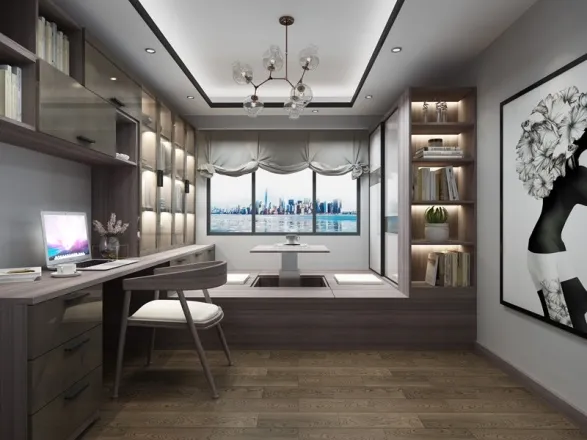
Traditional tatami rooms aren't just about flooring; they're flexible living ecosystems. By day, your tatami platform serves as a living room. Come evening, bedding rolls out transforming it into a bedroom. Weekend? Fold it all away for workout or meditation space. This isn't just furniture – it's spatial wizardry perfect for apartments where square footage comes at a premium.
Let's bust a myth: tatami isn't stuck in feudal Japan. Contemporary designers are reinventing tatami platforms to work seamlessly in studio apartments and tiny homes. Picture this: a foldaway tatami workstation that disappears into the wall when not in use, or modular tatami sections with lift-up storage that doubles as seating. That's what I call functional beauty!
And it's not just for floors anymore. Visionary designers are creating tatami-inspired wall panels and ceiling treatments that bring that same warm, organic texture vertically. Imagine a small bedroom where tatami-style headboards and accent walls create cocoon-like comfort without swallowing precious floor space.
Here's why tatami works optical miracles in small rooms: the standardized 2:1 rectangular shape creates rhythmic visual patterns that expand perceived space. That grid effect? It's like wearing vertical stripes – but for your floors. And because tatami sits slightly raised, it literally adds dimension to flat urban apartments.
That natural wheat straw smell? That's spatial psychology in action. The subtle scent triggers associations with open fields and spaciousness – cognitive trickery that shrinks claustrophobia. Meanwhile, the give underfoot provides tactile feedback that connects you to the space physically, compensating for the small dimensions.
Install full tatami flooring with deep storage compartments under lift-away sections. Roll-out bed storage during nights, tuck away bedding during daytime revealing living space with built-in seating.
Use modular tatami squares to create fluid zoning without walls. Corner platforms elevate sleeping areas while defining spaces, with integrated drawers replacing bulky dressers.
Apply tatami-inspired textures to accent walls and ceilings. Creates spatial illusion while maintaining minimalist aesthetic. Perfect for rented spaces or adding personality to plain boxes.
In our eco-conscious times, tatami offers seriously green credentials. Made from renewable rush grass woven around rice straw cores, these mats represent centuries of sustainable wisdom. Modern versions use recycled materials without sacrificing authenticity – making them environmentally friendly building materials with soul. Each mat is essentially carbon storage in floor form!
And get this: tatami actually regulates humidity naturally. That means fewer dehumidifiers in damp climates and less dry air during winters. All while neutralizing odors and discouraging dust mites. Compare that to synthetic carpets that off-gas toxins or hardwood demanding deforestation.
The tatami revolution is accelerating with tech integrations. Experimental studios are embedding flexible LED lighting between mats to create glowing navigation paths at night. Magnetic tatami systems allow instant reconfiguration of space for entertaining versus solo living.
Perhaps most exciting are the cross-cultural fusions emerging. Western studios combine tatami principles with floating Scandinavian concepts to create "disappearing rooms." Imagine transforming 300-square-feet into seemingly unlimited configurations without construction permits or demolition dust!
Ultimately, tatami isn't just about surviving small spaces – it's about thriving in them. By embracing floor-level living principles, we rediscover that space isn't about measurements but about perception. Tatami teaches us that boundaries can expand through thoughtful design. Your tiny apartment might have finite dimensions, but your experience of it doesn't need limits. Every traditional mat holds an invitation: to sit lower, breathe deeper, and discover just how large a small space can truly feel.
Recommend Products












