
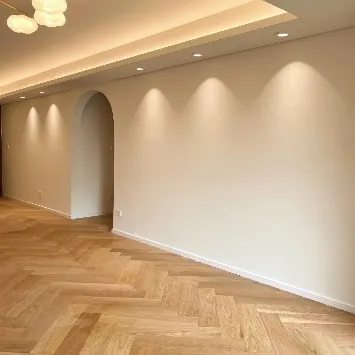
Imagine walking into your favorite boutique. What catches your eye first? The beautifully lit display showcasing the latest collection. Professional lighting isn't about making your store brighter—it's about creating an experience. When done right, lighting tells your products' story, highlights textures, sets moods, and guides customers through your space.
In this comprehensive guide, we'll unlock the secrets behind three game-changing lighting elements: beam angle , illumination, and color rendering. Whether you're designing a jewelry store where diamonds need to sparkle or a bookstore creating cozy reading nooks, you'll learn how to use LED spotlights like an artist uses a brush.
Think of beam angle as the spotlight's personality. A narrow beam whispers "look here," while a wide beam gently fills a space. Measured in degrees, it's the angle at which light disperses from your LED fixture. Getting this right means everything becomes intentional—every corner, shelf, and focal point.
Spotlights (8°-25°): Like a solo performer on stage. Perfect when you need drama—highlighting jewelry under glass, emphasizing artwork, or creating intimate changing rooms. Creates crisp circles of light that make products pop.
Medium Beam (30°-45°): Your multitasker. Spreads light without losing focus. Ideal for retail displays where customers interact with products up close—think clothing racks where shoppers evaluate fabric textures or gadget demo tables.
Floodlights (50°-120°): The welcoming committee. Bathes spaces in even, ambient light. Essential in store entrances, checkout counters, and lounge areas where you want customers to feel comfortable lingering. Creates atmosphere without visible shadows.
| Beam Angle | Store Applications | Recommended Fixture Height |
|---|---|---|
| Narrow (8°-25°) | Jewelry cases, product highlights, art displays, changing rooms | 2-3 feet above object |
| Medium (30°-45°) | Clothing racks, makeup testers, book displays, electronics sections | 4-6 feet above floor |
| Wide (50°-120°) | Entrances, checkout lanes, cafe areas, aisle lighting | 8-12 feet ceilings |
Pro Insight: Your ceiling height is your beam angle co-pilot. High ceilings (12+ feet) love narrow beams that punch light downward without washing out. Standard 8-10 foot ceilings thrive with medium beams—they reach surfaces without glare. Low ceilings demand wide beams that won't blind customers with intense spotlights.
Brightness isn't one-size-fits-all. Imagine walking through a museum: artifacts get star treatment at 500 lux, while hallways subtly guide at 100 lux. This concept applies to stores too. Use targeted brightness to subconsciously guide shoppers:
For LED spotlights, calculate needs using lumens: a standard downlight needs ≈ 500 lumens per square meter for general lighting. But placement matters more than wattage—mount closer to products rather than blasting higher outputs from afar.
Ever bought a shirt that looked richer in-store than daylight? That's CRI at play. The Color Rendering Index (CRI) measures how faithfully light reveals true colors. In retail, poor CRI = lost sales:
Tip: Combine high CRI LEDs with appropriate color temperatures. Warm whites (2700-3000K) create cozy environments like bookstores or cafes. Cool whites (4000K+) mimic daylight in grocery sections or tech shops.
Luxury stores share a secret: they use 97+ CRI spotlights combined with tight 10° beams on jewelry cases. At these levels, diamonds display fire you simply can't get with office-grade lighting. The investment pays off when customers see the sparkle and pay premium prices.
Map your customer journey. Where do they linger? What's your conversion hot spot? Lighting follows storytelling:
One lighting type creates a flat experience. Professionals layer:
| Retail Type | Beam Angle Strategy | Recommended CRI |
|---|---|---|
| Clothing Boutique | 15° on mannequins, 24° on racks, 40° in changing rooms | 90+ for true fabric colors |
| Electronics Store | 24° on display tables, 40° aisle lighting | 85+ for screen glare control |
| Jewelry Store | 10° in cases, 24° general, 15° on statement pieces | 97+ to maximize gem sparkle |
| Coffee Shop/Bookstore | 40° ambient, 24° on tables, 10° on art | 85+ for comfort |
Your best friend? A light meter app. Measure key zones:
Example: A small table (1.5m diameter) needs ≈36° beam at 2m height for balanced illumination without dark edges. Get it wrong and products get lost in shadow.
Your layout changes with seasons or promotions. Install track lighting with adjustable heads—30° spots can rotate to focus on new arrivals next week. This approach beats static recessed lighting and keeps your space dynamic. For permanent installations, choose fixtures offering swapable optics: change 15° lenses to 40° when merchandise changes.
Light scaping uses angles to shape perceived space:
Transform spaces with programmable scenes:
Today's systems blend seamlessly—control tunable LED spotlights via smartphone or automated schedules.
When lighting aligns with your brand strategy:
Professional lighting transcends function. It shapes memories—a perfectly lit dressing room makes someone feel confident; spotlighted pastries look irresistible; a bookstore corner becomes an inviting escape. The lighting choices you make today—balanced between technical precision and emotional design—will build customer loyalty tomorrow. Remember, people don't just buy products; they buy experiences. Your lights set that stage.
Implementation Checklist:
Recommend Products












