
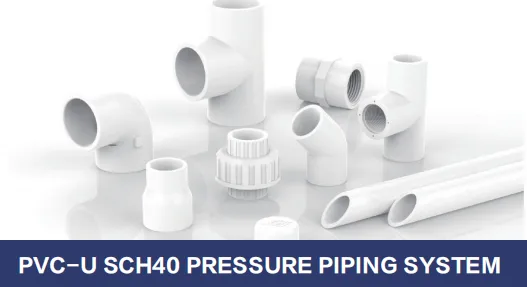
Midway through a commercial building project, the plumbing budget is already stretching thin. Leaks in the piping system have delayed construction, and replacement parts are eating into profits. Sound familiar? For contractors, developers, and project managers, the pressure to deliver quality work on time and within budget is constant. One area where costs often spiral out of control is the piping system—specifically, the design and installation of pressure piping. But here's the good news: by optimizing your PVC-U SCH40 pressure piping system design, you can cut unnecessary expenses, reduce delays, and ensure long-term durability. In this guide, we'll walk through practical, actionable tips to help you save money without compromising on performance, drawing on insights from industry experts and real-world applications.
Before diving into optimization strategies, let's clarify why PVC-U SCH40 has become a staple in residential and commercial construction. PVC-U (Unplasticized Polyvinyl Chloride) is a rigid, strong plastic pipe known for its corrosion resistance, chemical stability, and affordability. The "SCH40" designation refers to its pressure rating—SCH40 pipes are designed to handle moderate pressure, making them ideal for water supply systems, irrigation, industrial fluid transfer, and even some HVAC applications. Unlike metal pipes, PVC-U SCH40 won't rust, scale, or degrade when exposed to most acids, alkalis, or salts, which means fewer replacements and lower maintenance costs over time.
But not all PVC-U SCH40 pipes are created equal. The key to unlocking its cost-saving potential lies in how you select, design, and install the system—starting with partnering with a reliable PVC-U SCH40 pressure piping system supplier . A trusted supplier doesn't just sell pipes; they provide PVC-U SCH40 pressure piping system solutions tailored to your project's needs, from material selection to technical support. This partnership alone can prevent costly mistakes, such as using substandard materials or incorrect sizing, which often lead to rework and delays.
It's tempting to opt for the lowest-priced pipes to save money upfront, but this is often a false economy. Low-quality PVC-U SCH40 pipes may have inconsistent wall thickness, weak joints, or poor chemical resistance, leading to leaks, bursts, or premature failure. The cost of repairing a burst pipe in a finished building—ripping out walls, replacing damaged materials, and paying for labor—can far exceed the savings from buying cheap pipes.
Expert Insight: "We once worked with a contractor who switched to a budget upvc pipe supplier to cut costs on a 10-story apartment complex," recalls Maria Gonzalez, a technical consultant with a leading piping solutions company. "Six months after completion, residents reported low water pressure and leaks. An inspection revealed the pipes had cracked due to inconsistent wall thickness. The repair bill? Over $120,000—more than triple the initial savings on pipes. Investing in quality from the start would have avoided that nightmare."
So, how do you choose quality PVC-U SCH40 pipes? Look for suppliers who adhere to international standards, such as ASTM D1785 (for PVC pipe dimensions and pressure ratings) or DIN 8062 (for metric-sized pipes). These standards ensure the pipes are tested for strength, impact resistance, and pressure tolerance. A reputable PVC-U SCH40 pressure piping system supplier will provide certification documents, material safety data sheets (MSDS), and test reports upon request. Additionally, ask about the pipe's lead content—low-lead or lead-free options are not only safer for potable water systems but also comply with strict building codes, avoiding fines for non-compliance.
| Material | Initial Cost (per foot) | Installation Time | Maintenance Needs | Expected Lifespan (Years) | Best For |
|---|---|---|---|---|---|
| PVC-U SCH40 | $0.50–$2.00 | Fast (lightweight, easy to cut/join) | Low (no rust/scale; occasional cleaning) | 40–50+ | Residential/commercial water supply, irrigation, industrial non-potable systems |
| Copper | $3.00–$8.00 | Slow (requires soldering, heavy) | Medium (prone to corrosion in acidic water; requires periodic descaling) | 50–70 | High-end residential, historical buildings (aesthetic preference) |
| Galvanized Steel | $2.50–$6.00 | Slow (heavy, requires threading/cutting tools) | High (rusts over time; needs frequent replacement) | 20–30 | Industrial applications with high pressure/temperature (rarely used for water supply today) |
| PEX (Cross-Linked Polyethylene) | $1.00–$3.00 | Fast (flexible, no soldering) | Low (resistant to corrosion; sensitive to UV light) | 40–50 | Residential plumbing (hot/cold water lines) |
As the table shows, PVC-U SCH40 offers the best balance of initial cost, installation speed, and low maintenance—making it a cost-effective choice for most pressure piping projects. For example, a 10,000-square-foot commercial building with 2,000 feet of piping would cost roughly $1,000–$4,000 for PVC-U SCH40, compared to $6,000–$16,000 for copper. Over 50 years, the savings add up significantly, especially when factoring in lower maintenance costs.
Even with quality materials, a poorly designed piping system can waste money. Oversized pipes increase material costs and reduce water pressure, while undersized pipes lead to flow restrictions, noise, and premature wear. The goal is to design a system that delivers the required flow rate at the correct pressure, using the smallest possible pipe size to minimize material usage.
Before ordering pipes, calculate the maximum flow rate and pressure your system will need. For example, a hospital's water supply system requires higher flow rates than a small office building, and a sprinkler system needs to maintain specific pressure to ensure adequate coverage. Use hydraulic design software (such as AutoCAD Plant 3D or EPANET) to model the system, or consult a PVC-U SCH40 pressure piping system supplier for technical assistance. Many suppliers offer free design support as part of their PVC-U SCH40 pressure piping system solutions , helping you avoid over-engineering.
Every bend, valve, or fitting in a piping system creates friction, which reduces flow rate and increases pressure drop. To compensate, you may need to upsized pipes or add pumps—both of which cost money. By simplifying the layout, you can reduce friction, lower material costs, and speed up installation. For example:
Remember: each fitting you add not only costs money to purchase but also takes time to install. By reducing the number of fittings, you cut both material and labor costs. This is where partnering with a pipes fittings supplier who offers a wide range of high-quality, compatible fittings is crucial. Mismatched or low-quality fittings can leak or fail, undoing the savings from a simplified layout.
Even the best-designed system can fail if installed incorrectly. Poor installation—such as misaligned joints, over-tightened connections, or improper solvent welding—leads to leaks, which are costly to fix. Investing in training for your installation team and using the right tools can prevent these issues.
PVC-U SCH40 pipes are typically joined using solvent cement, a chemical adhesive that fuses the pipe and fitting into a single piece. If done incorrectly—too little cement, dirty surfaces, or insufficient curing time—the joint will leak. Train your team to follow these steps:
Using the right tools, such as a pipe cutter (not a hacksaw, which leaves uneven edges) and a deburring tool to smooth the pipe ends, also improves joint quality. A pipes fittings supplier can recommend compatible solvents and tools, ensuring you have everything you need for a leak-free installation.
For threaded PVC-U SCH40 fittings (used in some industrial applications), over-tightening can crack the fitting or strip the threads. Use Teflon tape or pipe dope to seal the threads, and tighten by hand until snug, then give an additional 1/4 turn with a wrench. Overtightening is a common mistake that leads to costly repairs—train your team to recognize when a connection is "just right."
A well-designed PVC-U SCH40 system requires minimal maintenance, but proactive care can extend its lifespan and prevent unexpected failures. Here's how to keep costs low over time:
Include shut-off valves, cleanouts, and inspection ports in your design. These allow you to isolate sections of the system for repairs without shutting down the entire supply, reducing downtime and labor costs. For example, a cleanout in a long horizontal pipe makes it easy to remove debris that could cause clogs, avoiding the need to cut into walls later.
High pressure can stress PVC-U SCH40 pipes, leading to bursts. Install pressure gauges at key points (e.g., near the water meter) and check them monthly. If pressure exceeds the pipe's rating (typically 150 psi for SCH40 at 73°F), install a pressure-reducing valve (PRV). Similarly, monitor flow rates to detect clogs early—slow drains or low water pressure are often signs of buildup that can be cleared with a plumber's snake or hydro-jetting before they cause backups.
PVC-U SCH40 pipes exposed to direct sunlight can degrade over time, becoming brittle and prone to cracking. For outdoor systems (e.g., irrigation or exterior water supply), use UV-resistant pipes or insulate standard pipes with sleeves. This small upfront cost prevents the need for premature replacement.
Perhaps the most overlooked cost-saving strategy is choosing the right PVC-U SCH40 pressure piping system supplier . A supplier who views themselves as a partner—not just a vendor—will go the extra mile to help you save money. Look for these qualities:
Case Study: A hotel construction project in Riyadh partnered with a PVC-U SCH40 pressure piping system supplier early in the design phase. The supplier provided hydraulic calculations, recommended a manifold-based layout to reduce fittings, and offered bulk discounts on pipes and fittings. By simplifying the design and consolidating orders, the project saved 18% on piping costs and finished two weeks ahead of schedule. "Their technical team was with us every step of the way," said the project manager. "They even trained our installers on solvent welding, which cut down on rework."
Optimizing your PVC-U SCH40 pressure piping system isn't about cutting corners—it's about making informed choices that reduce waste, prevent rework, and ensure durability. By choosing quality materials from a trusted PVC-U SCH40 pressure piping system supplier , simplifying the design, training your team on proper installation, and planning for maintenance, you can save thousands of dollars over the life of your project. Remember, the cheapest option today may cost you more tomorrow. Invest in PVC-U SCH40 pressure piping system solutions that prioritize performance and longevity, and you'll deliver a project that's on budget, on time, and built to last.
So, what's your next step? Reach out to a reputable PVC-U SCH40 pressure piping system supplier today. Discuss your project's needs, ask about their design support, and see how they can help you optimize your system. Your budget (and your future self) will thank you.
Recommend Products












