
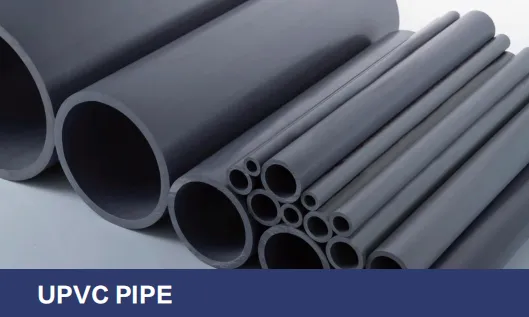
Every building—whether it's a cozy family home, a bustling office complex, or a state-of-the-art hospital—relies on one invisible hero: its plumbing system. It's the silent network that delivers clean water for morning coffee, drains away waste, and keeps spaces hygienic. But here's the thing: not all plumbing materials are created equal. Choose the wrong one, and you could be staring at sky-high installation bills, endless repairs, or premature replacements that derail your budget. Choose wisely, and you'll lock in decades of reliable performance without breaking the bank. Today, we're diving deep into one material that's redefining "cost-effective" in construction: UPVC pipe solutions.
Let's start with a scenario we've all heard (or lived through): A homeowner builds their dream house, splurges on premium finishes, but skimps on plumbing materials to save a few thousand dirhams. Five years later, they're shelling out for a full repipe because the cheap metal pipes corroded. Or a contractor opts for a "budget-friendly" material on a commercial project, only to face delays when installation takes twice as long as planned. The lesson? Cost-effectiveness in plumbing isn't just about the price tag at the hardware store. It's about the total cost of ownership—initial purchase, installation labor, maintenance, and lifespan—all rolled into one.
For years, options like copper, galvanized steel, and even PPR (Polypropylene Random Copolymer) have dominated the market. Copper, with its shiny reputation, was long seen as the gold standard, but its high cost and tricky installation tell a different story. PPR, popular for hot water systems, offers durability but often requires specialized tools. And then there's PVC—yes, the flexible stuff you might know from drain pipes (DWV, or Drain-Waste-Vent systems). But today, we're focusing on its stronger, more versatile cousin: UPVC, or Unplasticized Polyvinyl Chloride.
If you've ever worked with a pvc dwv pipe supplier , you know traditional PVC is great for drains—it's affordable, lightweight, and resists clogs. But UPVC takes that formula and cranks up the strength. Unlike flexible PVC, UPVC is rigid, reinforced, and designed to handle pressurized water systems—think supply lines for sinks, showers, and appliances. It's made by adding stabilizers and modifiers to PVC resin, creating a material that's tough, corrosion-resistant, and surprisingly lightweight.
But what really makes UPVC stand out isn't just its physical properties—it's how those properties translate to cold, hard cash. Let's break it down:
To truly understand UPVC's cost-effectiveness, we need to stack it against the competition. Below is a side-by-side comparison of common plumbing materials, based on real-world data from construction projects across Saudi Arabia and the GCC. All figures are approximate and based on 2024 market rates, but they paint a clear picture of long-term value.
| Material | Initial Cost per Meter (USD) | Installation Cost per Meter (USD) | Annual Maintenance Cost (USD) | Expected Lifespan (Years) | Total Cost Over 20 Years (USD)* |
|---|---|---|---|---|---|
| UPVC | $5–$8 | $3–$5 | $1–$2 | 50–60 | $110–$170 |
| Copper | $15–$25 | $10–$15 | $8–$12 | 20–30 | $510–$820 |
| PPR | $8–$12 | $6–$9 | $3–$5 | 40–50 | $230–$330 |
| PVC DWV (Traditional) | $3–$6 | $2–$4 | $2–$3 | 25–35 | $100–$150** |
* Total cost includes initial + installation + (annual maintenance × lifespan). ** Note: PVC DWV is not suitable for pressurized water systems, so this is for drain lines only.
Let's unpack these numbers. Copper, at first glance, might seem "premium," but its total cost over 20 years is 5x higher than UPVC. Why? Because copper pipes require skilled labor for soldering, and they're prone to corrosion—especially in areas with hard water—leading to leaks and costly fixes. PPR, while more affordable than copper, still costs nearly twice as much as UPVC over two decades. And traditional PVC DWV? It's cheap, but it can't handle the pressure of supply lines, so you'd still need a separate material for water delivery—adding complexity and cost.
UPVC pipes start at around $5 per meter, making them significantly cheaper than copper ($15–$25) and even PPR ($8–$12). But here's the kicker: that lower price doesn't mean lower quality. UPVC is engineered to meet strict international standards (like ASTM D1785), so it's tested for pressure, impact, and chemical resistance. As one upvc pipe supplier put it: "We've had clients tell us, 'I can't believe this is plastic—it feels as strong as metal!'" And because UPVC is lighter than copper or steel, shipping costs are lower too—another hidden saving for large projects.
If you've ever watched a plumber install copper pipes, you know it's a slow process: measuring, cutting, cleaning, soldering, and waiting for joints to cool. UPVC? It's a breeze. The pipes are lightweight (a 3-meter UPVC pipe weighs just 2–3 kg, vs. 10+ kg for copper), so workers can carry more in one trip. And instead of soldering or fusion machines, you just use solvent cement or push-fit fittings—no open flames, no specialized training.
Ahmed, a contractor with 15 years of experience in Riyadh, shared his experience: "On a recent residential project, we switched from PPR to UPVC for the main water lines. Our crew used to install 20 meters of PPR a day with fusion tools. With UPVC? They hit 35 meters—same crew, same hours. Labor costs dropped by 40%, and we finished the plumbing phase a week early. The client was thrilled."
Corrosion, rust, and scale buildup are the arch-enemies of plumbing systems. Copper pipes develop pinholes over time; steel rusts; even PPR can degrade if exposed to harsh chemicals. UPVC? It's impervious to all of that. Its smooth inner surface resists sediment buildup, so water flows freely without clogs. And since it doesn't react with acids, alkalis, or minerals in water, you'll never need to replace a section because of corrosion.
Maria, a homeowner in Jeddah, installed UPVC pipes in her villa 12 years ago: "I haven't called a plumber once for a pipe issue. No leaks, no weird tastes in the water—just… nothing. When my neighbor had to repipe their house (they used galvanized steel), they spent over $10,000. I'm still on my original UPVC system. That's peace of mind you can't put a price on."
Most upvc pipe supplier warranties last 50 years, but real-world data shows UPVC can easily hit 60–70 years. Compare that to copper (20–30 years) or even PPR (40–50 years). For a developer building a residential complex, that means the pipes will outlast the first two generations of homeowners. For a hospital or school, it means no disruptions for repiping during the building's prime operational years.
The Al-Hasa Commercial Plaza, a 10-story mixed-use building in Eastern Saudi Arabia, faced a dilemma: stay within a tight plumbing budget while ensuring durability for high-traffic restrooms, restaurants, and retail spaces. The project manager initially leaned toward PPR, citing its popularity in hot water systems. But after consulting with their upvc pipe supplier , they ran the numbers:
The result? A total savings of $30,000 in the first decade alone. "We were worried about UPVC's performance in hot water lines," the project engineer admitted, "but the supplier recommended insulated UPVC for the restaurant kitchens, and it's worked flawlessly. No leaks, no heat-related warping—just consistent performance."
We've all heard the skepticism: "Plastic pipes? They'll crack in the heat!" or "They can't handle high pressure!" Let's set the record straight. Modern UPVC pipes are designed to withstand Saudi Arabia's scorching temperatures (up to 60°C in direct sunlight) when properly insulated. For pressurized systems, they're rated for 10–16 bar (that's 145–232 psi), more than enough for residential (4–6 bar) and most commercial (8–10 bar) applications.
Another myth: "UPVC is bad for the environment." Today's UPVC is more sustainable than ever. Many suppliers use recycled resin in their pipes, and UPVC production requires 50% less energy than copper mining. Plus, its long lifespan means fewer replacements, reducing waste. For green-building certifications like LEED or Estidama, UPVC can even earn points for low environmental impact.
UPVC isn't a one-size-fits-all solution—but it fits most sizes. It shines in:
At the end of the day, building or renovating is about investing in the future. You wouldn't skimp on a foundation—so why skimp on the plumbing that keeps your building alive? UPVC pipe solutions offer something rare in construction: a material that's affordable today and saves you money tomorrow. It's lightweight, easy to install, and built to last longer than most of us will own our homes or manage our projects.
So the next time you're discussing options with your upvc pipe supplier , remember: you're not just buying pipes. You're buying 50+ years of reliability, lower labor costs, and the freedom to focus on what matters—building spaces that thrive. In a world where every dirham counts, UPVC isn't just a choice—it's a smart financial decision.
Recommend Products












