
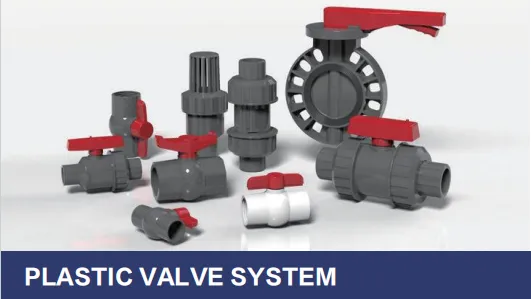
Imagine starting a plumbing project—whether it's a new commercial building, a hospital renovation, or a residential complex. You've budgeted carefully, hired contractors, and mapped out timelines. Then comes the critical choice: selecting a plastic valve system supplier. It's a decision that seems simple on the surface, but get it wrong, and you could be facing leaks, failed inspections, or even safety hazards down the line. On the flip side, overspending on an overpriced supplier might eat into funds needed for other project essentials. So how do you find that sweet spot—where quality is non-negotiable, but your budget doesn't take a hit? That's what we're diving into today. We'll explore what makes a plastic valve system supplier truly "cost-effective," why cutting corners often backfires, and how to partner with suppliers who deliver both reliability and value.
Plastic valves might not be the most glamorous part of a construction or plumbing project, but they're the unsung heroes keeping everything flowing smoothly. From controlling water pressure in a high-rise to managing chemical flow in an industrial setting, these small components bear enormous responsibility. That's why quality isn't just a "nice-to-have"—it's a necessity.
Low-quality plastic valves often use subpar materials, like recycled plastics with inconsistent melting points or additives that break down under heat or pressure. Over time, this leads to cracks, leaks, or even complete valve failure. Think about a hospital: if a valve in the HVAC system fails, it could disrupt temperature control in patient rooms. In a school, a leaking valve under a sink might lead to mold growth, posing health risks to students. The cost of fixing these issues? Far more than the savings from choosing a cheap supplier.
Reputable plastic valve system suppliers prioritize materials that meet industry standards. For example, many use PVC-U (unplasticized polyvinyl chloride) or PPR (polypropylene random copolymer), both known for their durability, chemical resistance, and long lifespan. These materials undergo rigorous testing—for pressure tolerance, temperature resistance, and corrosion—to ensure they perform as promised. When you choose a supplier that invests in quality materials, you're not just buying a valve; you're buying peace of mind.
Let's be honest: budgets are tight. Every project manager, contractor, or business owner has felt the pressure to trim expenses wherever possible. When it comes to plastic valve systems, the allure of a supplier offering rock-bottom prices is hard to ignore. But here's the harsh truth: "cheap" almost always comes with hidden costs.
Consider a scenario: A property developer chooses a budget plastic valve system supplier for a residential complex, saving 15% upfront. Six months after move-in, residents start complaining about leaky faucets and low water pressure. An inspection reveals that the valves are degrading—their seals are failing, and some have even cracked. The developer now faces the cost of replacing all valves, compensating residents for water damage, and repairing drywall. What started as a "savings" of $10,000 balloons into a $50,000 headache.
This isn't an isolated case. Cheap suppliers often skip critical steps: they don't test products thoroughly, they use uncertified materials, or they cut corners in manufacturing. The result? Higher maintenance costs, frequent replacements, and damage to your reputation. In contrast, a cost-effective supplier—one that balances reasonable pricing with quality—might cost a bit more upfront, but they eliminate these hidden expenses. It's the difference between "paying less now" and "paying once and forgetting about it."
So, what separates a truly cost-effective plastic valve system supplier from a budget one? It's not just about the price tag—it's about the entire package. Here are the qualities to look for:
Trustworthy suppliers don't just claim their products are high-quality—they prove it with certifications. Look for suppliers whose products meet international standards like ISO 9001 (quality management), ASTM D2466 (for PVC pipe fittings), or EN 12201 (for plastic piping systems). These certifications mean the supplier adheres to strict manufacturing and testing protocols. For example, a class A fireproof CPL inorganic board supplier (though we're focusing on valves here) would need similar certifications to ensure safety in hospitals and schools—and the same logic applies to valves. If a supplier can't produce these certifications, walk away.
A reliable plastic valve system supplier will be upfront about where they source their materials. Do they use virgin plastics, or do they mix in recycled materials (which can weaken the product)? Are their raw materials tested for purity and consistency? For instance, PPR pipe and fitting suppliers who use high-grade polypropylene will often share details about their resin suppliers and material composition. Transparency here is a red flag—if a supplier hesitates to discuss materials, it's likely because they have something to hide.
Even the best materials can fail if the manufacturing process is flawed. Top suppliers test every batch of valves for pressure resistance, temperature tolerance, and durability. For example, PVC DWV (Drain-Waste-Vent) pipes and valves—used in plumbing systems to carry wastewater—must withstand constant exposure to water, chemicals, and temperature fluctuations. A reputable PVC DWV pipe supplier will test their valves by subjecting them to high-pressure water flow for extended periods to ensure they don't leak or crack. Ask suppliers about their testing procedures—if they can't explain them in detail, they're probably not doing enough.
A cost-effective supplier isn't just a vendor—they're a partner. They should offer technical support, help you choose the right valve for your project, and stand behind their products if something goes wrong. For example, if you're unsure whether to use a PEX pipe fitting or a PPR valve for a hot water system, a good supplier will explain the pros and cons of each, based on your specific needs. After-sales support is equally important: if a valve fails prematurely, will they replace it quickly? Or will you be stuck in a loop of phone calls and emails?
Not all plastic valve systems are created equal. The right solution depends on your project's needs—whether it's a hospital, a school, a commercial building, or a residential complex. Below is a breakdown of common plastic valve system solutions, their applications, and what to look for in a supplier:
| Product Type | Key Materials | Common Applications | Key Features | Cost Range* | Ideal For |
|---|---|---|---|---|---|
| PVC DWV Valves | PVC-U | Drainage, waste, and vent systems in residential/commercial buildings | Lightweight, corrosion-resistant, easy to install | $8–$35 per unit | Apartment complexes, offices, retail spaces |
| PPR Valves | PPR (Polypropylene Random Copolymer) | Hot and cold water supply systems (hospitals, schools, homes) | High temperature resistance (up to 95°C), leak-proof joints | $12–$45 per unit | Hospitals, schools, luxury residential projects |
| UPVC Pressure Valves | UPVC (Unplasticized PVC) | Irrigation, industrial piping, water distribution | High pressure tolerance, chemical resistance | $15–$50 per unit | Farms, factories, municipal water projects |
| PEX Valves | PEX (Cross-Linked Polyethylene) | Residential plumbing, radiant heating systems | Flexible, freeze-resistant, easy to bend | $10–$30 per unit | Single-family homes, small apartments |
*Cost ranges are approximate and vary by size, supplier, and order quantity.
When evaluating a plastic valve system supplier, use this table as a guide. A supplier that specializes in PPR valves for hospitals should emphasize their products' compliance with healthcare safety standards, while a PVC DWV pipe supplier might focus on ease of installation and cost-effectiveness for large-scale projects. The key is to align the supplier's expertise with your project's unique needs.
Now that you know what to avoid (cheap, uncertified suppliers) and what to prioritize (quality materials, testing, support), let's dive into actionable steps to find a supplier that balances cost and quality.
Pro Tip: Always ask for a sample. A reputable supplier will happily send you a valve (or a small batch) for testing. Inspect it for finish, weight, and build quality. If it feels flimsy, has rough edges, or smells strongly of chemicals, it's a red flag.
A supplier might claim to be ISO-certified, but don't take their word for it. Ask for a copy of their certification and verify it through the issuing body's website. For example, if they mention ASTM D2846 compliance for CPVC pipes and fittings, cross-check with ASTM International's database. Certifications are non-negotiable—they're proof that the supplier meets global quality standards.
A supplier's past projects tell you everything. Look for case studies on their website, or ask for references. Did they supply valves for a hospital? A school? A large commercial building? Reach out to those clients and ask about their experience: Were the valves reliable? Did the supplier provide good support? Would they work with them again? A supplier with a history of successful projects in your industry is far less risky than one with no track record.
Cost-effective suppliers often offer discounts for bulk orders—and this is where you can save without sacrificing quality. For example, if you're ordering 500 valves for a commercial project, ask if they can lower the per-unit price. But be clear: the discount shouldn't come with a downgrade in materials or testing. A good supplier will work with you to find a price that fits your budget while maintaining quality.
Many top plastic valve system suppliers also offer complementary products, like PVC DWV pipes, PPR pipe and fittings, or UPVC pipes. Choosing a supplier that provides these solutions can streamline your project—you'll deal with fewer vendors, simplify logistics, and often qualify for bundled discounts. For example, if you need both valves and PPR pipes for a hospital project, a supplier that offers both can ensure compatibility between products, reducing the risk of leaks or system failures.
Let's put this all into context with a real-world example. A school district in Riyadh was renovating three elementary schools, with a tight budget of $2 million. The project included upgrading plumbing systems, and the team needed to source plastic valve systems, PVC DWV pipes, and PPR fittings.
Initially, they considered a budget supplier offering valves at $7 each (well below the market average of $12–$15). But after reviewing the supplier's certifications (they had none) and speaking to a former client (who reported frequent leaks), the team decided to pivot. They reached out to a plastic valve system supplier with ISO 9001 certification, who specialized in school and hospital projects. This supplier offered PPR valves for $14 each, but included free technical support, a 10-year warranty, and a 5% discount for bulk orders of PVC DWV pipes and PPR fittings.
The upfront cost was higher—about $8,000 more than the budget supplier—but the results spoke for themselves. Two years later, the schools have had zero valve failures. The district avoided costly repairs, and the warranty gave them peace of mind. What's more, by bundling valves with pipes and fittings, they saved an additional $5,000 on logistics. In the end, choosing quality over cheapness saved them time, money, and stress.
Choosing a plastic valve system supplier is about more than checking a box on your procurement list. It's about protecting your project, your reputation, and your bottom line. Cost-effective suppliers aren't the cheapest—they're the ones who deliver quality, reliability, and support at a fair price.
So, the next time you're comparing suppliers, remember: Ask about certifications. Insist on material transparency. Review their track record. And don't be afraid to pay a little more upfront—because the alternative is paying a lot more later. When you find a supplier who balances quality and budget, you're not just buying valves. You're building a partnership that will make your projects run smoother, last longer, and cost less in the long run.
Recommend Products












