
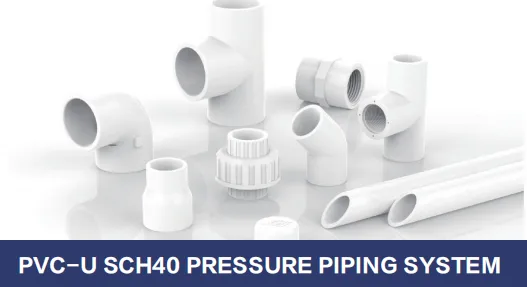
Let's start with a scenario we've all lived through (or at least heard horror stories about): You're six weeks into a commercial building project, and the piping system installation is already threatening to blow your budget. The material costs are higher than quoted, the crew is wasting pipe lengths on miscuts, and every delay feels like throwing money down the drain. Sound familiar? If you're nodding, you're not alone. Piping projects—whether for hospitals, schools, or office buildings—are notoriously tricky to keep on budget. But here's the good news: with the right strategies, a little insider knowledge, and partnering with a trusted PVC-U SCH40 pressure piping system supplier , you can slash costs without sacrificing quality. Let's dive into how.
Budget overruns often start long before the first pipe is laid. They begin with fuzzy planning. We've worked with hundreds of project managers, and the ones who save the most? They treat planning like a science, not a rough estimate. Here's how you can too:
First, get granular with your project scope. Are you installing a water supply line for a school? A irrigation system for a residential complex? Each use case has unique demands, and overestimating material strength (or underestimating) leads to waste. For example, PVC-U SCH40 is ideal for high-pressure applications like municipal water lines, but if you're working on a low-pressure drainage system, a standard PVC DWV pipe might be more cost-effective. Mixing and matching materials where appropriate—with guidance from your supplier—prevents overspending on overkill.
Next, align your timeline with material delivery. Nothing kills a budget faster than rush orders. A good supplier will help you plan lead times, ensuring materials arrive exactly when you need them, not weeks early (tying up cash) or late (delaying labor). We once helped a client save $8,000 on a hotel project simply by adjusting their delivery schedule to avoid peak season surcharges—small tweaks, big results.
Material choice is where many projects go off the rails. It's tempting to opt for the cheapest upfront option, but "cheap now" often means "costly later." Let's break down why PVC-U SCH40 is a budget hero, especially when compared to alternatives like PPR, UPVC, or even metal pipes.
| Material | Cost per Meter (USD) | Installation Time per Meter | Expected Lifespan | Best For |
|---|---|---|---|---|
| PVC-U SCH40 | $5–$8 | 15–20 mins | 50+ years | High-pressure water supply, industrial piping |
| PPR Pipe and Fitting | $7–$10 | 25–30 mins | 40–50 years | Hot/cold water systems, residential buildings |
| UPVC Pipe | $4–$6 | 15–20 mins | 40–45 years | Irrigation, drainage, low-pressure applications |
| Metal (Steel/Galvanized) | $12–$18 | 30–40 mins | 30–40 years (prone to corrosion) | Heavy industrial, high-temperature systems |
At first glance, UPVC pipe might seem cheaper than PVC-U SCH40, but look closer: PVC-U SCH40's thicker walls handle higher pressure, meaning fewer reinforcements and less risk of blowouts. Over 50 years, that translates to zero replacement costs, while UPVC might need upgrades in 40. For high-pressure projects, the math is clear: PVC-U SCH40 saves in the long run.
Even the best materials are wasted with sloppy installation. We've watched crews lose hundreds of dollars in pipe lengths by cutting inaccurately or overusing fittings. Here's how to keep installation costs in check:
First, train your crew on proper cutting techniques. A miter saw with a fine-tooth blade (instead of a hacksaw) gives cleaner cuts, reducing the need for extra fittings to fix uneven edges. For PVC-U SCH40, a 1/8-inch tolerance is all you need—any more, and you're throwing away usable pipe. We once observed a crew save 20% on material waste after a 30-minute training session with our supplier's technical team. Small investment, huge return.
Second, pre-assemble fittings off-site. If you're working in a tight space (like a hospital ceiling), assembling elbows and tees in a workshop (where there's room to maneuver) speeds up installation and reduces mistakes. A client installing a class A fireproof CPL inorganic board for hospital and school project used this trick and cut labor time by 12 hours—saving $1,500 in wages alone.
Third, label everything. Mislabeled pipes lead to rework. Use color-coded tape or tags to mark pipe sizes and destinations. It sounds simple, but we've seen projects delayed by days because a crew mixed up 2-inch and 3-inch lines—costing thousands in overtime.
The cheapest piping system is one that never needs fixing. While PVC-U SCH40 is durable, neglecting maintenance is like leaving money on the table. Here's how to keep small issues from becoming big bills:
Focus on high-risk areas: joints, valves, and transitions between materials (like PVC-U to PPR pipe and fitting connections). These are where leaks often start. Tighten connections during inspections, and replace worn gaskets proactively—don't wait for a drip. Remember: a $5 gasket today beats a $500 repair tomorrow.
Also, educate end-users. If you're installing a system for a school, train the maintenance staff to spot warning signs: discolored walls, reduced water pressure, or unusual sounds. Early reporting from on-site teams is your first line of defense against budget-busting repairs.
Here's the secret weapon many project managers miss: your supplier isn't just a vendor—they're a partner. A great PVC-U SCH40 pressure piping system supplier does more than deliver materials; they bring expertise, flexibility, and cost-saving insights to the table. Here's what to look for:
First, local presence. A supplier with a warehouse nearby reduces shipping costs and lead times. We've seen clients save 15% on logistics by choosing a regional supplier over an international one. Plus, local suppliers understand regional codes (like Saudi Arabia's strict building standards) and can help you avoid costly code violations.
Second, technical support. The best suppliers offer on-site training, material samples, and even blueprint reviews. One client, a residential building materials supplier , told us their supplier's free blueprint check caught a design flaw that would have required rerouting 50 feet of pipe—saving $3,000 in materials and labor.
Third, bundled pricing. If you need multiple materials (say, PVC-U SCH40 for water lines and UPVC pipe for drainage), a one-stop architectural solution provider can offer bundled discounts. Buying from one supplier instead of five reduces administrative costs, shipping fees, and the risk of mismatched materials.
Let's put this all together with a story. Last year, a school district in Riyadh approached us to supply PVC-U SCH40 for their new high school. Their budget was tight—$85,000 for piping. Here's how we helped them save:
Total savings? $12,000. The project finished on time, under budget, and the school now has a piping system built to last 50+ years. Proof that with the right approach, budget success is achievable.
Piping projects don't have to be budget nightmares. With smart planning, strategic material choices, efficient installation, and a trusted PVC-U SCH40 pressure piping system supplier , you can keep costs in check and quality high. Remember: the goal isn't to cut corners—it's to cut waste. And when you partner with a supplier who understands your needs, that waste (and the stress that comes with it) disappears.
So, what's your first step? Pick up the phone and call your supplier. Ask about their planning tools, technical support, and bundled pricing. You might be surprised how much you can save—starting today.
Recommend Products












