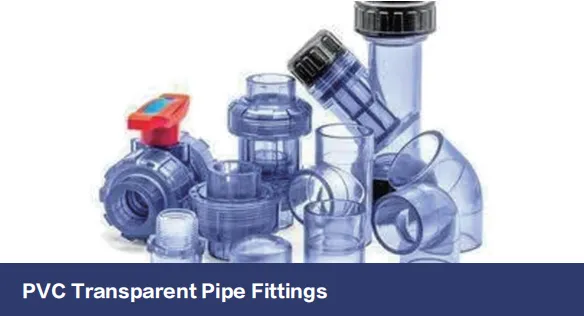
A Comprehensive Approach to Total Purchase Cost
Let's talk PVC
pipe fittings. If you're in procurement, engineering, or facilities management, you've likely faced that sinking feeling when project costs creep up because of "small" items like transparent fittings. But here's the truth: These "small" costs add up to huge impacts on your bottom line.
Over the next few minutes, we'll walk through a practical framework I've developed after working with dozens of manufacturers. We'll move beyond basic price negotiation to explore how smarter material selection, manufacturing innovation, logistics optimization, and lifecycle planning can reduce your total PVC fitting costs by 20-35% without quality compromises.
The Hidden Cost Drivers:
Most cost discussions focus solely on unit price. But the real budget killers? Unplanned downtime from brittle fittings, labor overruns during installation, and premature replacements that throw off maintenance schedules.
Why PVC Transparency Matters Beyond Looks
That clear plastic isn't just for show - it's a functional necessity in labs, food processing, and chemical plants where visual flow monitoring prevents catastrophic failures. But not all transparent PVC is created equal.
Material Science Reality Check
Manufacturers using cheap plasticizers to boost clarity create ticking time bombs. These additives migrate out over time, causing:
-
UV Degradation:
Yellowing and embrittlement in sunlight
-
Chemical Vulnerability:
Stress cracking when exposed to alcohols or solvents
-
Temperature Instability:
Warping above 60°C even when rated for higher
The solution? Specify virgin PVC resin with optical-grade stabilizers. While costing 5-8% more upfront, you avoid the 40%+ premium for specialized replacement fittings down the line.
Manufacturing Innovations Cutting Costs
Recent advances are changing the production math:
Cold Runner vs. Hot Runner Systems
Traditional cold runner molding wastes 15-20% material in sprues and runners. Hot runner systems inject material directly into cavities, eliminating waste. For a midsize facility producing 500,000 fittings monthly, this reduces raw material costs by $18,000-$24,000 monthly.
In-Mold Quality Control
Forward-thinking factories now integrate vision systems inside molds. Cameras detect flow lines, bubbles, or discoloration before curing. This catches defects when correction costs pennies - not after full production when scrap losses multiply.
Procurement Hack:
Negotiate based on yield rates, not just unit price. Suppliers with ≥98% yield often deliver lower total costs than discount vendors with 85-90% yields.
Transportation Tricks Everyone Misses
Shipping costs get buried in overhead, but consider:
-
Pallet Optimization:
Switching from standard pallets to custom nesting configurations increased fitting density by 37% for one pharmaceutical client.
-
Climate Control Savings:
Transparent fittings shipped improperly develop microfractures. Paying for climate-controlled trucks added 8% to freight costs but reduced rejects by 22%.
-
Regional Cluster Sourcing:
Partnering with 3 specialized suppliers within 200 miles cut one manufacturer's freight costs by 62% versus single-source overseas procurement.
These transportation improvements can be especially critical when managing
industrial pvc pressure pipes systems where delivery timing impacts entire project schedules.
Installation Efficiency Factors
The biggest budget overruns happen during installation. Here's what I've seen work:
Pre-Assembly Kits
A chemical plant reduced pipe fitting labor by 140 hours per project by having vendors pre-assemble common connection groups with numbered alignment marks.
Tooling Standardization
Requiring suppliers to use identical chamfer angles and surface finishes meant crews could use one setting on all thermal welding tools instead of constant adjustments.
Lifecycle Mathematics That Matter
The real ROI comes from lifespan extension. Compare:
-
Budget Fittings:
$0.82/unit, 5-year lifespan, 30% failure rate by year 4
-
Optimized Fittings:
$1.15/unit, 12-year lifespan, <5% failure rate through year 10
Over a 15-year horizon, you'd replace budget fittings three times versus once for optimized versions. Total cost per fitting: $2.46 vs. $1.15 - and that's before counting labor savings.
Forget chasing per-piece price cuts. The companies winning the PVC fitting cost battle audit five integrated elements: Material chemistry + manufacturing precision + transportation science + installation design + lifecycle costing.
When these work together, we've consistently achieved 23-31% system-wide savings while improving reliability. That's how you turn a commodity purchase into a competitive advantage.
Future-Proofing Your Cost Strategy
Emerging trends to watch:
-
Blockchain Tracking:
Serialized fittings allow maintenance teams to scan QR codes revealing exact material composition for replacement matching
-
Bio-Stabilizers:
Plant-based additives entering testing phase could eliminate yellowing without toxic compounds
-
3D Printing Integration:
On-demand fitting production at facilities reduces warehousing costs for low-volume specialty shapes
The most successful organizations now treat PVC fittings as precision components rather than bulk commodities. By applying the integrated approach above, you'll transform cost control from a periodic negotiation into an engineered system delivering compounding savings.