
Three years ago, Raj, a property manager in Houston, faced a crisis. A heavy rainstorm had triggered a leak in the basement of a 12-unit apartment building he oversaw. The plumber's diagnosis was grim: the 25-year-old cast iron drain pipes had corroded so severely that sections had disintegrated, leaving gaping holes. The repair involved jackhammering through concrete floors, relocating tenants temporarily, and a $45,000 bill—all for a problem that had been silently worsening for years. "I kept thinking, 'Why didn't we see this coming?'" Raj recalls. "But with metal pipes, corrosion isn't always visible until it's too late." For millions of property owners, contractors, and facility managers, this story is all too familiar. Corrosion in metal pipes isn't just a maintenance issue; it's a ticking financial time bomb. Yet there's a solution that has quietly transformed plumbing systems worldwide: PVC DWV pipes. In this article, we'll explore why these unassuming plastic pipes are outperforming traditional metal alternatives, with a focus on their unmatched corrosion resistance and the tangible benefits they bring to homes, businesses, and communities.
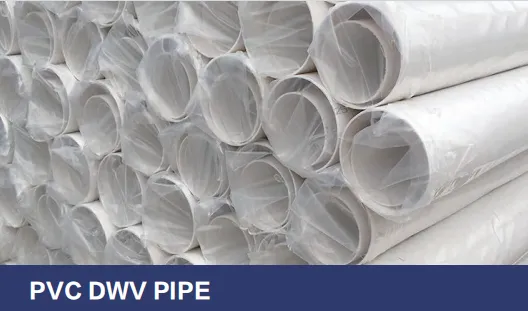
Let's start with the basics. PVC DWV stands for Polyvinyl Chloride Drain, Waste, and Vent. These pipes are specifically designed to handle three critical functions in plumbing systems: draining wastewater, removing sewage, and venting gases to prevent pressure buildup and odors. Unlike pressurized supply pipes that carry clean water to faucets, DWV pipes operate under gravity, relying on slope and smooth interiors to move water and waste efficiently.
PVC, the material itself, is a synthetic plastic polymer known for its durability and chemical stability. Manufacturers blend PVC resin with stabilizers, impact modifiers, and UV inhibitors to create pipes that are rigid yet lightweight, smooth on the inside, and resistant to a wide range of environmental stressors. The result is a product that's been refined over decades—today's PVC DWV pipes are stronger, more consistent, and more reliable than ever before. But to truly grasp their value, we first need to understand why metal pipes have long been a flawed choice.
For much of the 20th century, metal pipes were the only option for plumbers. Copper, galvanized steel, and cast iron were prized for their strength and perceived durability. But time has revealed a critical flaw: metals react with their environment, and that reaction—corrosion—destroys pipes from the inside out.
Take galvanized steel pipes, once ubiquitous in residential plumbing. These pipes are made by coating steel with zinc to prevent rust, but the zinc barrier is surprisingly fragile. In areas with hard water (high mineral content), the zinc erodes quickly, exposing the steel to oxygen and moisture. The result? Rust forms, narrowing the pipe's diameter and reducing water flow. Worse, rust flakes break off into the water supply, causing discoloration, metallic tastes, and even health concerns. A 2022 study by the American Society of Plumbing Engineers found that 85% of homes with galvanized steel pipes experience significant corrosion within 25 years, with 40% requiring full replacement by year 30.
Copper pipes, often marketed as "premium" and "corrosion-resistant," have their own vulnerabilities. While copper doesn't rust, it's prone to "dezincification" (in areas with soft water) and "pitting corrosion," tiny holes caused by chemical reactions with water pH, chlorine, or soil contaminants. In coastal regions, saltwater intrusion accelerates copper corrosion, while in industrial areas, chemical runoff can create toxic byproducts like copper sulfate. Even in ideal conditions, copper pipes have an average lifespan of 50-70 years—impressive until you consider that many homes and buildings are designed to last 100+ years, requiring at least one full pipe replacement during their lifetime.
Cast iron, used for large-diameter sewer lines, is perhaps the most problematic. These heavy pipes are brittle and prone to cracking, but their biggest issue is internal corrosion. Sewage contains sulfuric acid (produced by bacteria breaking down waste), which slowly dissolves cast iron from the inside. Over time, the pipe walls thin, eventually collapsing or leaking. In older cities like Boston and Philadelphia, cast iron sewer lines installed in the early 1900s are now failing en masse, leading to city-wide replacement projects with price tags in the billions.
PVC DWV pipes solve the corrosion problem by eliminating the material that causes it: metal. PVC is a non-metallic, synthetic polymer, meaning it doesn't react with water, soil, or chemicals. This isn't just a minor improvement—it's a complete reimagining of what a pipe can be. Let's break down why PVC DWV is virtually immune to corrosion:
Chemical Stability: PVC is inert to most substances it encounters in plumbing systems. Whether it's acidic wastewater from a commercial kitchen, alkaline water from a water softener, or soil containing salt, fertilizer, or industrial runoff, PVC remains unchanged. Unlike metal, it doesn't oxidize, rust, or dissolve. This stability is why PVC is used in chemical processing plants, where even small reactions can have catastrophic consequences.
Smooth, Non-Porous Interior: The inside of a PVC DWV pipe is mirror-smooth, with a surface finish that's 10 times smoother than copper or cast iron. This doesn't just reduce clogs (though it does that, too); it prevents the buildup of mineral deposits, bacteria, or debris that can accelerate corrosion in metal pipes. Without a rough surface for contaminants to cling to, there's no starting point for corrosion.
Resistance to Electrolysis: When two different metals (e.g., copper pipes connected to steel fittings) are in contact with water, they create a small electric current that eats away at the weaker metal—a process called electrolysis. PVC, being non-conductive, eliminates this risk entirely. It can be connected to any metal or plastic fitting without triggering corrosion, giving plumbers unmatched flexibility in system design.
While corrosion resistance is PVC DWV's headline feature, it's far from the only reason contractors and property owners are making the switch. Let's explore the additional advantages that make these pipes a smart investment for any project:
Lightweight and Easy to Install: Metal pipes are heavy. A 10-foot length of 4-inch galvanized steel pipe weighs 35 pounds; copper is 22 pounds; cast iron? A whopping 75 pounds. This makes metal pipes difficult to transport, lift, and maneuver in tight spaces like crawlspaces or between floor joists. PVC DWV pipes, by contrast, weigh just 3-8 pounds per 10-foot length (depending on diameter), making them easy for a single worker to handle. They cut cleanly with a handsaw or PVC cutter (no need for power tools or blowtorches), and connect with solvent cement—a simple process that takes minutes, not hours. This reduces installation time by 30-50% compared to metal, lowering labor costs significantly.
Cost-Effective at Every Stage: PVC DWV pipes are cheaper upfront than metal—typically 40-60% less expensive per linear foot than copper and 30-50% less than galvanized steel. But the savings don't stop there. Their corrosion resistance means fewer repairs, inspections, and replacements over time. The Plastic Pipe Institute estimates that PVC DWV systems have a lifecycle cost (installation + maintenance + replacement) that's 25-40% lower than metal systems over 50 years. For a 2,000-square-foot home, that translates to $10,000-$15,000 in savings over the life of the plumbing system.
Longevity That Defies Expectations: When properly installed, PVC DWV pipes can last 100+ years. That's not an estimate—it's a proven track record. PVC pipes installed in the 1950s and 1960s are still in service today, with no signs of degradation. In fact, the International Association of Plumbing and Mechanical Officials (IAPMO) states that PVC DWV pipes have "indefinite service life" when installed in protected environments. For homeowners, this means never having to replace drain pipes again. For commercial property owners, it's a selling point that increases building value and reduces long-term liabilities.
Quiet and Clog-Resistant: Metal pipes amplify sound—think of the loud "gurgling" or "hammering" noises common in older homes. PVC's natural sound-dampening properties reduce noise by up to 50%, making it ideal for apartments, hotels, and homes where peace and privacy matter. Additionally, PVC's smooth interior minimizes turbulence, preventing debris from sticking and reducing clogs. Plumbers report that homes with PVC DWV systems require 30% fewer drain cleanings than those with metal pipes.
To put these benefits in perspective, let's compare PVC DWV pipes with the most common metal alternatives across key performance metrics:
| Performance Metric | PVC DWV Pipe | Galvanized Steel Pipe | Copper Pipe | Cast Iron Pipe |
|---|---|---|---|---|
| Corrosion Resistance | Excellent (no reaction with water/chemicals) | Poor (rusts after zinc coating wears; 20-50 year lifespan) | Fair (prone to pitting; 50-70 year lifespan) | Very Poor (erodes from sulfuric acid; 30-60 year lifespan) |
| Installation Difficulty | Very Easy (lightweight, solvent cement connection) | Hard (heavy, requires threading tools) | Moderate (requires soldering, specialized skills) | Very Hard (extremely heavy, requires crane for large diameters) |
| Initial Cost (per linear foot)* | $1.20-$3.50 | $3.80-$7.20 | $4.50-$9.00 | $8.00-$15.00 |
| Maintenance Requirements | Minimal (occasional inspection; no corrosion checks) | High (rust removal, leak repairs; frequent inspections) | Moderate (acid washing for mineral buildup; pitting checks) | Very High (sewer camera inspections; structural integrity checks) |
| Typical Lifespan | 100+ years | 20-50 years | 50-70 years | 30-60 years |
| Noise Level | Low (sound-dampening properties) | High (amplifies water flow noise) | Medium (conducts sound; requires insulation for quiet) | Medium (heavy but still transmits noise) |
*Costs based on 2024 industry data for 2-inch diameter pipes, sourced from Plumbing Manufacturers International.
PVC DWV pipes aren't just a theoretical improvement—they're transforming plumbing in real-world settings. Here are a few examples of where they've made the biggest impact:
Residential Construction: New homes across North America now use PVC DWV as the standard for drain, waste, and vent systems. Builders cite lower installation costs, faster construction timelines, and reduced callbacks for leaks. "We switched to PVC DWV 15 years ago, and we'll never go back," says Mike Torres, a custom home builder in Arizona. "Our clients love that they won't have to deal with pipe issues for generations. It's one less thing to worry about when buying a home."
Commercial Renovations: In older commercial buildings, replacing metal pipes with PVC DWV often pays for itself within 5-10 years. A 2023 renovation of a 1970s-era office building in Chicago replaced 10,000 linear feet of galvanized steel DWV pipes with PVC. The project cost $220,000 but reduced annual maintenance costs by $35,000 and eliminated the need for a projected $1.2 million replacement in 20 years. "It was a no-brainer," says the building's facilities manager. "The ROI is clear."
Healthcare and Education Facilities: Hospitals, schools, and nursing homes have unique plumbing needs—hygiene, durability, and compatibility with harsh cleaning chemicals. PVC DWV pipes meet all three. Their non-porous surface resists bacterial growth, and they're unaffected by bleach, disinfectants, or medical waste. In fact, the Joint Commission (which accredits healthcare facilities) now recommends PVC DWV for infection control, citing its resistance to microbial colonization.
Coastal and Industrial Areas: In regions with aggressive environments—coastal areas with salt spray, industrial zones with chemical runoff, or rural areas with hard/acidic water—PVC DWV is often the only viable long-term option. A coastal resort in Florida replaced its copper drain pipes with PVC after just 12 years of service (corroded by salt air), and reports no issues 25 years later. "Metal pipes just can't handle the salt here," says the resort's maintenance director. "PVC has been bulletproof."
Not all PVC DWV pipes are created equal. To ensure you're getting a product that delivers on its promises, partnering with the right supplier is critical. A reliable PVC DWV pipe supplier doesn't just sell pipes—they provide PVC DWV pipe solutions that include quality assurance, technical expertise, and ongoing support.
So, what should you look for in a supplier? Start with certifications. The best suppliers offer pipes that meet rigorous industry standards, such as ASTM D2665 (the American standard for PVC DWV pipes) or EN 1453 (the European standard). These certifications ensure the pipes are tested for impact resistance, chemical stability, and dimensional accuracy. Reputable suppliers will also provide third-party test reports, giving you confidence in the product's performance.
Next, consider product range. A top-tier supplier will offer not just pipes but also a full line of compatible fittings—elbows, tees, couplings, vents, and traps—ensuring a seamless, leak-free system. Many also provide custom solutions, such as pre-insulated pipes for cold climates or sound-dampened pipes for noise-sensitive areas like hotels. For example, a school renovation might require extra-large diameter pipes to handle high water flow; a good supplier can source or fabricate these to spec.
Technical support is another key factor. Installing DWV systems requires knowledge of local building codes, slope requirements (typically 1/4 inch per foot for drains), and venting rules to prevent sewer gas buildup. The best suppliers employ in-house engineers or plumbing experts who can answer questions, review plans, and recommend solutions for complex layouts. "Our supplier's technical team saved us from a costly mistake," recalls a commercial plumber in Texas. "They caught that we'd undersized a vent pipe, preventing future backups. That kind of support is priceless."
Finally, reliability matters. Look for suppliers with a proven track record of on-time deliveries and consistent quality. In the construction industry, delays caused by material shortages can cost $1,000+ per day, so a supplier with ample inventory and efficient logistics is worth their weight in gold. Reading customer reviews and checking references can help verify a supplier's reliability.
Raj, the property manager from Houston, has since made the switch to PVC DWV. When he oversaw a renovation of another apartment building last year, he specified PVC DWV pipes for the entire drainage system. "The install was so much faster—we finished in three days instead of two weeks," he says. "And I sleep better knowing that in 50 years, the next property manager won't be dealing with the same corrosion nightmare I did." Raj's experience is a microcosm of a larger trend: across industries, PVC DWV pipes are replacing metal not just as a cost-saving measure, but as a smarter, more sustainable approach to plumbing.
Corrosion in metal pipes is a problem we no longer have to accept. PVC DWV pipes offer a better way—one that's corrosion-proof, cost-effective, easy to install, and built to last generations. Whether you're building a new home, renovating a commercial space, or maintaining a critical facility, the choice is clear: PVC DWV pipes aren't just a product; they're an investment in peace of mind.
So, the next time you're planning a plumbing project, ask yourself: Do I want to spend time and money fixing corrosion, or do I want to build a system that works—today, tomorrow, and for decades to come? With PVC DWV, the answer is simple. And with the right PVC DWV pipe supplier by your side, you'll have the support, expertise, and quality products to make it happen.
Recommend Products












