
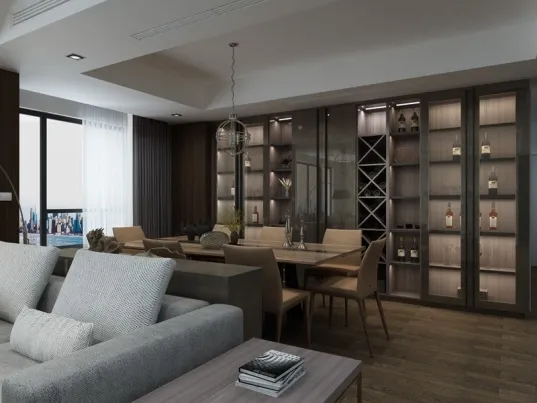
Imagine opening a prized bottle of Cabernet Sauvignon you've been saving for a decade, only to find it tastes flat and lifeless. What went wrong? Nine times out of ten, the villain isn't poor winemaking—it's improper storage. Wine isn't just a beverage; it's a living, breathing chemistry experiment that reacts violently to environmental changes. Temperature fluctuations cause liquid expansion and contraction, forcing corks out and letting air in. Humidity swings dry out corks, creating microscopic highways for oxygen invasion. And noise? Vibrations disturb sediment and accelerate chemical reactions, robbing your wine of its graceful evolution.
Unlike standard refrigerators designed to chill food quickly, custom wine cabinets provide the environmental consistency bottles need. While food only cares about staying cold, wine requires ballet-perfect harmony between temperature precision, humidity calibration, and vibration control. This isn't refrigerating—it's hyper-controlled preservation.
Forget the "red vs. white" debate—both suffer equally under poor temperature conditions. The critical factor is stability. Here's what actually happens:
| Temperature Fluctuation | Chemical Reaction | Damage Timeline |
|---|---|---|
| Above 70°F (21°C) | Accelerated oxidation and ester hydrolysis | Flavor collapse within months |
| Below 45°F (7°C) | Suppressed development, tartrate crystallization | Stunted aging potential |
| ±5°F swings | "Micro-oxidation" through cork movement | Noticeable degradation in 1-2 years |
Premium cabinets tackle this through triple-wall insulation and advanced cooling systems. While thermoelectric units offer whisper-quiet operation for small collections, larger cellars need compressor-based systems with inverter technology. As one master sommelier told me: "That 55°F average means nothing if your cabinet swings between 48°F and 62°F—that's like storing wine near a radiator."
Humidity doesn't get headlines, but it's the unsung hero of wine preservation. The 50-70% sweet spot exists for physics, not preference:
| Humidity Level | Cork Impact | Long-term Consequence |
|---|---|---|
| <50% | Shrinkage and microfractures | Gradual oxidation (1-3% annually) |
| >80% | Mold growth on corks/labels | Contamination and cellar depreciation |
Advanced cabinets maintain balance through passive hydrometric systems —think capillary water reservoirs rather than electronic humidifiers that can overcompensate. Silica gel or activated carbon filters are crucial to prevent musty odors that can penetrate corks. This synergy creates an environment where corks stay pliable but mold gets no invitations.
I once evaluated a client's 1990 Margaux that tasted prematurely aged. Their "ideal" 55°F storage? Flawless. The humidity? A desert-like 38% from an air-conditioning vent. The bottle had lost nearly 15% of its volume through evaporation.
Quietness isn't just about comfort—it's about sediment settlement. Vibrations disturb the slow precipitation of tartrates and phenolic compounds, which should form over decades, not days. How cabinets solve this:
| Technology | Noise Reduction | Best Use Cases |
|---|---|---|
| Gel-mounted compressors | Absorbs 90% of motor vibration | Living room installation |
| Magnetocaloric systems | Near-silent solid-state cooling | Bedroom units |
| Suspended floor racks | Decouples bottles from cabinet | Buildings near subway lines |
When evaluating quietness, ignore decibel ratings alone. Ask where measurements were taken. Front-panel 39dB often means 50dB near the compressor—like judging a concert by back-row acoustics.
These elements don't operate in isolation. For instance:
Premium cabinets feature cross-compensation algorithms where systems adjust collaboratively. When compressor cooling kicks in (adding dry air), supplemental humidification activates. During defrost cycles, secondary sensors monitor humidity dips. This isn't magic—it's microprocessor-driven choreography.
As wine collecting evolves, so do cabinet technologies:
These innovations aren't gadgets—they're insurance policies. Much like choosing archival framing for artworks, the right cabinet protects tangible and emotional value. After all, what's the point of investing in DRC La Tâche if you're storing it like orange juice?
Recommend Products












