
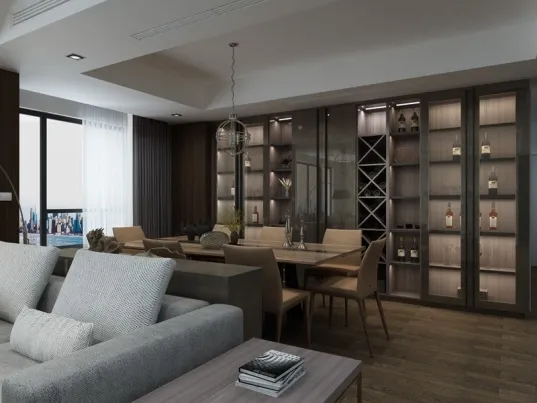
Let's get real—owning a wine collection isn’t just about stacking bottles in a corner. If you’re serious about your Pinots and obsessed with your Cabernets, you need a storage solution that doesn’t just look sleek but works smarter . Forget those generic fridges or flimsy racks. We're diving into the non-negotiables that separate the amateur setups from pro-grade sanctuaries for your vino.
Imagine this: you splurge on a ’95 Bordeaux. You tuck it away, giddy for that perfect moment to pop the cork. Fast forward six months… you take a sip and… meh . Flat. Lifeless. Why? Probably because your “wine storage” was just a repurposed mini-fridge that couldn’t hold a steady temp. Disaster.
Sommeliers aren’t pulling this out of thin air. That golden range between 45°F and 65°F (with 55°F as the sweet spot) slows down aging just right. Too warm? Your wine cooks into vinegar. Too cold? The aging process stalls dead in its tracks. Premium wine cabinets lock in temps tighter than Fort Knox—no wild swings, no “oops” moments.
Here’s the scoop: reds, whites, and sparkling wines play by different rules. Dual-zone cabinets let you chill whites at 45°F while keeping reds cozy at 65°F. Single-zone? Perfect if you’re monogamous with one varietal. Your call, but flexibility is king.
️♂️ Pro Tip: Look for cabinets with digital thermostats—manual dials are about as precise as a broken clock.
Dry air is a cork’s worst nightmare. Cracked corks = oxygen sneaking in = oxidized, ruined wine. We’re targeting 50-80% humidity here—enough to keep corks plump but not so muggy you grow mushrooms in your cabinet.
High-end cabinets manage humidity like a pro gardener watering orchids—consistent, automated, zero guesswork. Skip cabinets where you’re playing scientist with trays of water. Ain’t nobody got time for that.
Freestanding wine cabinet setups often struggle with humidity leaks. Built-ins? Sealed tighter than a submarine. If you’re investing in trophy bottles, go built-in. No compromise.
Ultraviolet rays don’t just fade your furniture; they wreck tannins and acids in wine. Ever tasted a “lightstruck” wine? Bitter, funky, and tragic. Quality cabinets use UV-resistant glass (often triple-paned) that blocks 99% of UV rays. Think of it as SPF 100 for your Barolo.
“Owning a wine cabinet without UV protection is like storing cash in a fishbowl. Sure, it looks pretty… until everything’s ruined.” — Elena Rossi, Master Sommelier
Compressors in cheap units rattle bottles nonstop. That constant vibration disturbs sediment and accelerates aging. Top-tier cabinets use suspension systems or quiet compressors—so gentle, they wouldn’t wake a sleeping cat.
Here’s the raw truth: if you’re spending more than $20 per bottle, a basic fridge is financial suicide. A true temperature-controlled wine cabinet defends your investment from the four horsemen of the wine apocalypse (heat, dry air, light, and vibration). It’s not luxury; it’s logic.
Your wine collection deserves better than a dark closet or a bargain-bin "cooler." Demand precision temperature control, military-grade humidity, and zero UV leaks. Whether you choose a sleek freestanding unit or a built-in masterpiece, these aren’t “features”—they’re your wine’s lifeline. Cheers to smarter storage!
Recommend Products












