
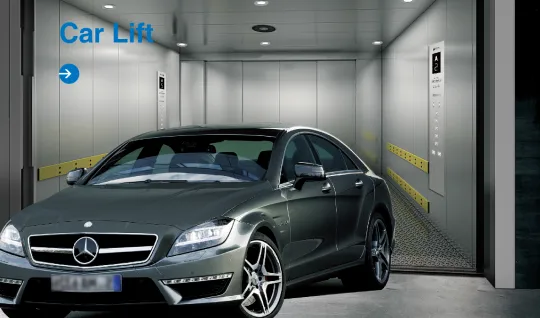
Picture your city streets at rush hour: bumper-to-bumper traffic, frustrated drivers endlessly circling blocks searching for parking spaces. That familiar anxiety? It’s not just irritating—it’s a costly urban epidemic. As more cars squeeze into our cities, the traditional "flat lot" approach collapses under pressure. Enter stereo parking garages , the vertical revolution transforming how we store vehicles. But what truly makes these engineering marvels tick? It’s the heartbeat of the system—the car lifts and their seamless integration.
Think about your last parking nightmare. Maybe you wasted 20 minutes hunting for a spot or returned to find your door dinged by another car. Traditional parking isn’t just inefficient—it actively sabotages urban living. In Seoul, drivers spend 120+ hours yearly searching for spaces. Londoners lose nearly £1.5 billion annually in wasted time. This frustration masks a critical infrastructure crisis: cities physically can’t expand horizontally forever.
What makes stereo solutions game-changers? They multiply space without land. A 2,000m² lot squeezing in 60 cars vertically can host 300+ cars through stacking. That’s the difference between permanent gridlock and breathing room for cities.
Ever wonder how a multi-story robotic garage knows precisely where to place your sedan? Meet the unassuming heroes— Programmable Logic Controllers (PLCs) . These aren’t generic computer chips; they’re industrial-grade workhorses built for split-second decisions. The Huang et al. study (2022) revealed how Mitsubishi FX2N PLCs manage intricate lift-and-shift ballet routines :
Imagine a system that self-corrects like human reflexes—if a tray jams, secondary lifts reroute vehicles automatically. That’s PLC reliability meeting daily urban chaos.
Lifts aren’t just elevators—they’re tailored engineering solutions. The Zhang et al. research (2019) spotlighted three core mechanisms transforming garages:
The heavy lifters : Ideal for compact high-rise installations where space = premium. Whisper-quiet but packs immense force—lifting SUVs like toys.
Precision performers : Use servo motors for micro-adjustments (±2mm accuracy). Perfect for high-value vehicles needing gentle handling.
Speed demons : Maglev-inspired contactless propulsion. Slashes retrieval time by 45%—less waiting, more driving.
Hybrid combinations (e.g., hydraulic lift + servo positioning) are emerging as the Goldilocks solution—strong yet precise.
Remember clunky ticket machines in old garages? Modern interfaces feel like premium concierge services. Leading designs blend:
Think of it as seamless hospitality—your car stored securely before you even step out of the vehicle.
Hardware means nothing without symphony-like coordination. Leading systems use a 4-layer integration approach:
This ecosystem generates efficiency: retrieval times under 90 seconds (versus 5+ minutes in manual garages) and 40% lower power consumption.
Adoption isn’t just technical—it’s psychological. Public perceptions reveal understandable hesitations:
The breakthrough happens when tech fades into background service—reliable and unnoticed, like elevators in skyscrapers.
The future? Think AI optimization:
Shanghai’s robotic Dragon Gate garage offers a glimpse—cars stacked like library books, retrieved via QR code in 70 seconds flat.
Ultimately, this revolution isn't about gears or software—it’s about restoring sanity to city living:
That’s what seamless integration delivers: not just stored cars, but reclaimed time and reduced stress.
Recommend Products












