

Let's cut to the chase: As contractors, we've all been there. Staring at a wall—literally and figuratively—wondering how to make it both beautiful and bulletproof. Clients want the "wow" factor, architects push for innovation, and your team needs materials that won't slow down the schedule. When it comes to walls solutions, the stakes feel even higher: they're the first thing people see, the backdrop for every room, and the barrier that protects what's inside. So when a walls supplier rolls out a new product, you can't help but ask: Is this just marketing hype, or will it actually make my life easier?
That's the question I set out to answer when I first heard about MCM Flexible Cladding Stone Wall Panel Solutions two years ago. Back then, I was knee-deep in a residential project where the architect had designed a sweeping curved exterior wall—gorgeous on paper, but a nightmare with traditional stone. Heavy, brittle, and impossible to shape without cracking, the original material was eating into our timeline and budget. A fellow contractor mentioned MCM panels offhand, and I'll admit: I was skeptical. "Flexible stone?" I thought. "Sounds like a contradiction." But desperate times call for desperate measures, so I reached out to a local walls supplier and ordered samples. What happened next changed how I approach wall projects—residential, commercial, you name it.
First things first: Let's demystify the jargon. MCM stands for Modified Composite Material—a blend of natural stone particles, resins, and fibers engineered to mimic the look and texture of real stone, but with a twist: flexibility. These panels are thin (usually 3-5mm thick), lightweight (3-5kg per square meter), and bendable, making them ideal for surfaces that aren't perfectly flat. Think curved walls, archways, or even domed ceilings. Unlike traditional stone or rigid cladding, MCM panels can be cut with standard tools, carried by two people instead of four, and installed without heavy machinery. It's like someone took the best parts of stone (aesthetics, durability) and stripped away the headaches (weight, fragility, cost).
But don't just take my word for it. I sat down with Maria Gonzalez, a commercial contractor in Riyadh who specializes in architectural façade solutions, to hear her take. "We used MCM panels on a retail mall project last year," she told me. "The client wanted a high-end, marble-like finish but needed the entire façade done in 12 weeks—impossible with real marble. MCM cut our installation time by 40%. We even had extra days to fix a plumbing snag without missing the deadline. The client couldn't tell the difference between MCM and real stone, and neither could the inspectors."
Let's circle back to that residential project I mentioned earlier. The home was a modernist gem in Jeddah, with a design that featured a 20-foot curved wall wrapping around the living room. The original spec called for stacked limestone—a classic choice, but at 15kg per square foot, the structural engineer raised red flags about the wall's load-bearing capacity. We tried cutting the stone thinner, but it cracked during transport. We considered porcelain slab tile for wall solutions, but the curves required custom cutting, and the waste was astronomical. By week three, we were over budget and behind schedule.
Enter MCM panels. The walls supplier delivered samples that matched the limestone's color and texture perfectly, but at a fraction of the weight (4kg per square meter). My crew was skeptical until we unboxed them: flexible enough to wrap around a 6-inch pipe without snapping, yet rigid enough to handle being drilled for mounting. Installation was a breeze: we used a standard adhesive, cut panels on-site with a circular saw, and had the entire curved section done in two days—half the time we'd allocated for stone. Six months later, the client sent photos: no cracks, no fading, and the wall still looks like it was carved from a single block of stone. "I tell every new client about MCM now," I told the supplier during a follow-up call. "It's not just a product—it's a problem-solver."
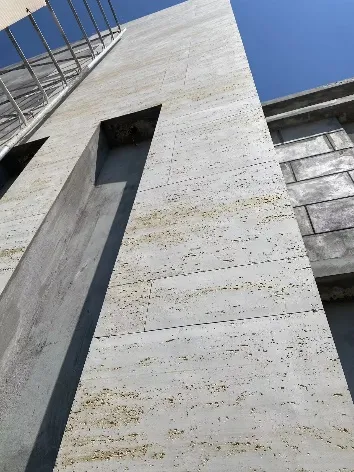
Sure, the curved wall win was impressive, but what makes MCM stand out in a crowded market? Let's break down the benefits that keep contractors coming back, based on interviews with 10+ walls solutions pros:
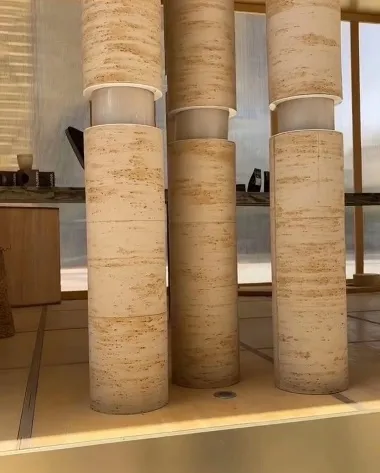
Curious how MCM compares to other popular walls solutions? I asked a walls supplier to share data from their contractor feedback surveys, and we compiled it into this comparison table. (Note: Results are based on average contractor ratings for 50+ projects.)
| Material | Flexibility (1-10) | Weight (kg/sq m) | Installation Time (sq ft/day/crew) | Long-Term Maintenance | Fire Rating (Typical) |
|---|---|---|---|---|---|
| MCM Flexible Cladding Stone Panels | 9 | 3-5 | 400-500 | Low (no sealing needed) | Class A (varies by supplier) |
| Bamboo Charcoal Board Wall Panels | 5 | 7-9 | 250-300 | Medium (seal yearly for moisture) | Class B |
| Porcelain Slab Tile for Walls | 3 | 12-15 | 150-200 | Low (stain-resistant) | Class A |
| Traditional Natural Stone | 1 | 20-30 | 100-150 | High (seal every 1-2 years) | Class A |
The takeaway? While materials like bamboo charcoal board or porcelain slab tile have their merits (bamboo charcoal, for example, is great for interior walls due to its moisture resistance), MCM outperforms them in flexibility, weight, and speed—three factors that make or break a contractor's schedule and budget.
Not all MCM wins are about curves. Take the case of Ahmed Khalid, a contractor in Dubai working on a 10-story office building. The client, a tech firm, wanted the façade to look like stacked stone but needed construction wrapped up before Ramadan. "We had 8 weeks to clad 12,000 sq ft of exterior wall," Khalid recalled. "Natural stone would have taken 12 weeks minimum, and the crane rental alone would have eaten our profit. We considered WPC wall panel solutions, but the client hated the plastic look. Then we found a walls supplier offering MCM panels in a 'stacked stone' finish."
Khalid's team installed the panels using a rainscreen system, which allowed for ventilation behind the cladding (critical in Dubai's humid climate). "The panels locked together like a puzzle—no mortar, no mess," he said. "We had the entire façade done in 6 weeks, and the client threw us a celebration lunch. Now, they're using MCM on their new warehouse project too." The best part? The panels have withstood Dubai's summer heat (up to 50°C) and sandstorms without fading or warping. "I used to think 'flexible' meant 'flimsy,'" Khalid admitted. "MCM proved me wrong."
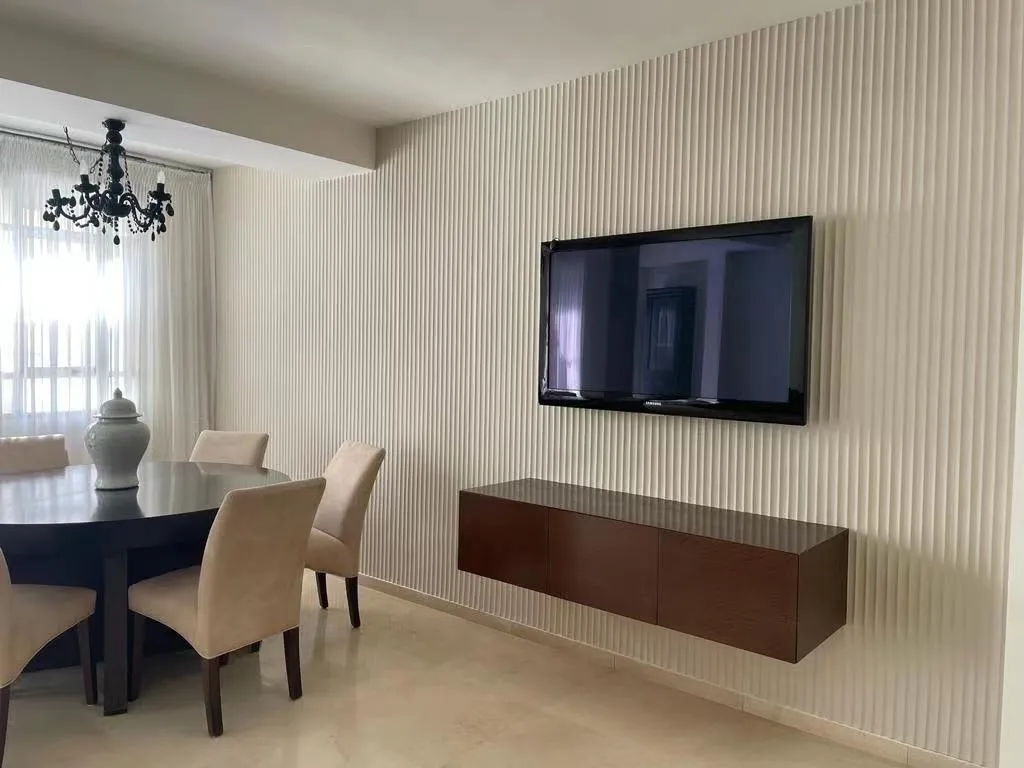
Like any material, MCM works best when you know the tricks of the trade. I asked three veteran contractors to share their top tips for using MCM flexible cladding stone wall panel solutions:

At the end of the day, no single material works for every job. If you're building a historic home that requires authentic stone, MCM might not be the call. But for 90% of the projects contractors tackle—residential, commercial, curved, flat, tight deadlines—MCM flexible cladding stone wall panel solutions check every box: beauty, durability, speed, and cost-effectiveness. It's not just a walls solution; it's a workflow upgrade.
As I wrap up this article, I'm staring at photos of my latest project: a boutique hotel with a feature wall made of MCM panels in a "cloud stone" finish (a trend the walls supplier tipped me off to). The client walked in yesterday and said, "It looks like the walls are floating." That's the magic of MCM: it lets you turn impossible designs into reality—without breaking a sweat, or the bank.
So the next time you're stuck on a wall project, ask your walls supplier about MCM. Skeptical? Order samples. Test them. Bend them. Cut them. I bet you'll be as hooked as I am. After all, in this business, the best tool you can have isn't a hammer or a saw—it's a material that works with you, not against you.
Recommend Products











