
The evolution of power management for a sustainable future
Ever stopped to think about what happens when you flick a light switch? That simple action connects you to an invisible world of innovation happening right inside your walls. We're living through a quiet revolution in energy management where energy-efficient switches and sockets aren't just conveniences - they're becoming essential soldiers in the battle against climate change.
I remember visiting my grandmother's house as a child. She had those old rotary switches that clicked satisfyingly when turned. Today, my own home has smart switches that learn my habits and motion-sensitive lights that save power when rooms are empty. The journey from those simple mechanical switches to today's intelligent systems represents decades of research and innovation that most of us never see.
The stakes couldn't be higher. With buildings consuming nearly 40% of global energy, those little plastic rectangles on our walls have become unexpected frontiers in sustainability. From semiconductor labs developing microscopic gallium nitride transistors to engineers creating sockets that eliminate standby power waste , there's an entire ecosystem working to make our power management smarter.
Modern switches aren't just metal contacts snapping together anymore. Inside today's advanced switches and sockets , you'll find microscopic semiconductor technologies that manage electricity with surgical precision. The big breakthrough came when researchers moved beyond silicon to materials like gallium nitride (GaN) and silicon carbide (SiC).
Traditional switches work like dams - they either block electricity completely or let it flood through. Modern semiconductor switches act more like sophisticated valves, controlling flow with minimal loss. This matters because every time electricity encounters resistance, it generates heat - that's wasted energy you pay for but never use.
"The shift from silicon to wide-bandgap semiconductors in power switches is like replacing steam engines with electric motors - it fundamentally changes what's possible in energy efficiency." - Dr. Elena Rodriguez, Materials Scientist
Wide-bandgap materials like GaN and SiC can handle much higher voltages and temperatures than silicon. This means:
89% less energy loss during power conversion compared to silicon
Switching speeds 10-100x faster than conventional switches
Ability to shrink components by 30-50% while increasing capacity
Imagine if your smartphone's charger was the size of your thumb but delivered twice the power without overheating. That's the kind of transformation happening in switch technology.
While we obsess over smart thermostats and voice assistants, humble sockets have been undergoing their own intelligence revolution. New research shows that smart sockets could eliminate 10% of household energy waste from vampire loads - the power devices consume when they're "off" but still plugged in.
Advanced sockets use microcontrollers like STM32F103 to monitor current flow with millisecond precision. They notice when your TV goes into standby and cut power to the surround sound system. They detect when your phone stops charging and shut off completely. More importantly, they do this without needing Wi-Fi or complicated apps.
Studies from prototype installations show these systems can reduce standby energy waste :
That persistent little LED on your game console? Multiply it by millions of devices and it becomes a significant environmental issue. Research suggests eliminating standby waste could:
Avoid building 32 medium-sized coal plants just to power devices that are switched "off"
Reduce CO2 emissions by 50 million tons annually - equivalent to removing 10 million cars
The true beauty lies in how these systems make efficiency invisible . You don't need to install solar panels or radically change habits. The sockets just do their job quietly, automatically eliminating waste.
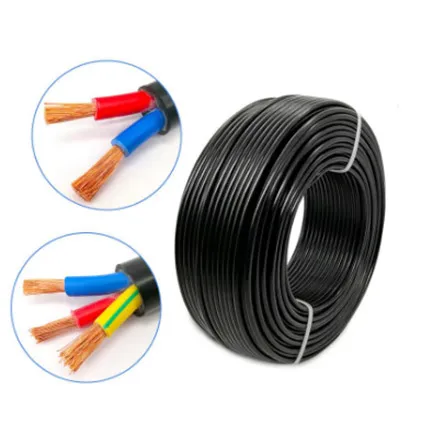
If switches are the brains and sockets are the gatekeepers, cables are the arteries of our electrical systems. And here too, innovation has been quietly transforming what was once just insulated copper wire.
Standard cables lose significant energy through resistance. On a sunny day, my grandmother would dry clothes outside because "electric dryers eat electricity like locusts eat crops." She couldn't see that poor quality cables were also consuming power unnecessarily throughout our home.
Modern high-performance cables use oxygen-free copper and advanced dielectric materials to minimize energy loss. Some even incorporate nanomaterials that reduce resistance while increasing flexibility. It's not glamorous technology, but the cumulative effect is staggering:
Energy loss reduction: Up to 15%
Heat generation reduction: Up to 40°F
Power transmission improvement: Up to 300%
This innovation enables those sleek smartphone chargers that don't get hot and allow future electric vehicles to charge faster with thinner, lighter cables.
The most meaningful advances in cable technology focus on fire prevention. New designs feature:
These improvements represent something profound - cables becoming active safety systems rather than passive conduits.
The real magic happens when innovative switches, intelligent sockets, and advanced cables work together. This synergy creates systems that are dramatically more efficient than the sum of their parts.
Imagine your entertainment system components communicating through cables. When you turn off your TV, the sockets automatically power down the speakers and game console. The switches send status updates to your home network. Everything works in concert without requiring an advanced computer.
Research demonstrates that such integrated systems can reduce household energy consumption by 18-25% without changing behavior. The technology creates what engineers call a "cascade of efficiency" - improvements compound rather than just adding together.
The best technology still needs human insight. Early studies found that users preferred simple sockets that automatically managed vampire power without requiring programming. Researchers created socket designs with:
Easy-to-read LCD displays showing real-time power usage
Avoided complex networking requirements
By designing sockets that functioned independently but cooperatively, engineers solved the critical problem of technology adoption - people will embrace efficiency that doesn't demand extra effort.
Despite the promise, innovating in electrical systems faces some steep challenges. Adoption barriers aren't just technical - they're deeply cultural and economic.
People want their devices ready instantly. That standby light brings psychological comfort - we know the device awaits our command. Research into user behavior found that eliminating standby lights decreased perceived convenience even when startup times remained virtually unchanged.
"Efficiency technology must overcome invisible barriers - human psychology, outdated regulations, and entrenched infrastructure. The technical solution is often the easiest part." - Dr. Samuel Park, Behavioral Economist
While the environmental case is compelling, energy efficiency must make financial sense. Studies show most homeowners require:
Advanced switch systems achieve this by integrating into existing wiring and demonstrating rapid returns through precise monitoring capabilities.
The evolution continues toward integrated energy systems that respond dynamically to grid needs. Imagine switches that sense grid stress during heat waves and dim non-essential lighting automatically. Picture sockets that pause EV charging during peak hours then rapidly complete charging when demand drops.
Grid-responsive automation reducing peak demand without human intervention
Nanotech-enabled materials making electrical components both smaller and more powerful
Self-monitoring circuits that predict failure before it happens
This represents more than better hardware - it's a reimagining of how power moves through our buildings. The days of passive electrical systems are ending, replaced by responsive energy networks that optimize for efficiency, cost, and reliability simultaneously.
For the one-stop architectural solution provider , these innovations offer exciting possibilities. Integrating advanced power management at the construction stage eliminates retrofit costs and creates fundamentally smarter buildings.
That switch on your wall represents the leading edge of energy innovation. Those unassuming cables carry innovations that reduce waste while improving safety. And those sockets between them? They're becoming guardians against invisible energy loss.
The journey from my grandmother's rotary switches to today's invisible energy management shows how far we've come. And what excites me most isn't just the technology itself - it's what becomes possible when we rethink familiar objects. When switches become smart, sockets become perceptive, and cables become efficient pathways rather than constraints, we gain more than efficiency - we gain a more sustainable relationship with energy itself.
That simple act of turning on a light? It's becoming something profound - a connection to global systems that preserve resources while making our lives better. That's innovation at its most meaningful - invisible but essential, hidden in walls but fundamental to our future.
Recommend Products












