


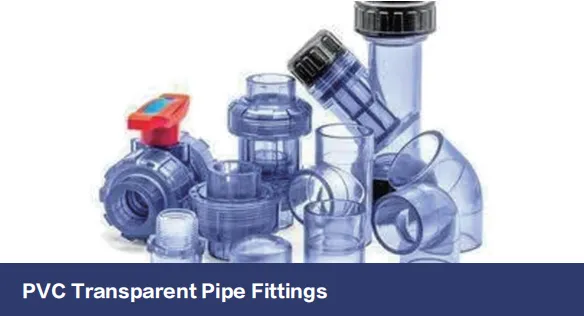
Introduction: The Evolution of Polymer Engineering
Picture the world around you—everything from the plumbing in your home to the advanced medical devices in hospitals relies on polymer materials that have quietly revolutionized modern living. For decades, polyvinyl chloride (PVC) has been the unsung hero of these everyday technologies, offering practicality at the cost of performance limitations. Now, we're witnessing a transformative shift where PVC isn't just functional; it's smarter, stronger, and incredibly lightweight.
Recent breakthroughs have shattered old constraints, allowing us to reimagine PVC pipe fittings as components that balance structural resilience with almost ethereal lightness. Imagine pipes so strong they withstand industrial pressures yet thin enough to reduce material usage by half. This journey towards lightweighting isn't just technical—it's reshaping how industries approach sustainability, efficiency, and design ingenuity.
The Heart of Innovation: Material Science Breakthroughs
What makes these newer PVC formulations so remarkable? Traditional PVC pipes often sacrificed clarity for strength or became brittle under stress. Modern solutions incorporate:
Nano-Reinforcements
Tiny silica particles embedded within the polymer matrix act like microscopic scaffolding. These particles disperse stress evenly, preventing cracks without clouding transparency—almost like invisible reinforcement armor.
Plasticizer Chemistry
Advanced phthalate-free plasticizers create flexible molecular chains. These don’t just prevent brittleness—they allow the PVC to "breathe" during temperature fluctuations, making pipes ideal for outdoor drainage systems exposed to harsh weather.
Interlayer Bonding
By alternating PVC with polycarbonate layers at a microscopic scale, engineers create pipes that resist impact like a safety windshield. When you knock on these transparent fittings, they respond with a reassuring solidity rather than a hollow plastic sound.
The synergy of these innovations means we're not just tweaking a material—we’re redesigning its DNA. The result? PVC fittings that achieve what was once impossible: **strength that rivals metal at one-tenth the weight**.
Manufacturing Revolution: Precision Engineering
Crafting these advanced PVC fittings requires more than recipes—it's an art form blending cutting-edge tech with human ingenuity. Consider the biaxial stretching technique:
During extrusion, the PVC isn't just pushed through a mold—it’s pulled horizontally and vertically under precise heat. This controlled stretching aligns polymer molecules like fibers in a rope, eliminating weak points and creating uniformly resilient walls as thin as 1.2mm—thinner than a credit card.
But it's not just about thinness. Precision micro-laser perforations enable real-time quality testing within production lines. Sensors monitor wall consistency down to micron-level variations, rejecting flaws before they become failures.
For **deep water drainage systems**, these innovations are game-changing. Where traditional pipes needed thick walls to prevent collapse under pressure, today's lightweight PVC alternatives maintain structural integrity while allowing engineers to visualize flow dynamics through transparent walls—an invaluable diagnostic tool in complex drainage networks.
Where Lightweight Matters Most: Real-World Impact
Let’s step into an operating room: surgeons now rely on transparent PVC tubing to monitor fluid paths during critical procedures. Unlike older opaque lines, these offer visual confirmation without adding weight to sensitive equipment. It’s a small change saving lives through precision and reliability.
Urban Infrastructure
City planners replacing aging water pipes face immense costs. Lightweight PVC alternatives cut installation time by 40% and reduce shipping emissions by up to 60% per mile. In earthquake-prone regions, their flexibility prevents catastrophic shattering during tremors.
Industrial Innovation
Chemical plants adopt corrosion-resistant transparent pipes to monitor reactive flows safely. Workers visually inspect mixtures without opening pressurized systems—reducing hazards while optimizing processes.
Home Plumbing
Ever watched a plumber wrangle heavy metal pipes in tight crawlspaces? Lightweight PVC solutions are shifting that narrative, empowering faster installations with ergonomic design that respects tradespeople's physical well-being.
"The shift toward thinner PVC pipe fittings represents what engineering should be—solutions that solve practical needs while honoring humanity." — Dr. Amina Chen, Materials Research Institute Singapore
Horizons of Opportunity: What’s Next?
The story doesn’t end with today's breakthroughs. Emerging technologies hint at PVC fittings that aren't just passive components:
- Self-Healing Polymers : Microcapsules filled with monomer fluids could automatically seal cracks when damage occurs, dramatically extending lifespan.
- Conductive Integration : Embedding carbon nanotubes might transform pipes into data carriers, transmitting flow metrics without external sensors.
- Bio-Sourced Reinforcements : Using lignin from plant waste could create biodegradable PVC hybrids without compromising strength.
Challenges remain—recycling multi-layered composites demands innovative separation techniques. Yet every obstacle fuels collaboration between chemists, engineers, and environmental scientists to refine these materials responsibly.
Final Thoughts: Light as Feather, Strong as Steel
Standing at the threshold of material science revolutions, PVC transparent pipe fittings embody a broader truth: progress isn't always about inventing new materials—it's about seeing familiar ones with fresh imagination.
The shift from heavy industrial-grade plastic to lightweight marvels teaches us that limitations are invitations to innovate. These humble pipes do more than convey fluids—they carry our collective ingenuity toward sustainable engineering where efficiency, safety, and elegance coexist.










